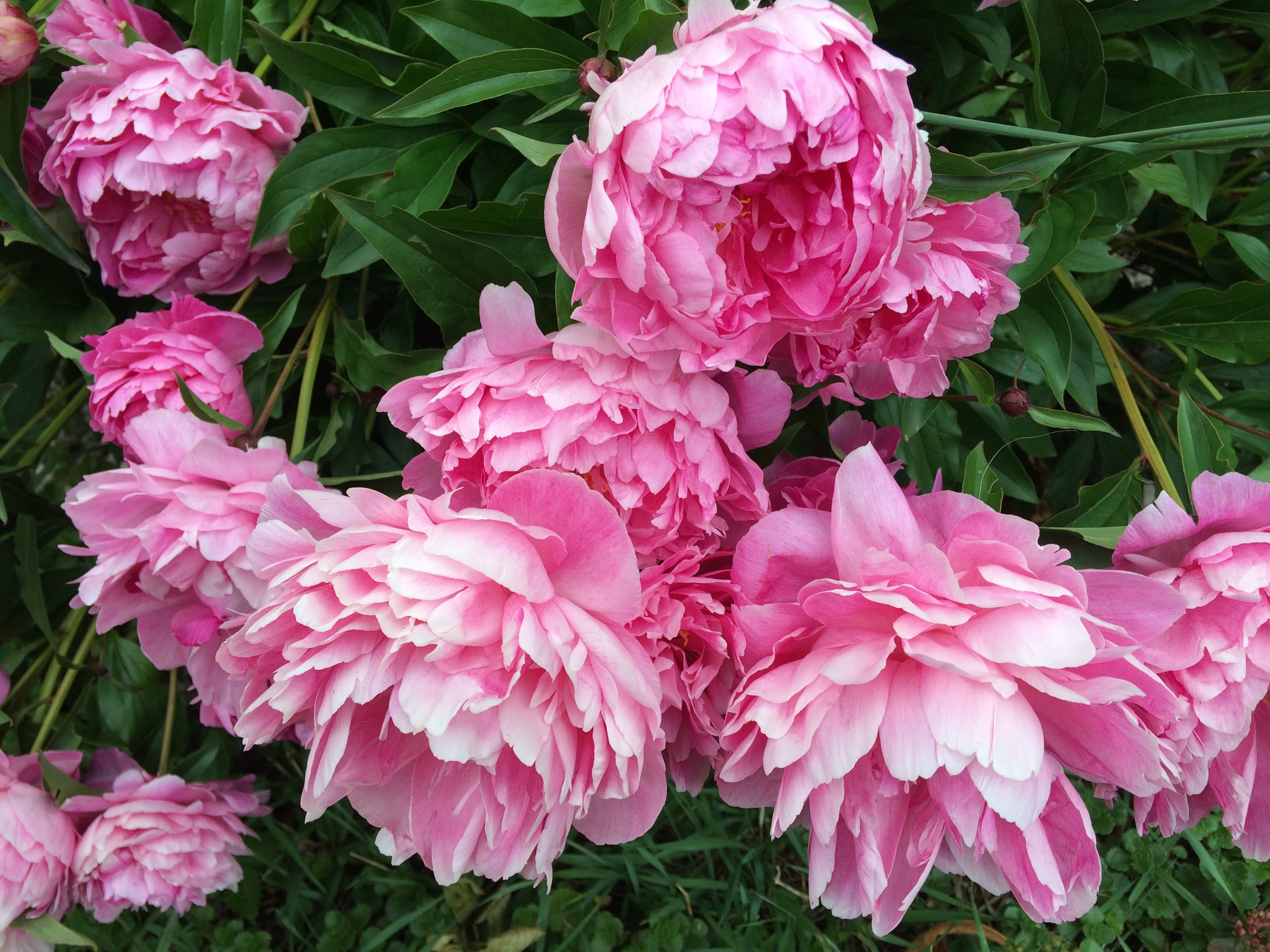
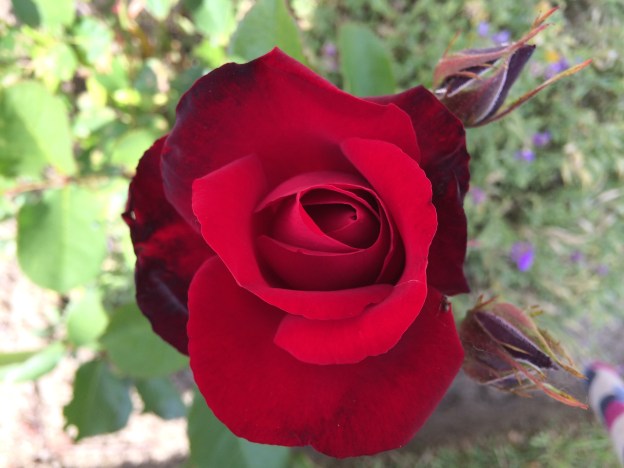
I have fallen in love with peonies. they are so OTT!




I have fallen in love with peonies. they are so OTT!



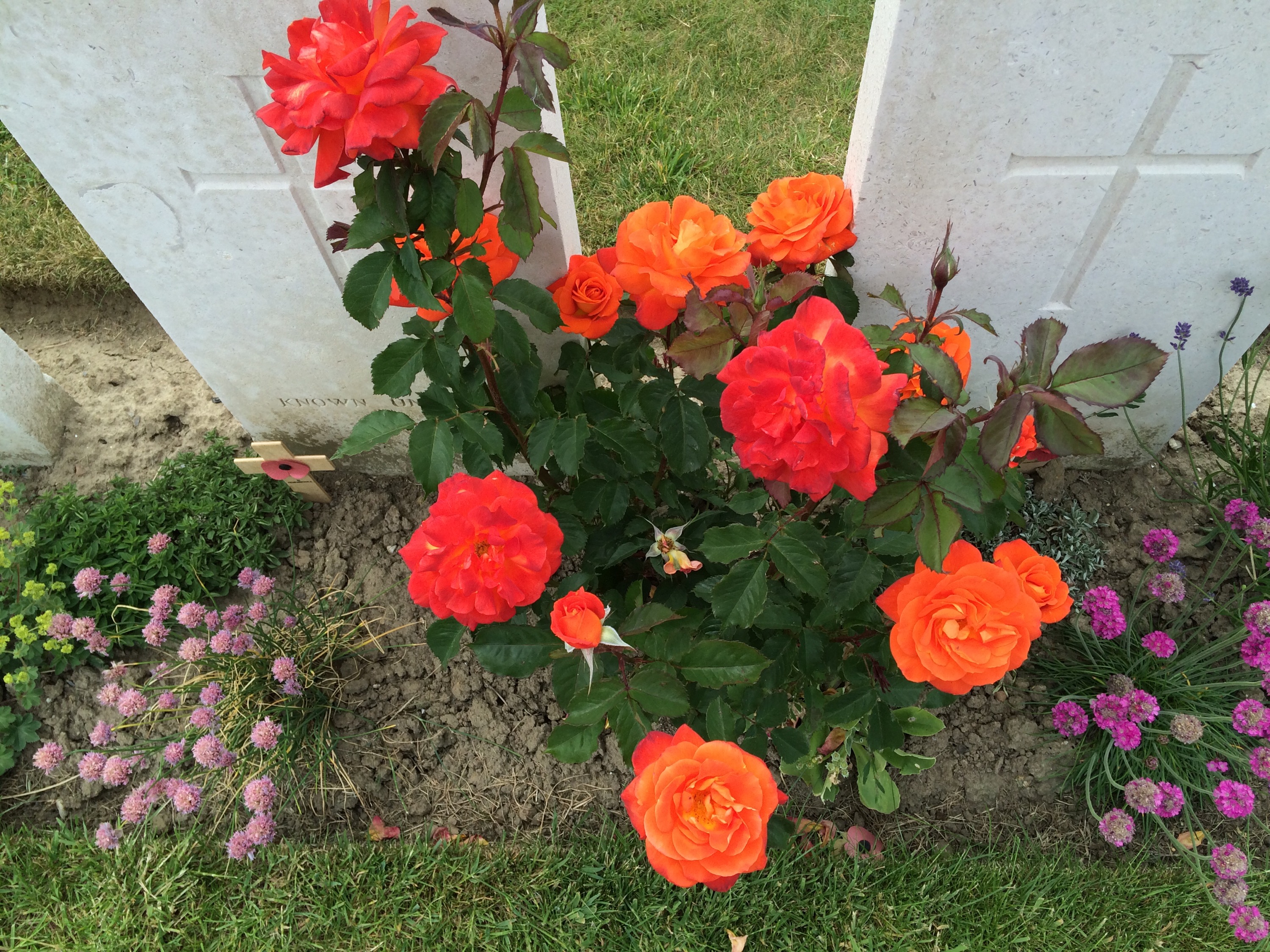
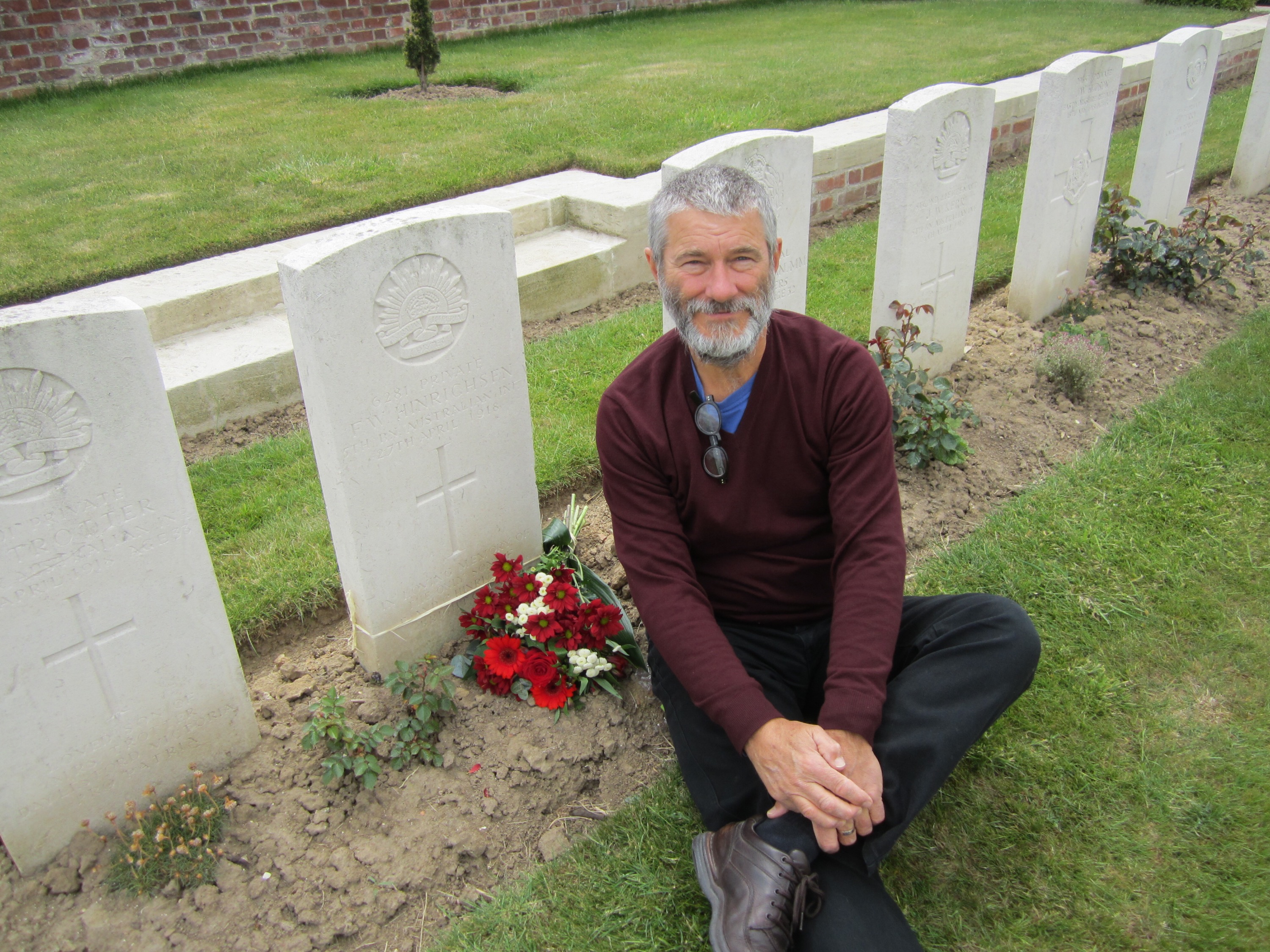
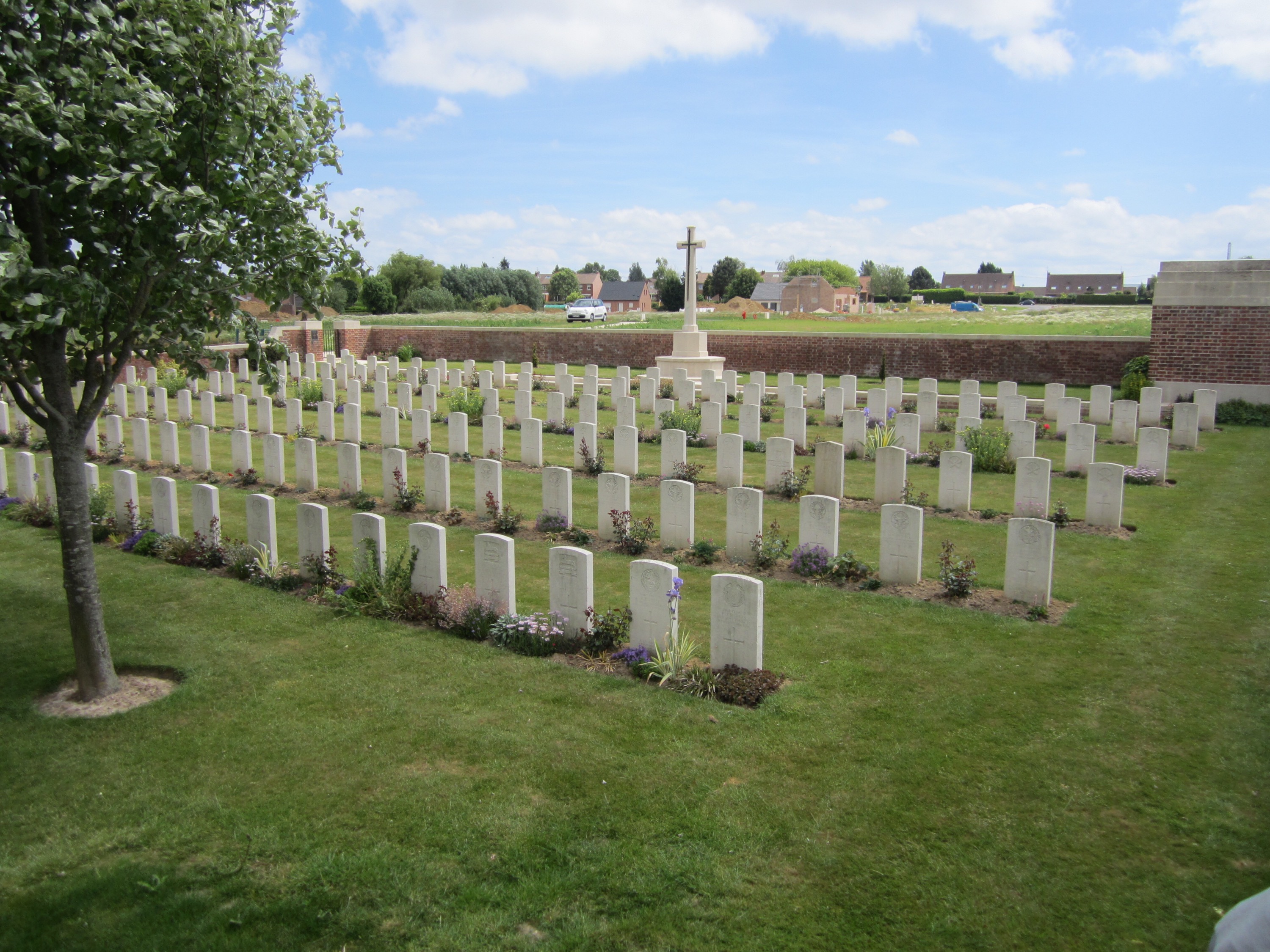
Fred was 21 yrs and 8 mths old when he enlisted on April 8 1916. Pte. Hinrichsen, 5th Battalion, AIF, embarked at Melbourne 11/9/16 and died of gas poisoning 27/4/18 and is buried in the tiny military cemetery at Caestre in the company of 149 British, 8 South African, 1 British West Indian and a further 31 Australian soldiers. The cemetery was used by front line units during the fighting to hold the 1918 German offensive and the opening phase of the subsequent advance to victory. Fred’s personal effects, at the time of his death, consisted of a cheque case, pipe, religious books, pocket case, metal mirror, cards, letters, photos, paper cuttings, packet of dried flowers and motor driver’s certificate. I wonder most about the flowers. Not all items were received by his parents as some were lost when the ship carrying them was torpedoed.
Fred was Geoff’s mother’s cousin and family history has it that he nursed little Winifred (Geoff’s mum) in his arms before he left Australia. The gas that killed him (& several others) was delivered by a British shell that dropped-short, exploding in his forward observation post. Such mistakes in the heat of battle were not uncommon.
The last time we visited Caestre was in 2008 and the small brick-walled cemetery was in the middle of large, cultivated fields. Now a new housing estate is being built close to the wall on one side. There will be many young families, all around, creating lives for themselves and bringing up new generations. Something to be celebrated.


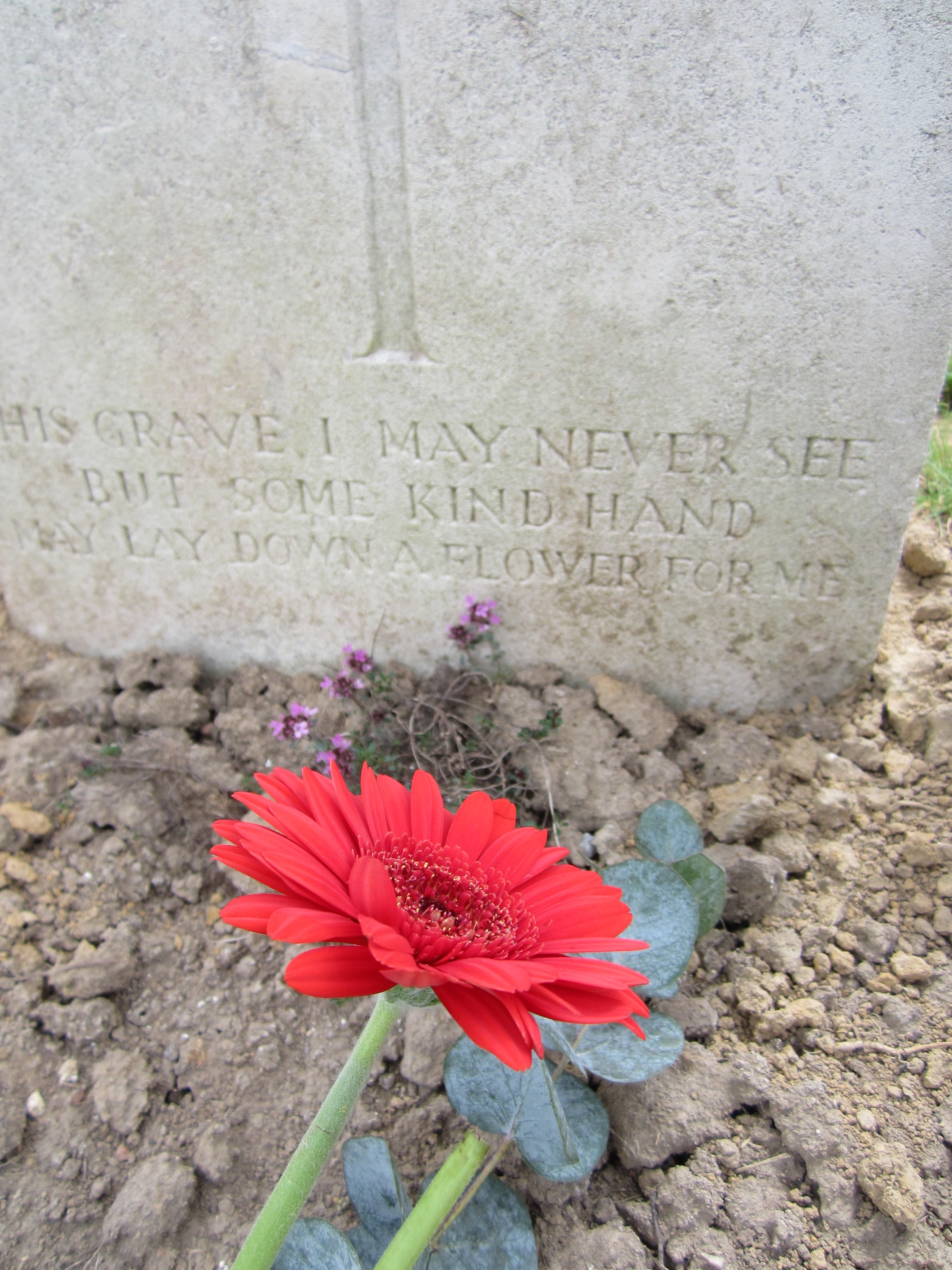
How could you not ….
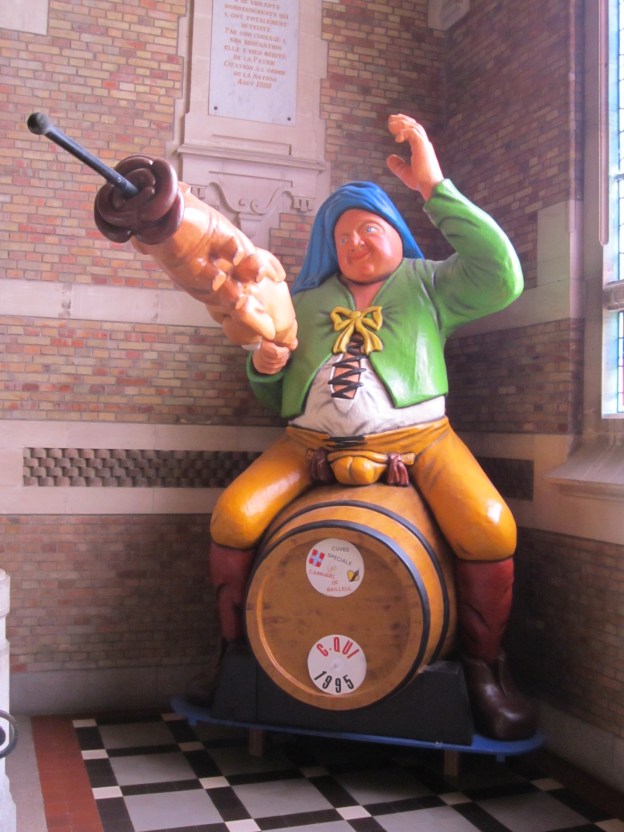
Before we actually left Bailleul we did a tour of the Unesco-classified, Beffroi (Belfry) de Bailleul. It was originally built in the 12th century, and it reflected the rise of the middle class through agriculture and industry – linen, lace, textiles etc. It has been destroyed and rebuilt many times, always in the same style, the last time being in 1932 after the whole town was reduced to rubble during the Great War. Geoff stayed with the group and climbed to the second- last level (too windy for the final assault) but I stopped climbing once I had had the opportunity to stand behind one of the clock faces, which was amazing. The belfry is constructed in wood so that it can move with the very strong winds which are common in this region.

Post 1914-18 War

Beffroi de Bailleul as it is today. Geoff was at the second level from the top

View from the top
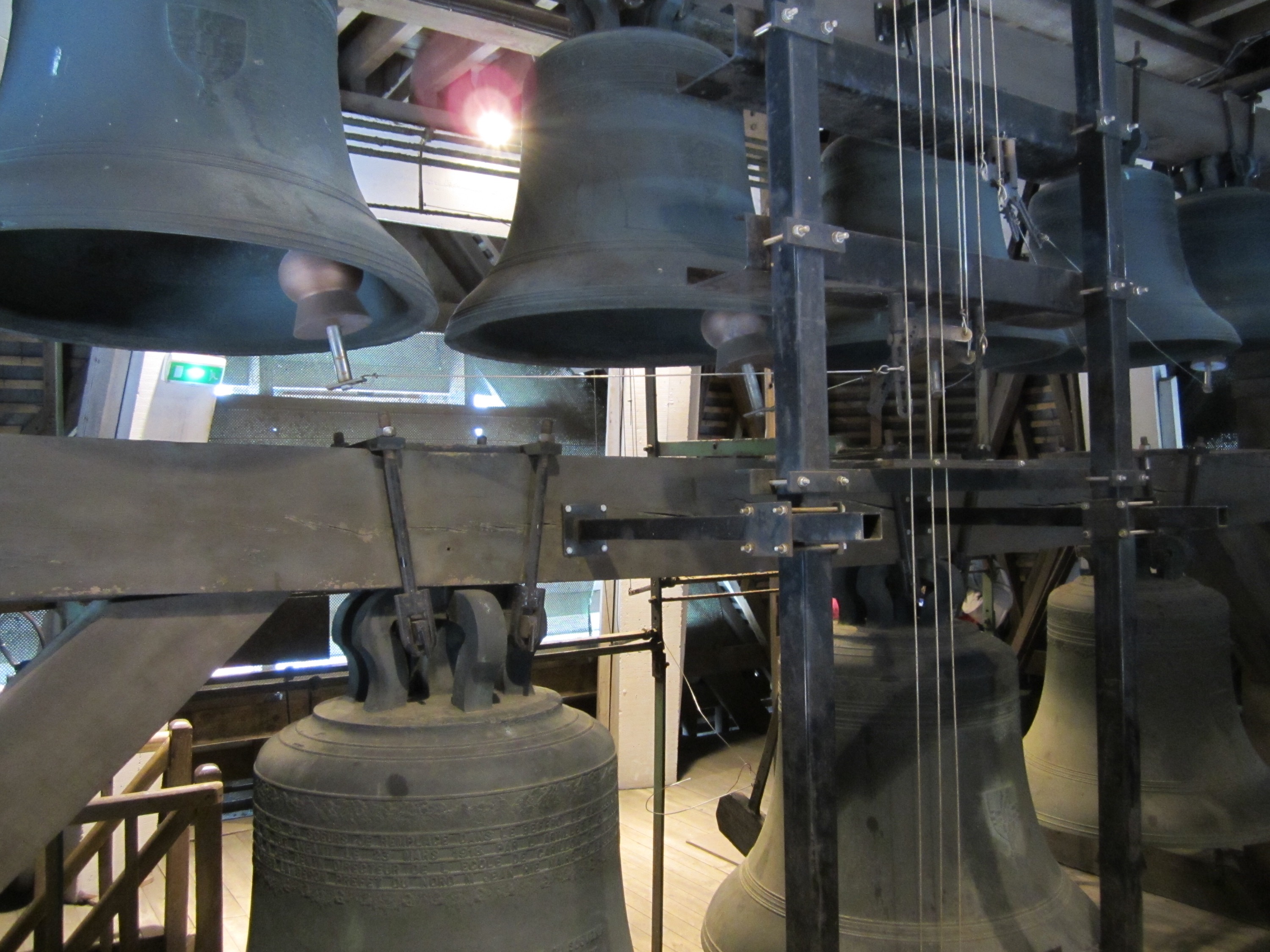
The bells, which were fashioned from cannons.

Melisande, who once graced the very top of the belfry. Siren, mermaid or witch?
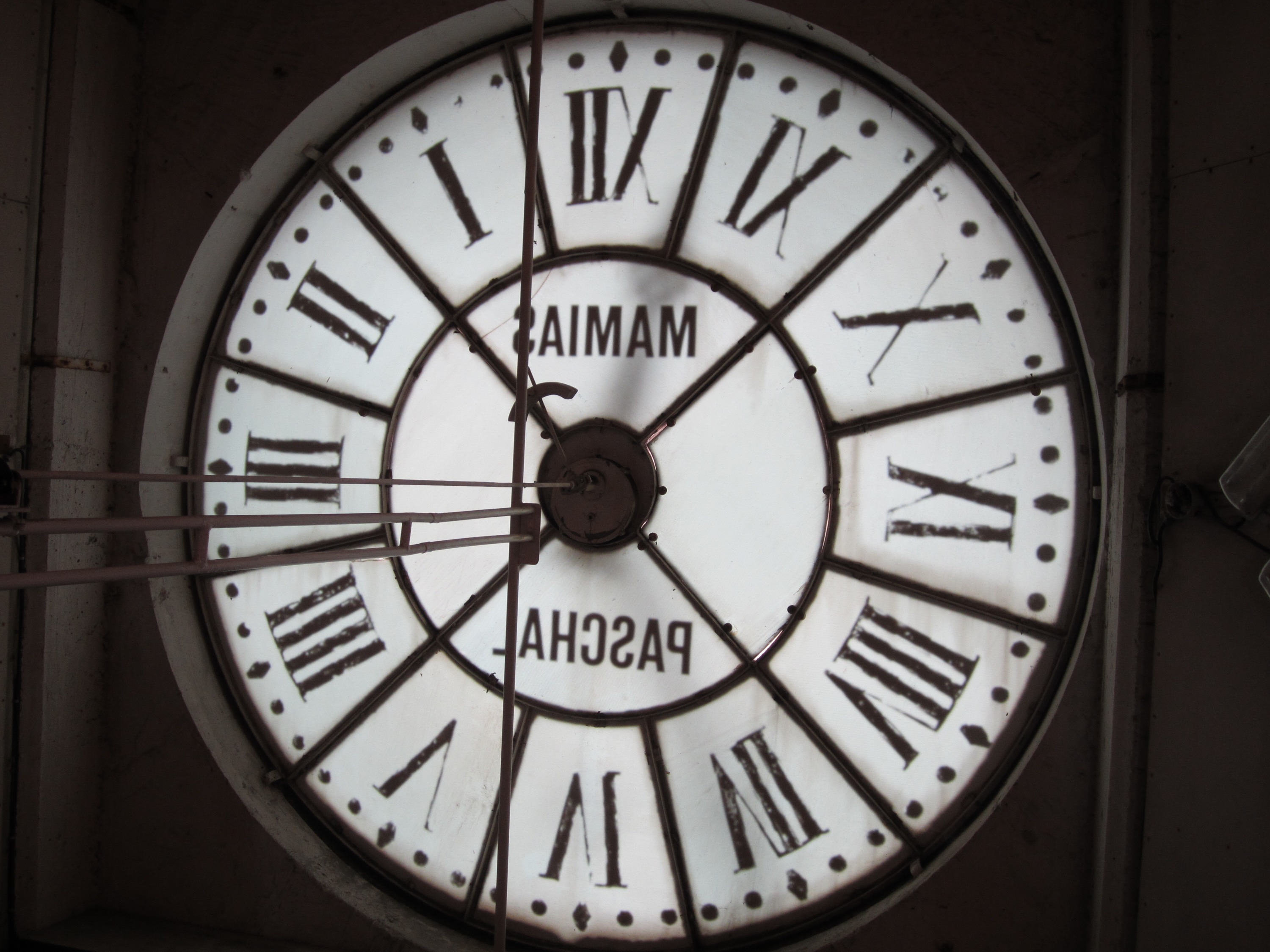
Behind the clock face . The intentional error in the Roman numeral for 4 is that the three white spaces, between the four black bars, instead of IV, represent the Holy Trinity

The mechanism
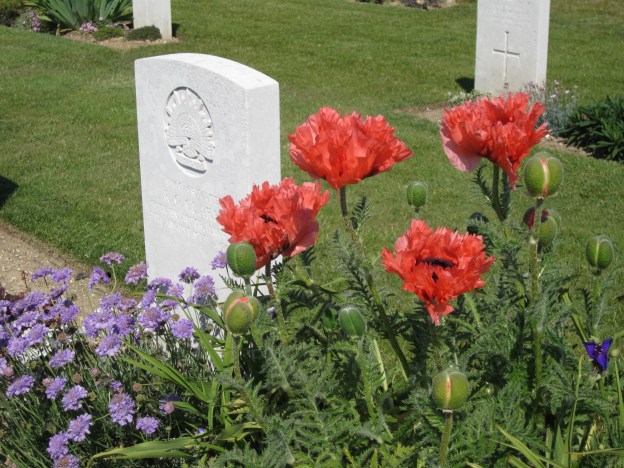
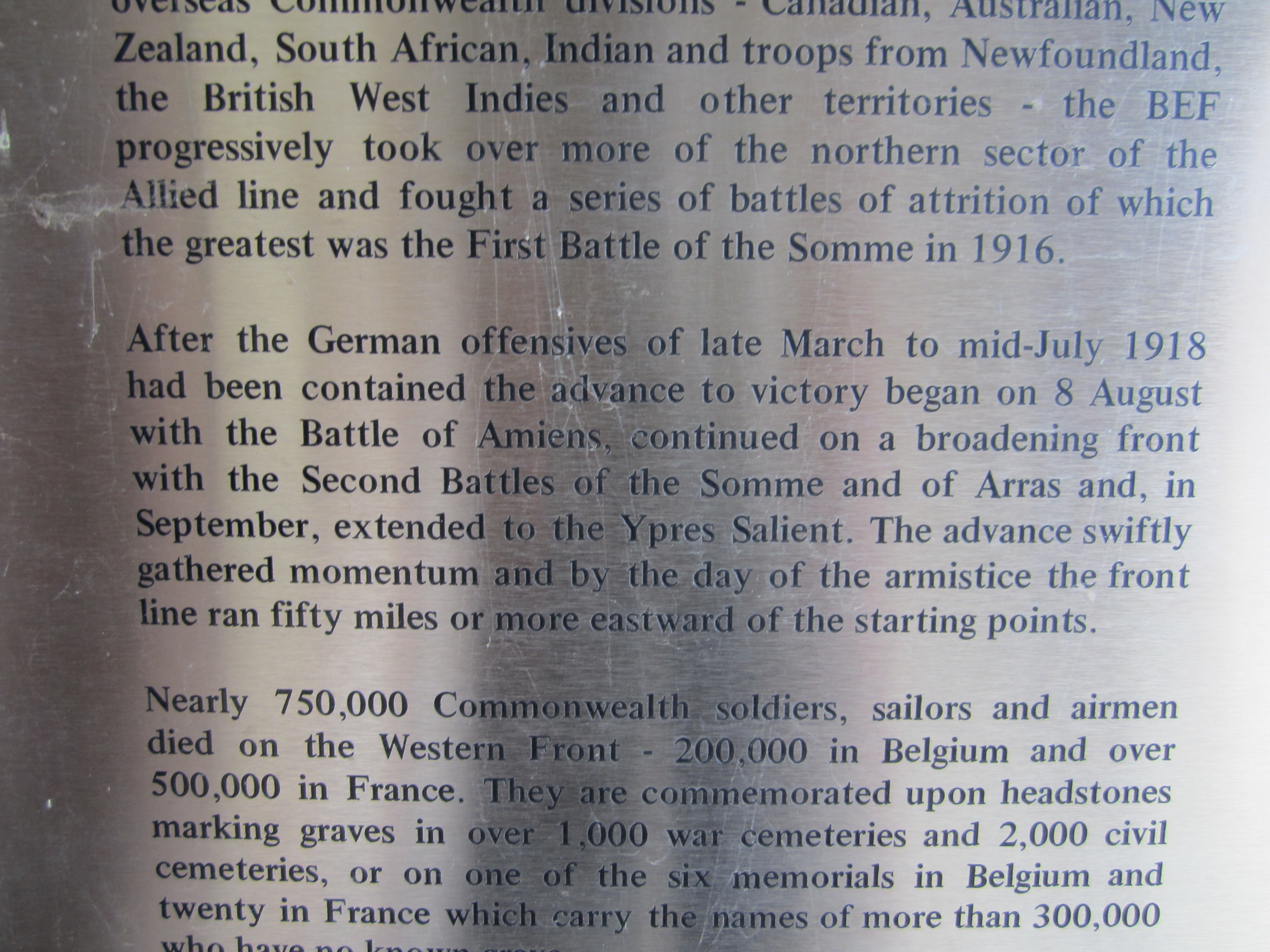
The battlefields, cemeteries and memorials of World War 1, The Great War, are scattered throughout this region and the scale of the conflict and loss of life is reflected in the thousands of white crosses and headstones stretching in all directions. Some cemeteries are small and others huge but they are all beautifully maintained and, at this time of year, ablaze with colour from the flowers blooming in front of every marker. Red-hot pokers, extravagant peonies, poppies, of course, and many others. The land has been transformed from a hell-hole of noise and mud and death into rolling green pastures and grain fields. The grave sites are tranquil and open to the sun and flowers and birds or sheltered in leafy glades, guarded by large overhanging branches. Unimaginable suffering and despair was endured here and you can only walk by the graves, read the inscriptions, and silently grieve for victims of war everywhere.
We began the day with a visit to Villers-Bretonneux and we toured the Franco-Australian Museum, temporarily housed in the Victoria Hall while extensive renovations take place. Victoria School was rebuilt using donations collected by Victorian school children, penny by penny, after the war ended. There is a true bond of friendship between the people of Australia and the inhabitants of Villers-Bretonneux and it is very touching to know that the message ‘N’oublions jamais l’Australie’ can be found in every classroom. It was in April 1918 that Australian troops in V-B stopped the German push before Amiens could be captured. The impressive Australian National Memorial is not far out of the town and there were quite a few visitors.
In the afternoon we went to the Beaumont-Hamel Newfoundland Memorial, the biggest battalion memorial on the Western Front and the largest area of the Somme battlefield which has been preserved. The site encompasses the ground over which the Newfoundland battalion attacked in July 1916 and part of the German front line system. The centrepiece of the memorial is the caribou which stands over the grassed-over trenches which are still clearly defined. The avenue of maple trees provided a cool sanctuary on a very hot day. Sorry Melbourne – I know you are having chilly weather but it is hot in Europe.

Richard and I at Victoria School at Villers-Bretttonneux
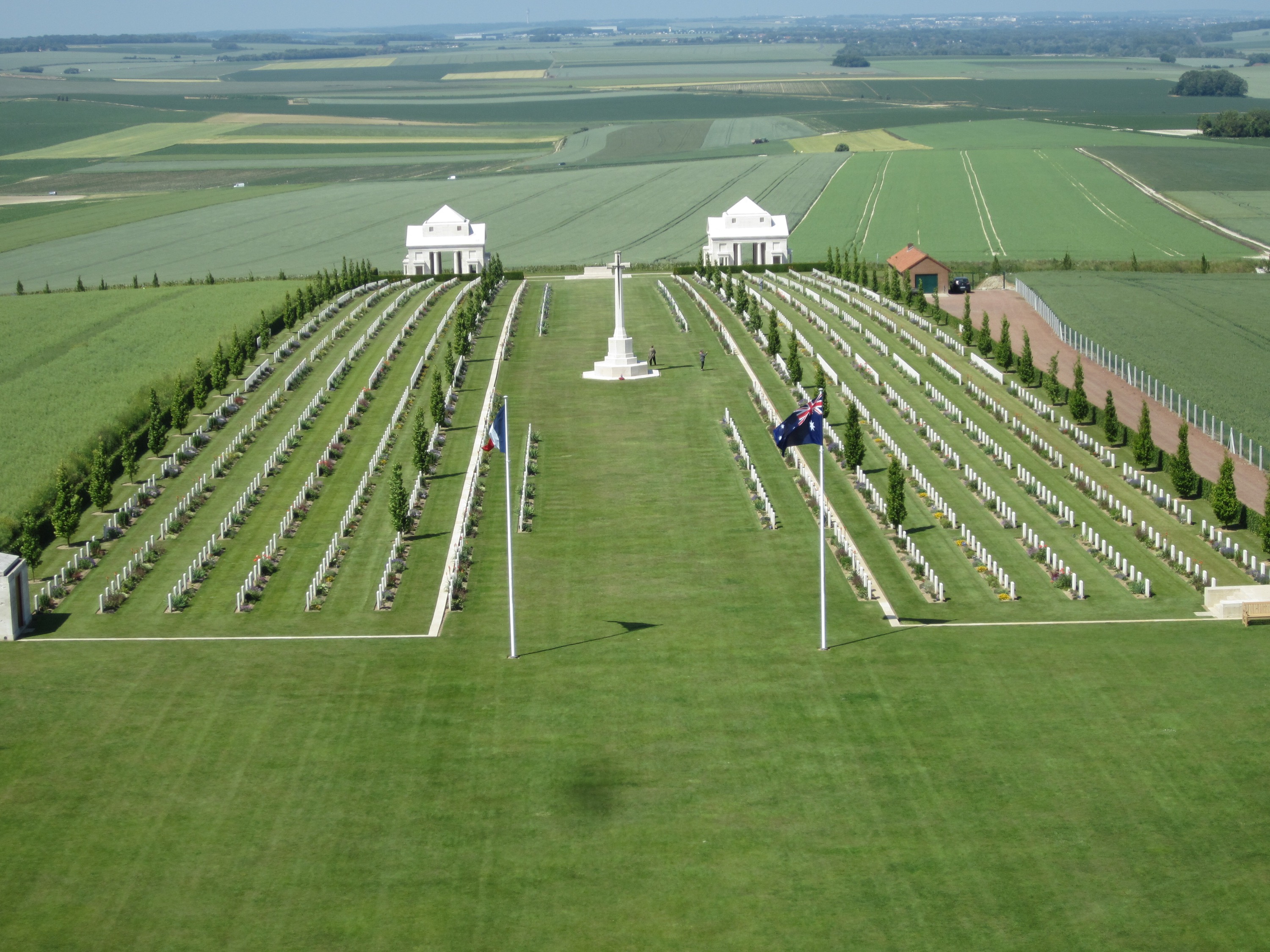
View from the top of the Australian War Memorial at V-B

Atop the Aust. War Memorial

The caribou – symbol of the Newfoundland Regiment
We drove to Albert via Compiegne because I have always wanted to see Pierrefonds Castle and had it as my screen saver at work for about twelve months (until the IT guys changed something and I didn’t know how to restore it!). The original citadel was built in 1393 but it was attacked and dismantled in 1616. The great ruin was bought by Napoleon 1 in 1810 and in 1857 Napoleon 111 had it restored in the style of a fortification of the Middle Ages.
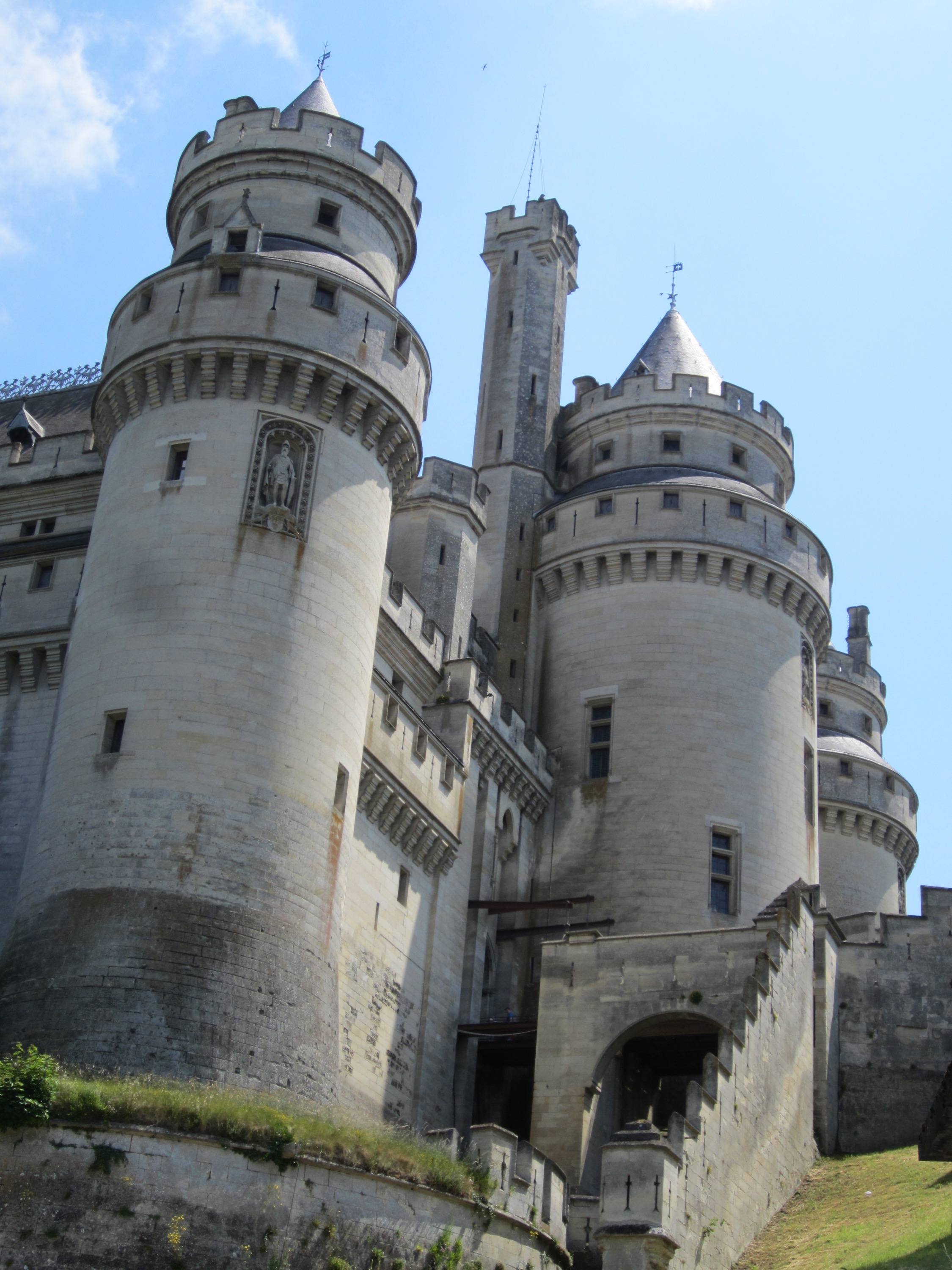
Pierrefonds Castle
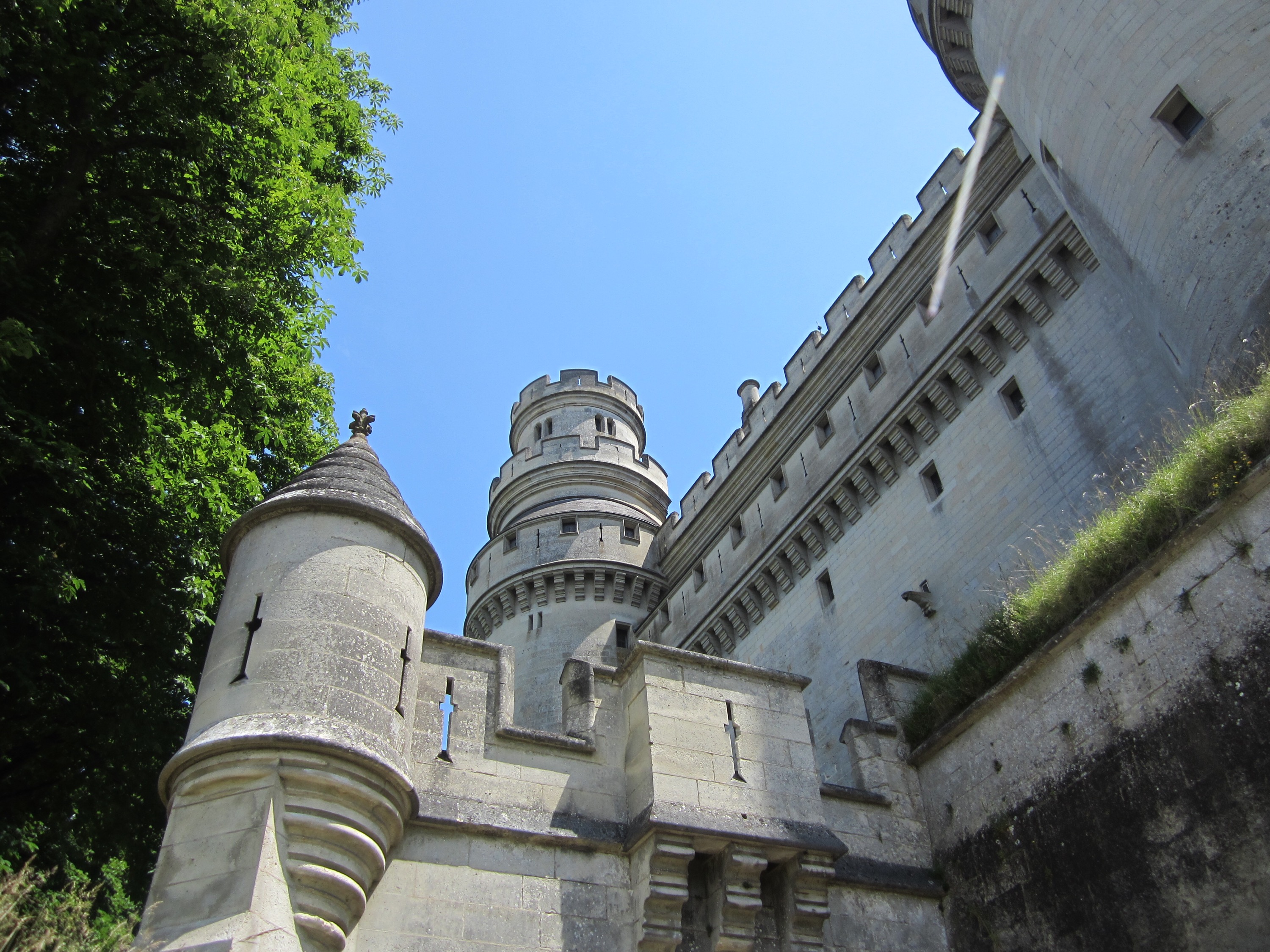
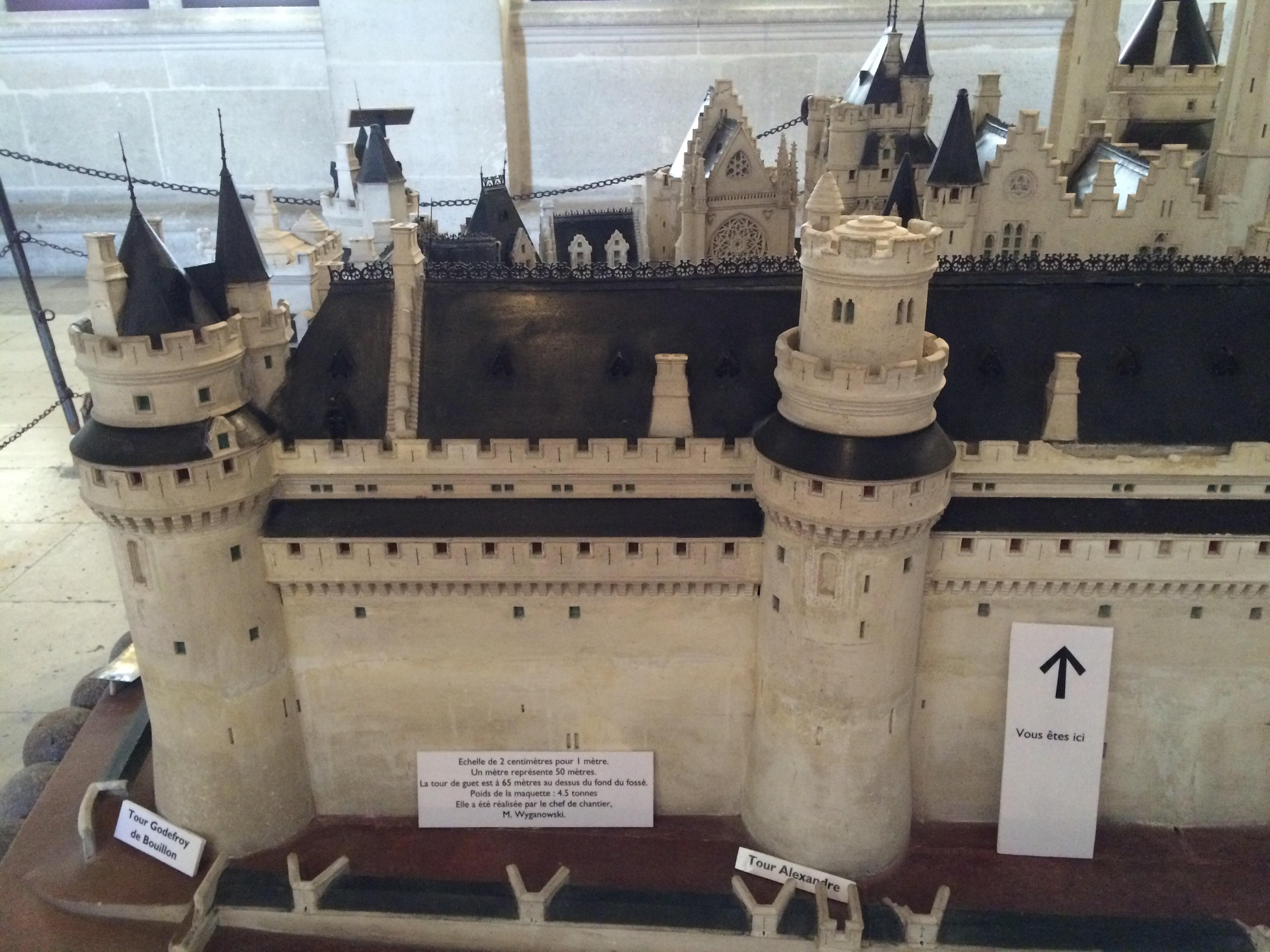
Model of the castle giving vital statistics

My favourite dress in an exhibition of opera & ballet costumes at the castle

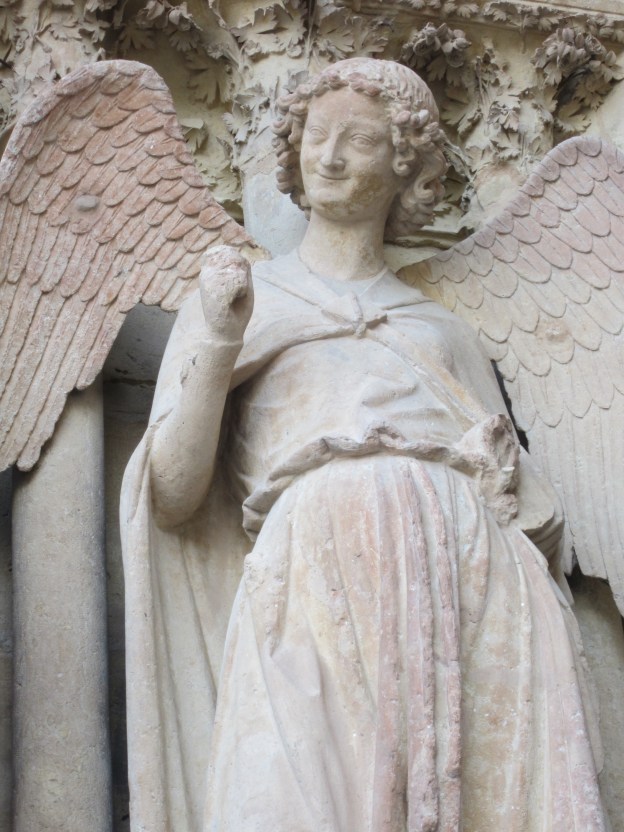
We met our friend Richard in Reims and the next morning we visited Cathedrale Notre-dame where people have worshipped for 1,500 years. This magnificent cathedral was nearly destroyed in 1914 when it was shelled and fire destroyed woodwork and shattered statues. It took 20 years to restore the pitiful wreck which it had become. Few of the ancient stained glass windows endured (many had already disappeared in the 18th century in an effort to let in more light), but there are now many glorious new windows, designed by modern artists, including Marc Chagall. The famous figure of the smiling angel (dare I say smirking angel) lost her head during the war but she is restored to full health. Sadly, we didn’t have enough time to do the Mumm champagne tour and I love champagne.


I love these vertical gardens

Cathedrale Notre-Dame in Reims


We really only had a morning in Verdun so we drove into town with the intention of doing a tour of La Citadelle Souterraine (The Underground Citadel) but the earliest tour we could book was at 11 am and then we were bumped by a couple of tour groups so we requested a refund and meandered back to the car, buying baguettes and cold drinks on the way. We drove to La Tranchee des Baionnettes (Trench of the Bayonettes) which is the oldest memorial on the battlefield – Dec 1920. The memorial is set in beautiful woodland where you can follow overgrown paths to see remains of trenches.
The countryside here is lush and green and we had a peaceful picnic in a little, wooded glade. We drove on to the Ossuary of Douament, a memorial built over the bones of 130,000 unknown soldiers. These bones can be viewed through small windows set at almost ground level in the walls of the building. It is a chilling sight. In Feb 1916 the German army launched a great offensive on Verdun and the ensuing ‘Hell of Verdun’ was to last for 10 months: 300 days and 300 nights of fighting. However, it was not until Nov 1918 that the entire territory lost in 1916 was finally recaptured, but the cost in lives was horrendous.
We continued our journey to Reims where Geoff nearly gave me a heart attack by driving down what I was sure was a pedestrian-only mall. But, Dulcie had sent us there and it turned out to be OK. Geoff is becoming very French in his driving and parking habits!

La Tranchee des Baionnettes

L’Ossuaire de Douamont

View from the tower of the ossuary.

Yesterday, Saturday, was laundry day – no choice! – but, happily, the laundrette was located next to the marvellous covered market so we had better things to do than watch our undies spinning around. I bought fresh fruit – apricots, strawberries, cherries and raspberries and I was given a bonus peach. If I had a fridge and I was able to cook, I could have really gone to town. There was a large variety of cheeses, as you would expect, bread, fresh fish and seafood of every kind, vegetables including the fat white asparagus which is currently in season (having tried it, I prefer the green), and bunches of the little pink and white radishes, which I love. There was a queue for unpasteurised milk & cheese and one butcher had an extensive selection of cuts of horse meat. The meat is very dark, almost black. The stalls outside the covered market offered the usual bric-a-brac, books, clothes etc.
Domestic duties complete, we went for a drive along the River Ouche and the Burgundy Canal, to Pont-de-Pany where we had lunch under the plane trees and continued through the gorgeous, wooded countryside of Auxois, which is dotted with tiny villages.
We returned via Nuits-Saint-George and had a drink on the terrace of the Chateau de Gilly, which now operates as a 5* hotel. Must stay there the next time we come to France!!
Happily, we were back in time to visit Notre-Dame de Dijon, where people have been praying for over ten centuries. The present gothic construction, built between 1220 & 1240, replaced a chapel founded in the middle of the 11th century, called Notre-Dame du Marche (Our Lady of the Market). Sections of the facade of the church were destroyed by revolutionaries. Legend has it that the reason there are just a few gargoyles left from the 13th century, is that a moneylender who had come to get married was crushed by one of the gargoyles falling from the facade and his colleagues had them taken down. In the 1800’s seven sculptors created new, false, gargoyles. The lovely thing about this cathedral was that there was a service in progress when we visited and the mass was sung. I am not a Roman Catholic so was not familiar with the words but it was a wonderful experience to be there. Afterwards we wandered around town (it was still very hot) and watched the children enjoying the water in the Place de La Liberation. Fruit for dinner – couldn’t be bothered going out again.
Later: We drove from Dijon to Verdun, via Toul and Commercy. The Cathedrale St.-Etienne in Toul is very impressive and has some beautiful stained glass, but it is cold and cavernous and, to me, it lacked feeling. It has just become a monument. Near Commercy is La Boîte de Madeleines, and I was looking forward to a freshly baked madeleine with a nice coffee but what we found was a glamourised factory outlet with hot drinks from push-button machines. We ate our free cake and left! It was not what I had in mind at all. We drove through some very pretty countryside to reach Verdun, where we will spend one night before heading to Reims where we will meet our friend Richard. I am looking forward to visiting the cathedral.
We met an American lady this evening, in France for 8 days, with her 88 yr-old mother. The mother was an army wife and her husband was based in Verdun for some years and the daughter was born here. They are a pretty intrepid pair as they are travelling with a wheelchair and they have no French!
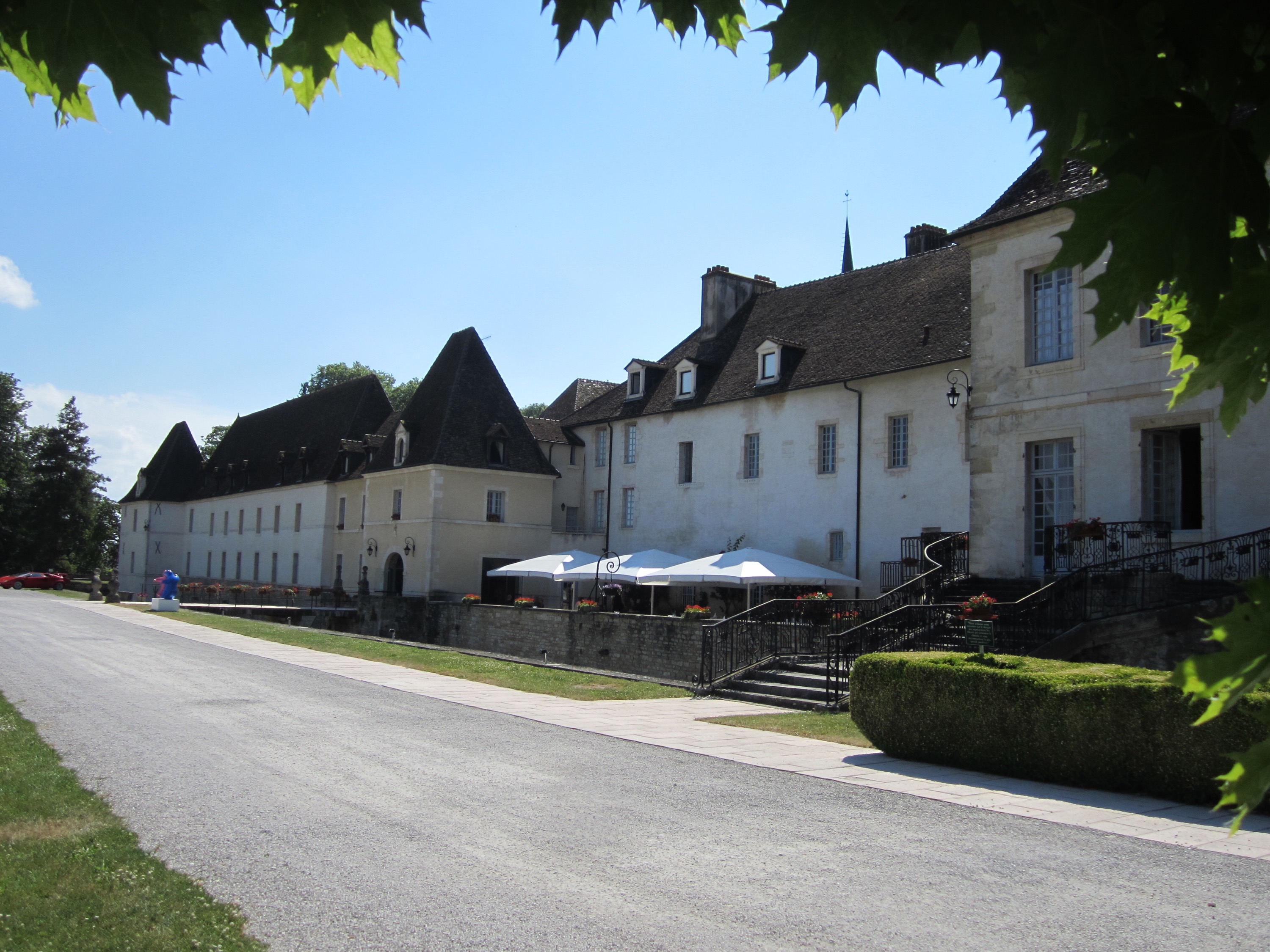
Chateau de Gilly

The vandalised facade of Notre dame de Dijon
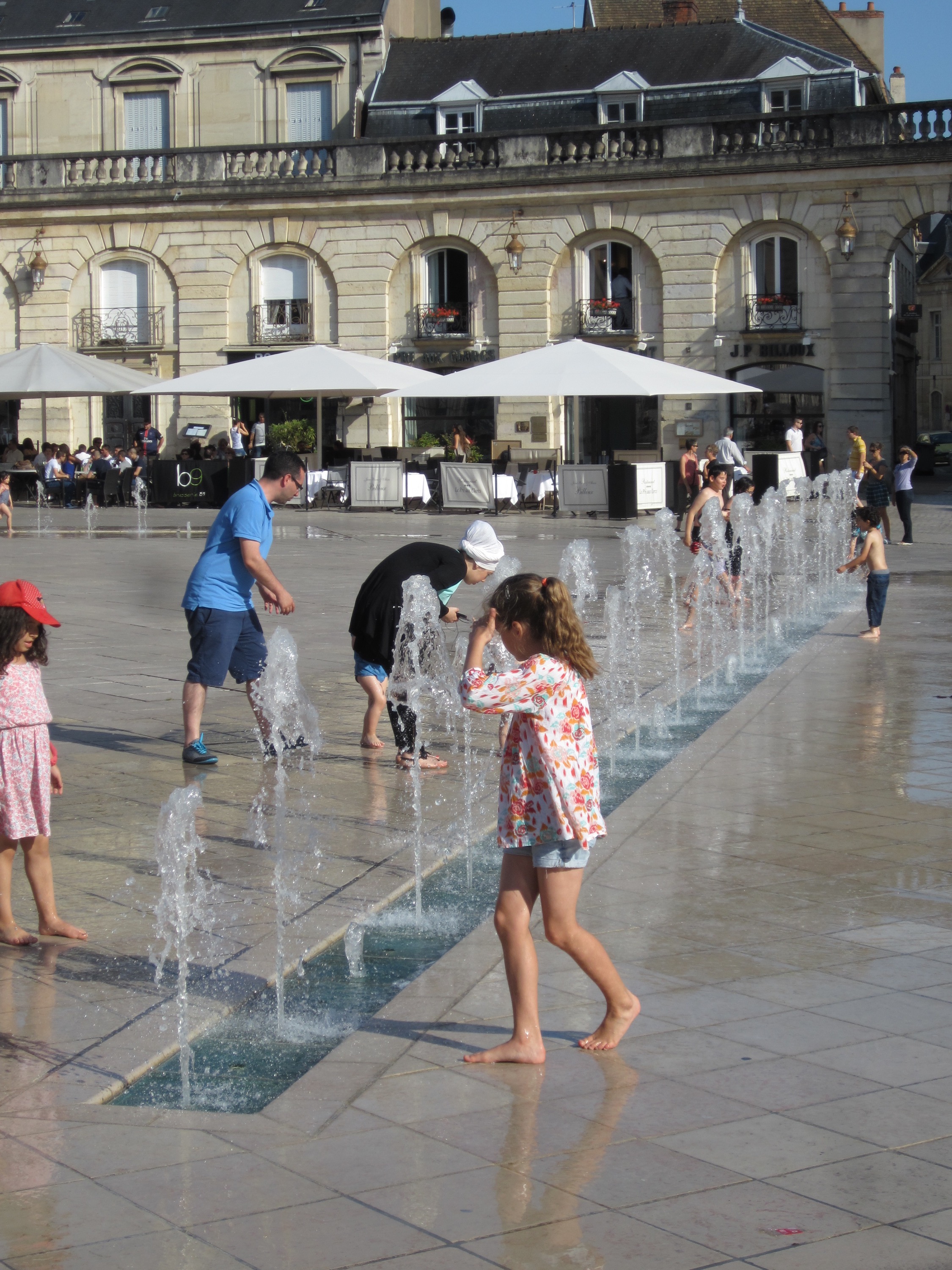
Place de La Liberation

Not sure where the naughty children go!

Cathedrale Saint- Etienne at Toul

A stirring message from the General to the people of France

We have arrived in Dijon and we are taking it easy for a couple of hours. It is 35 deg, and I am no fan of very hot weather.
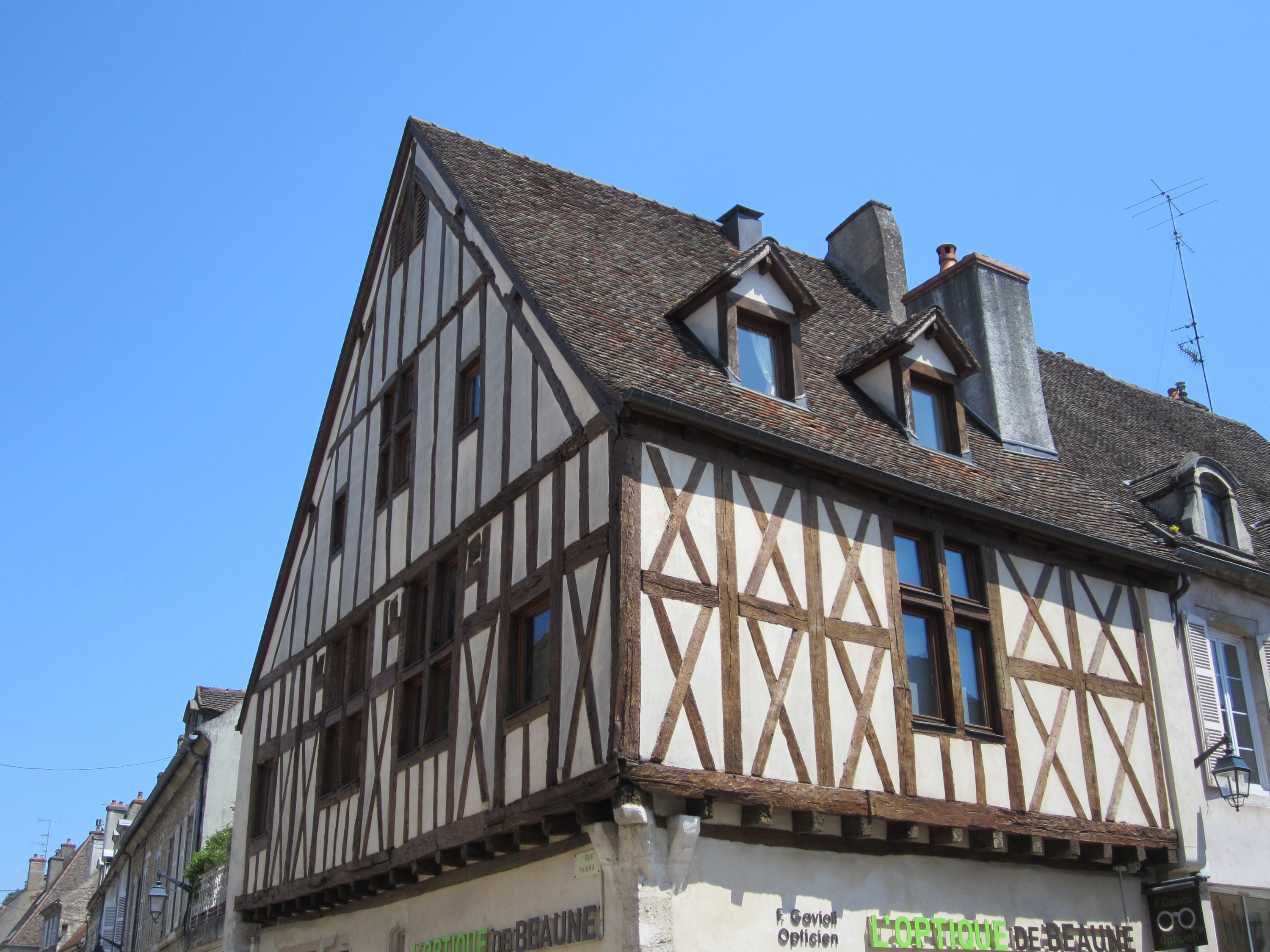
We stopped at Beaune on our way and wished we had more time to spend there. Famous for wine, there are countless ‘caves’ which we didn’t take advantage of because we had to drive. We did manage to wander around before and after lunch, and to walk along a section of the ramparts as we returned to the car. It is very pretty. When we arrived, it was quiet, but as soon as the clock rang for midday, people came from everywhere, in cars and on foot, to have lunch. In no time, the patisseries had queues and all the outdoor tables of the restaurants were occupied. It was a gastronomic migration.



 ravensflightdotcom