Monthly Archives: June 2015

Dijon to Verdun

Yesterday, Saturday, was laundry day – no choice! – but, happily, the laundrette was located next to the marvellous covered market so we had better things to do than watch our undies spinning around. I bought fresh fruit – apricots, strawberries, cherries and raspberries and I was given a bonus peach. If I had a fridge and I was able to cook, I could have really gone to town. There was a large variety of cheeses, as you would expect, bread, fresh fish and seafood of every kind, vegetables including the fat white asparagus which is currently in season (having tried it, I prefer the green), and bunches of the little pink and white radishes, which I love. There was a queue for unpasteurised milk & cheese and one butcher had an extensive selection of cuts of horse meat. The meat is very dark, almost black. The stalls outside the covered market offered the usual bric-a-brac, books, clothes etc.

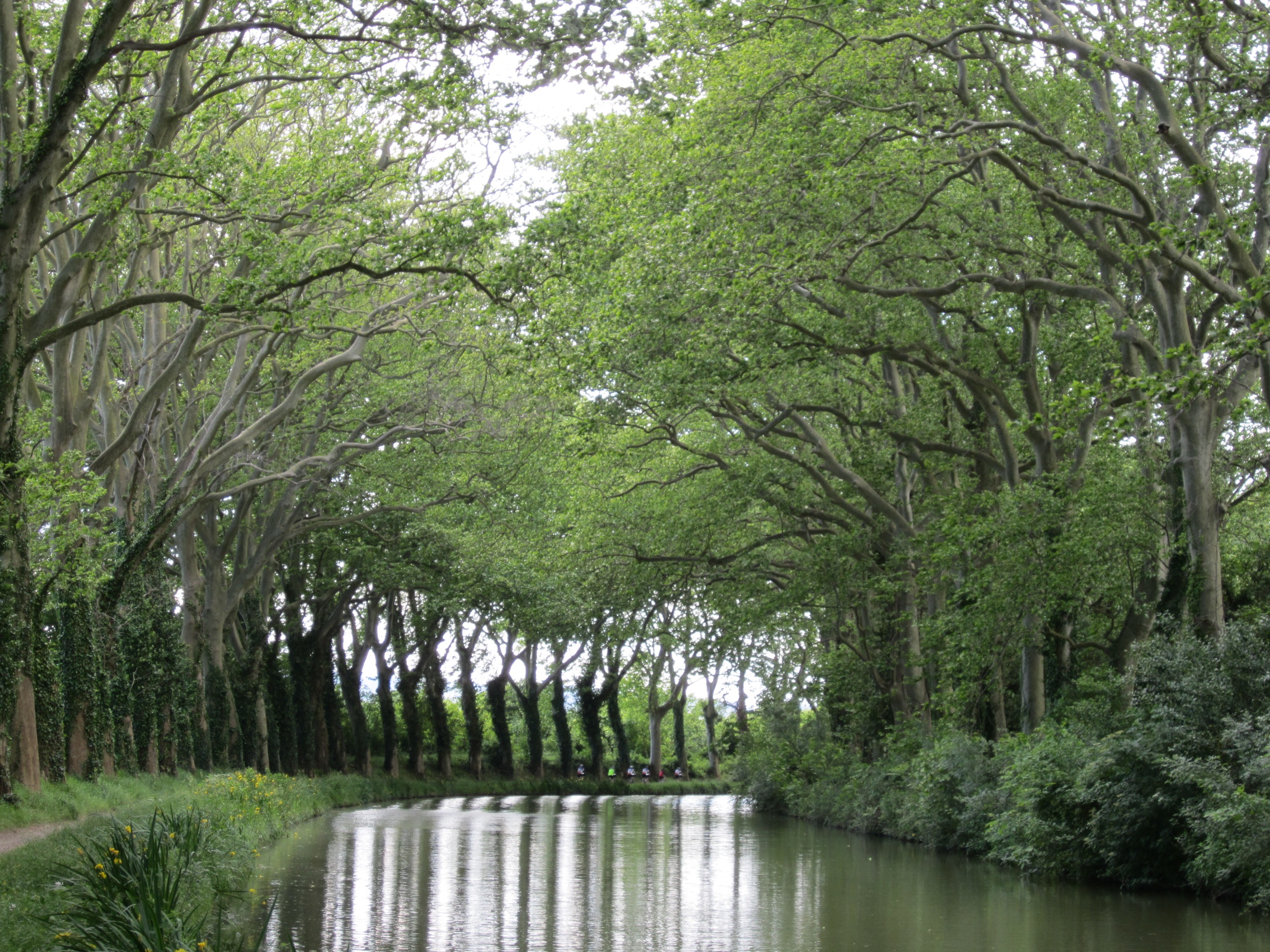
Domestic duties complete, we went for a drive along the River Ouche and the Burgundy Canal, to Pont-de-Pany where we had lunch under the plane trees and continued through the gorgeous, wooded countryside of Auxois, which is dotted with tiny villages.  

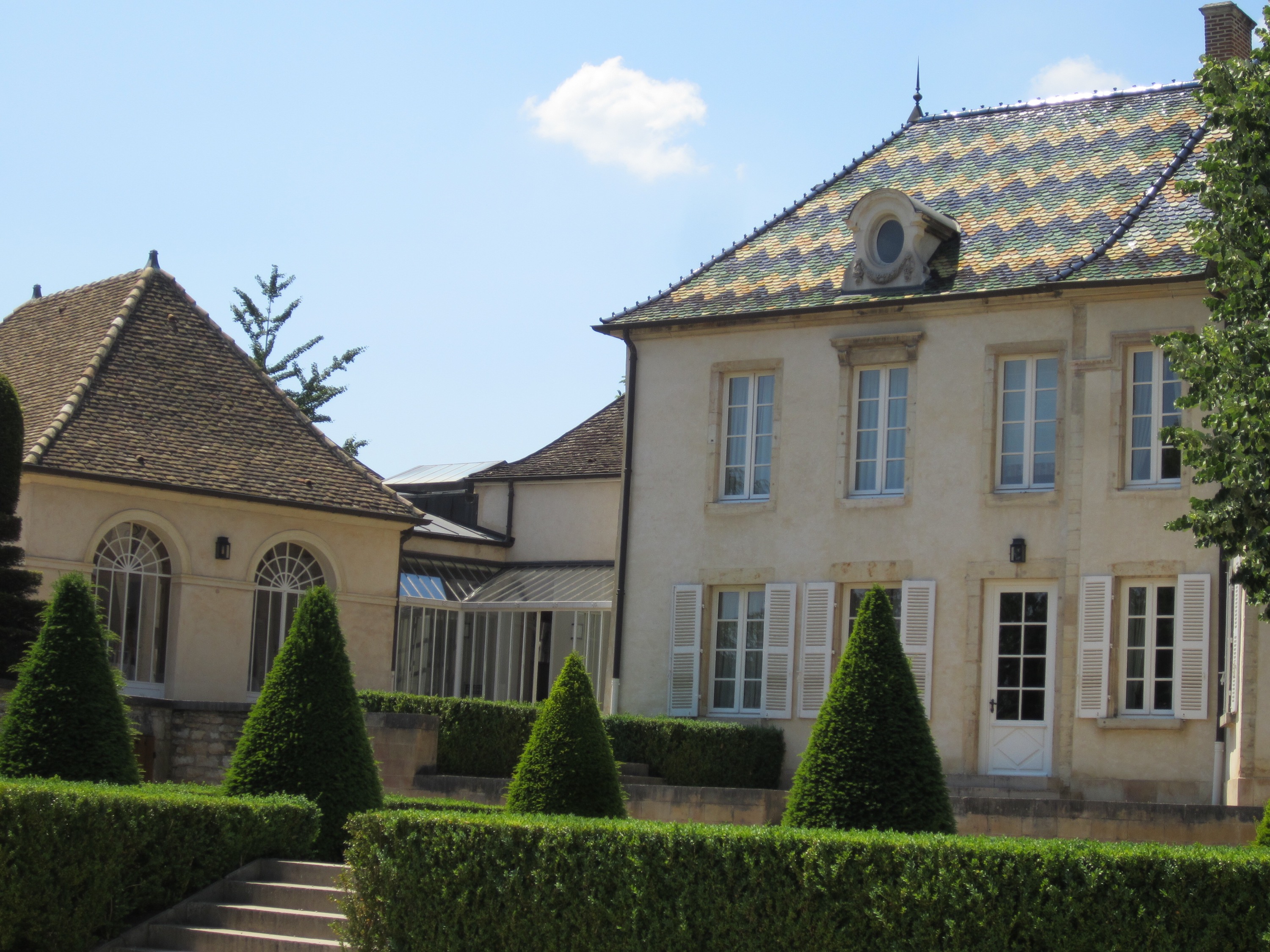
We returned via Nuits-Saint-George and had a drink on the terrace of the Chateau de Gilly, which now operates as a 5* hotel. Must stay there the next time we come to France!!  

Happily, we were back in time to visit Notre-Dame de Dijon, where people have been praying for over ten centuries. The present gothic construction, built between 1220 & 1240, replaced a chapel founded in the middle of the 11th century, called Notre-Dame du Marche (Our Lady of the Market). Sections of the facade of the church were destroyed by revolutionaries. Legend has it that the reason there are just a few gargoyles left from the 13th century, is that a moneylender who had come to get married was crushed by one of the gargoyles falling from the facade and his colleagues had them taken down. In the 1800’s seven sculptors created new, false, gargoyles. The lovely thing about this cathedral was that there was a service in progress when we visited and the mass was sung. I am not a Roman Catholic so was not familiar with the words but it was a wonderful experience to be there. Afterwards we wandered around town (it was still very hot) and watched the children enjoying the water in the Place de La Liberation. Fruit for dinner – couldn’t be bothered going out again.

Later: We drove from Dijon to Verdun, via Toul and Commercy. The Cathedrale St.-Etienne in Toul is very impressive and has some beautiful stained glass, but it is cold and cavernous and, to me, it lacked feeling.  It has just become a monument.  Near Commercy is La Boîte de Madeleines, and I was looking forward to a freshly baked madeleine with a nice coffee but what we found was a glamourised factory outlet with hot drinks from push-button machines. We ate our free cake and left! It was not what I had in mind at all. We drove through some very pretty countryside to reach Verdun, where we will spend one night before heading to Reims where we will meet our friend Richard. I am looking forward to visiting the cathedral.

We met an American lady this evening, in France for 8 days, with her 88 yr-old mother. The mother was an army wife and her husband was based in Verdun for some years and the daughter was born here. They are a pretty intrepid pair as they are travelling with a wheelchair and they have no French!
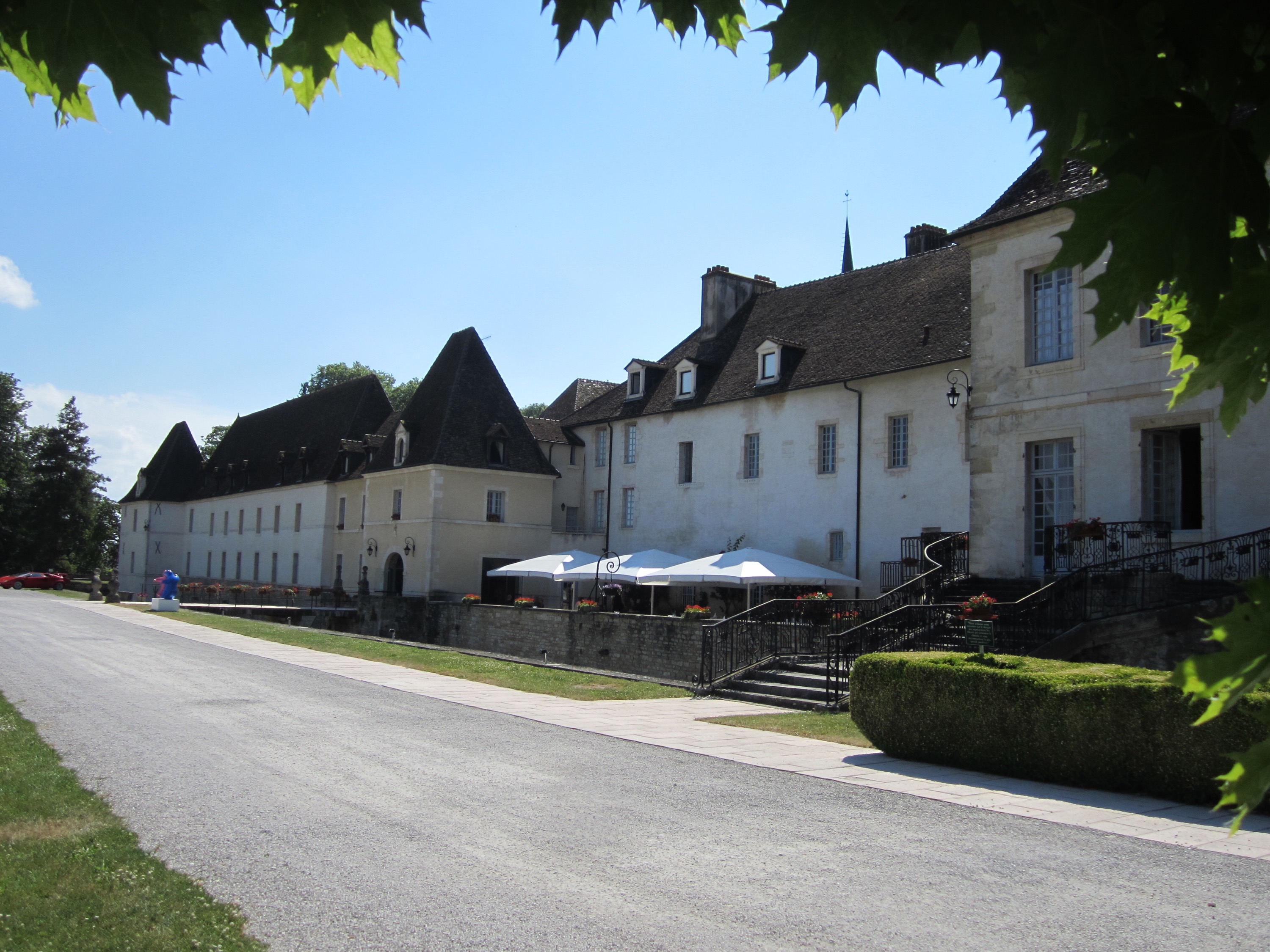
 

Chateau de Gilly


The vandalised facade of Notre dame de Dijon
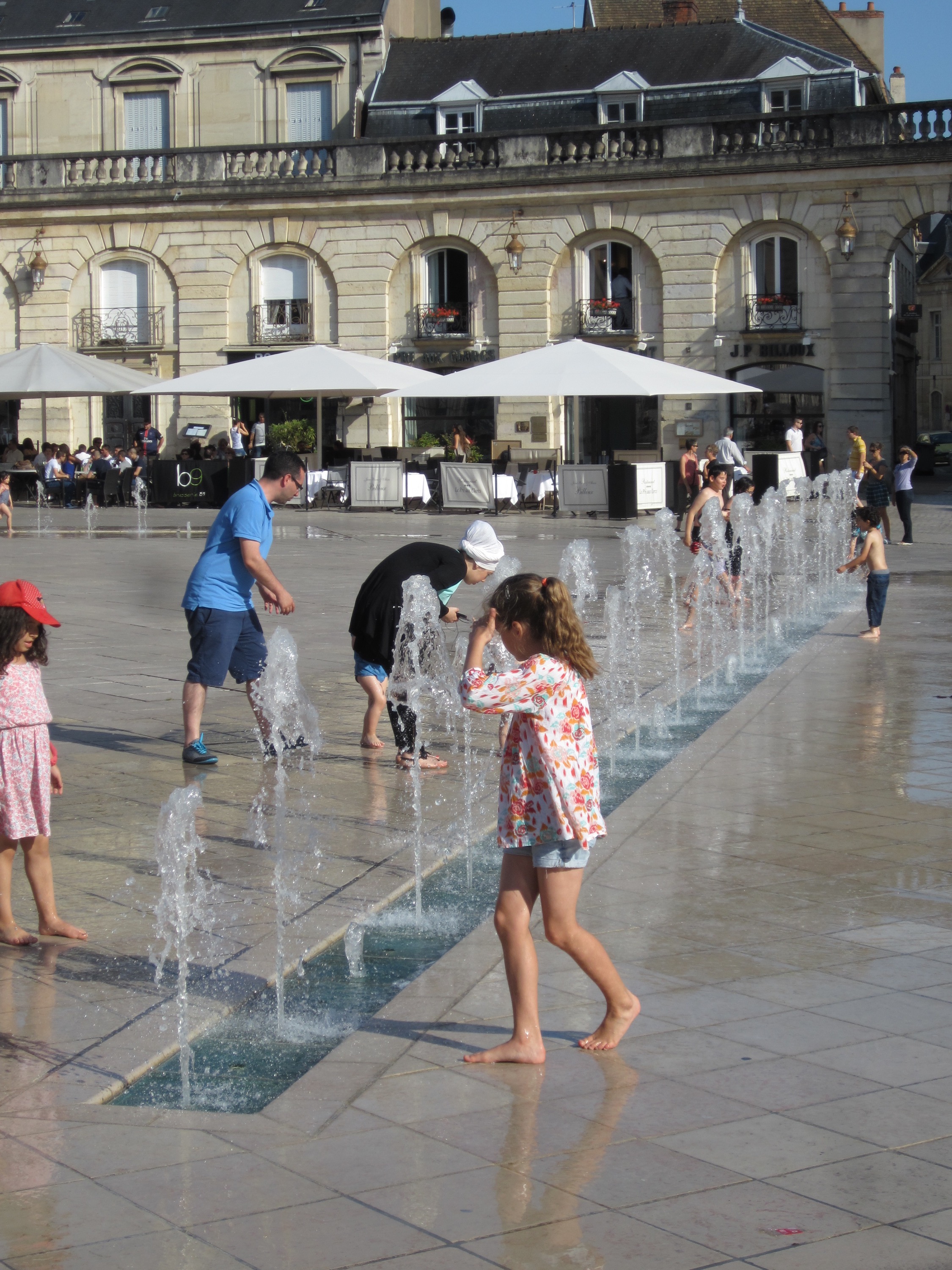
  

Place de La Liberation


Not sure where the naughty children go!


Cathedrale Saint- Etienne at Toul


A stirring message from the General to the people of France


Lyon to Dijon

We have arrived in Dijon and we are taking it easy for a couple of hours.  It is 35 deg, and I am no fan of very hot weather.

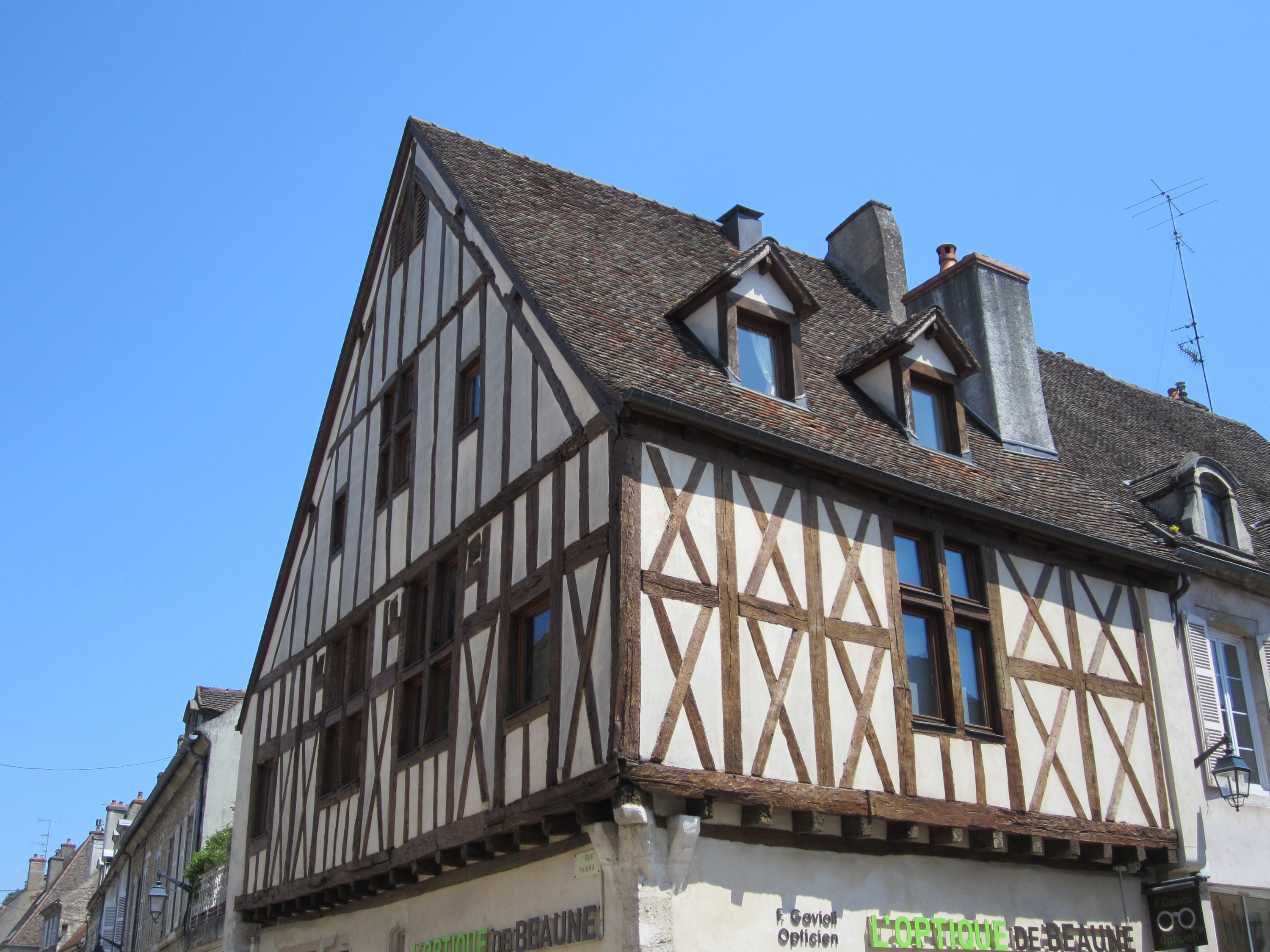
We stopped at Beaune on our way and wished we had more time to spend there.  Famous for wine, there are countless ‘caves’ which we didn’t take advantage of because we had to drive.  We did manage to wander around before and after lunch, and to walk along a section of the ramparts as we returned to the car. It is very pretty.  When we arrived, it was quiet, but as soon as the clock rang for midday, people came from everywhere, in cars and on foot, to have lunch.  In no time, the patisseries had queues and all the outdoor tables of the restaurants were occupied.  It was a gastronomic migration.


Lyon

It was an interesting journey from Aix-en-Provence to Lyon.

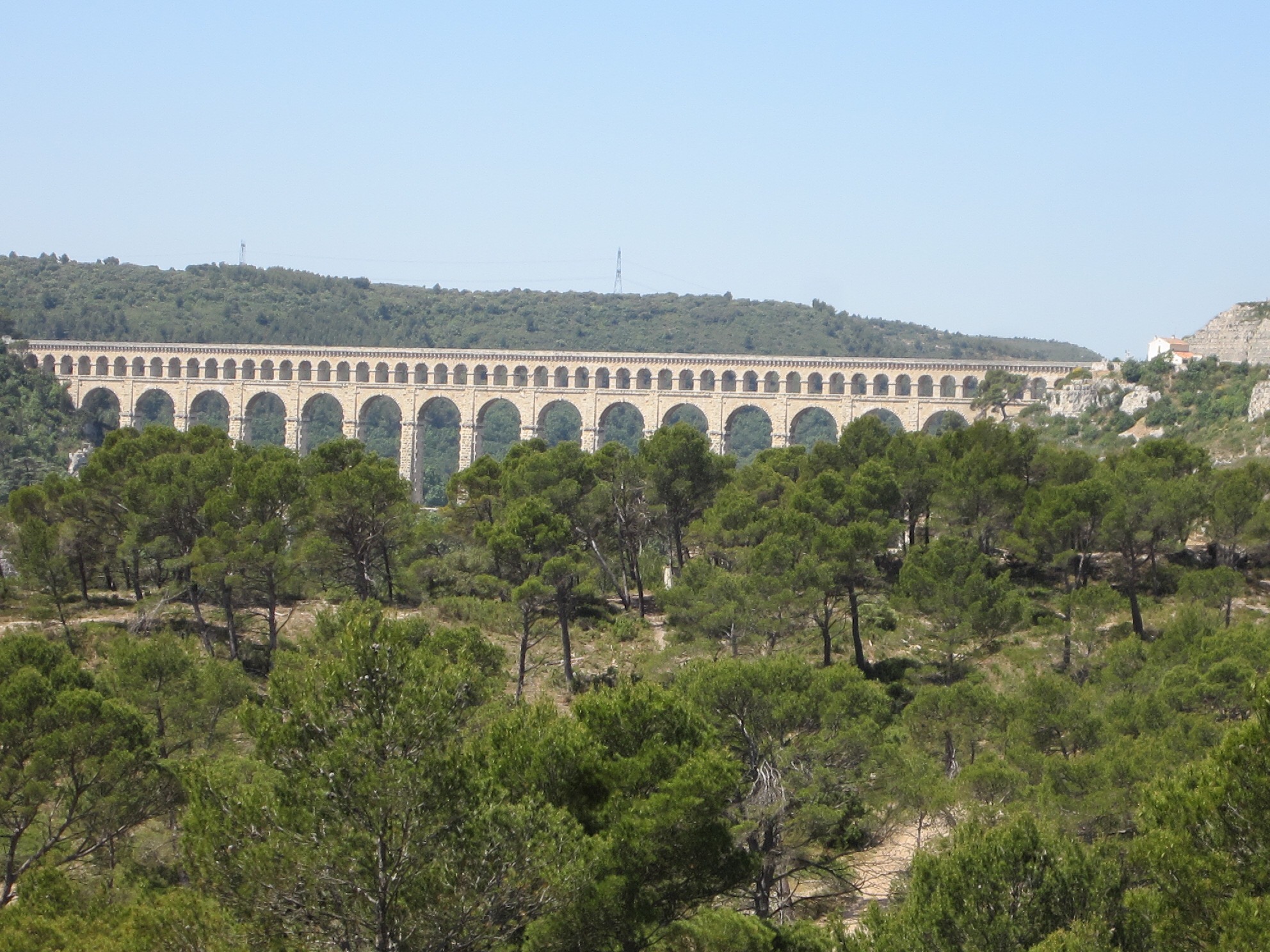
We collected our Avis hire car from the station and a sorry little Renault it was with stained seats and lots of scratches.  We drove first to the tiny village of Ventabren, which was a delightful place to stop for coffee, and then we had a look at the Roquefavour aqueduct – the largest stone aqueduct in the world.  This architectural monument was built between 1841 and 1847 to take water from the Durance to Marseille.

We then asked Dulcie (our GPS) to take us to the small town of Orange, on the way to Lyon, but she, in fact, took us to an Orange office near Marseille.  The wasted hour listening to Dulcie’s excruciating French pronunciation taught us that she needs very precise instructions.  Instead of lunch outdoors  in a pleasant, leafy square, we ate at one of the huge rest stops off the autoroute.  To be fair, they are pretty good.  We continued on our way, travelling at 130 kph and being continually overtaken, when a funny little red sign illuminated on the dashboard.  This was soon followed by a more aggressive red sign that said ‘STOP’ accompanied by a mini siren.  Eek!  Much poring over the Renault manual, entirely in French, determined that one of our tyres was either losing pressure or was severely damaged, and the ‘STOP’ sign means that you must cease driving immediately if you value your life.  Sure enough, one of the front tyres was looking a bit low.  No joy from the Avis ‘ring us if you have a breakdown’ number so Geoff put some air in the tyre and we made it to a parking station in Lyon.  It lost pressure again overnight and we went to the Avis office to see what could done.  I was all prepared to be angry in French and had my ‘incroyables’ and ‘insupportables’ at the ready, only to be greeted by a lovely lady with good English who said “… but, of course, we must change the car” and a lovely young man who brought us a glass of water. We now have a Fiat, in perfect condition, and very comfortable.

The CAR DRAMA took up a lot of time so we didn’t have much time to explore Lyon, a big city located at the confluence of the Saone and the Rhone rivers.  We did take the little funicular railway up to Notre Dame de Fourviere, the interior of which is ornately decorated, and the area around the basilica offers wonderful, sweeping views of Lyon.  Terrific dinner on our last night at La Tassee. 

Roquefavour Aqueduct


Rue de Marroniers restaurant precinct


Cathedrale St Jean


Interior of Notre Dame de Fourviere


Bordeaux

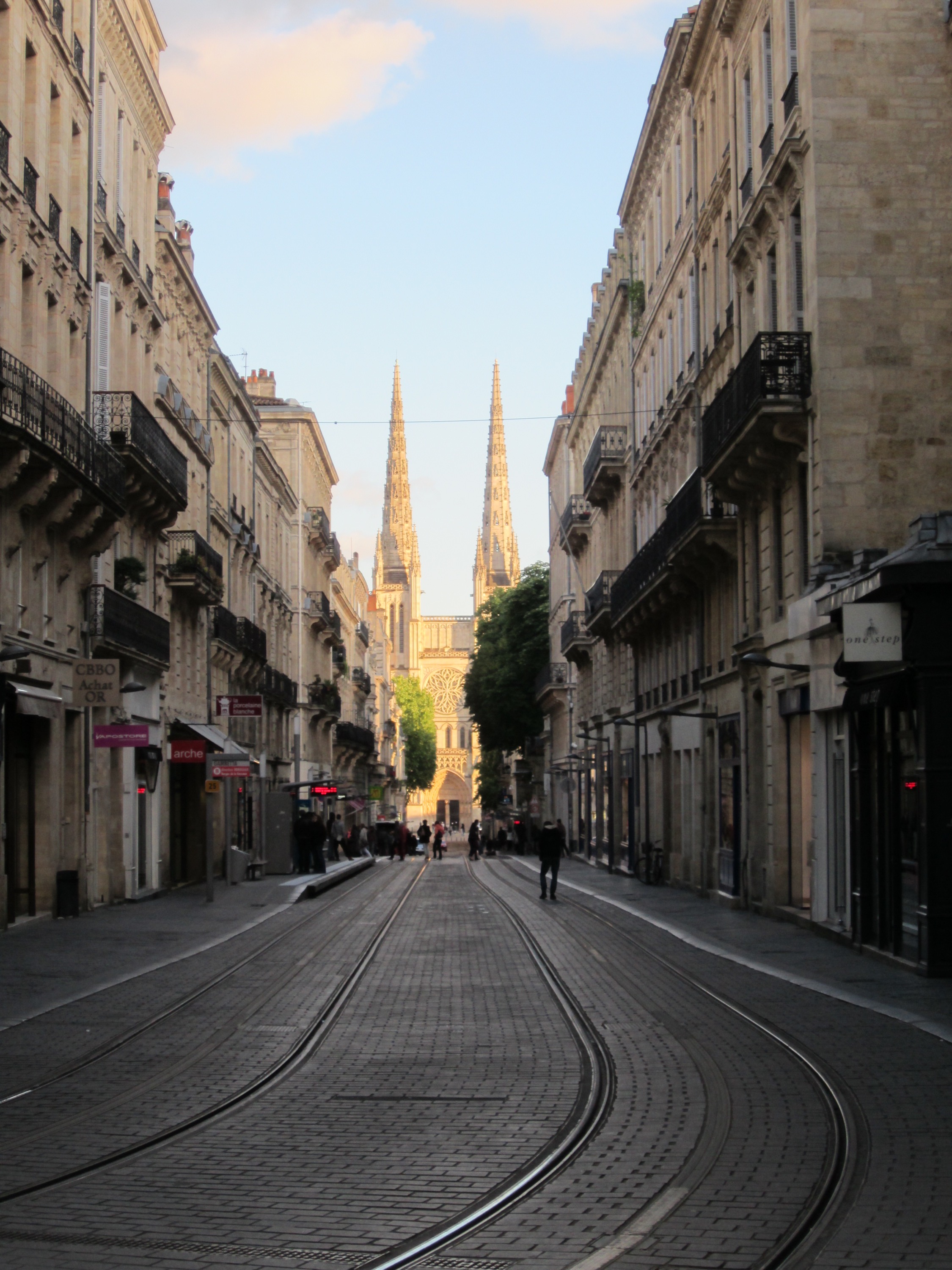
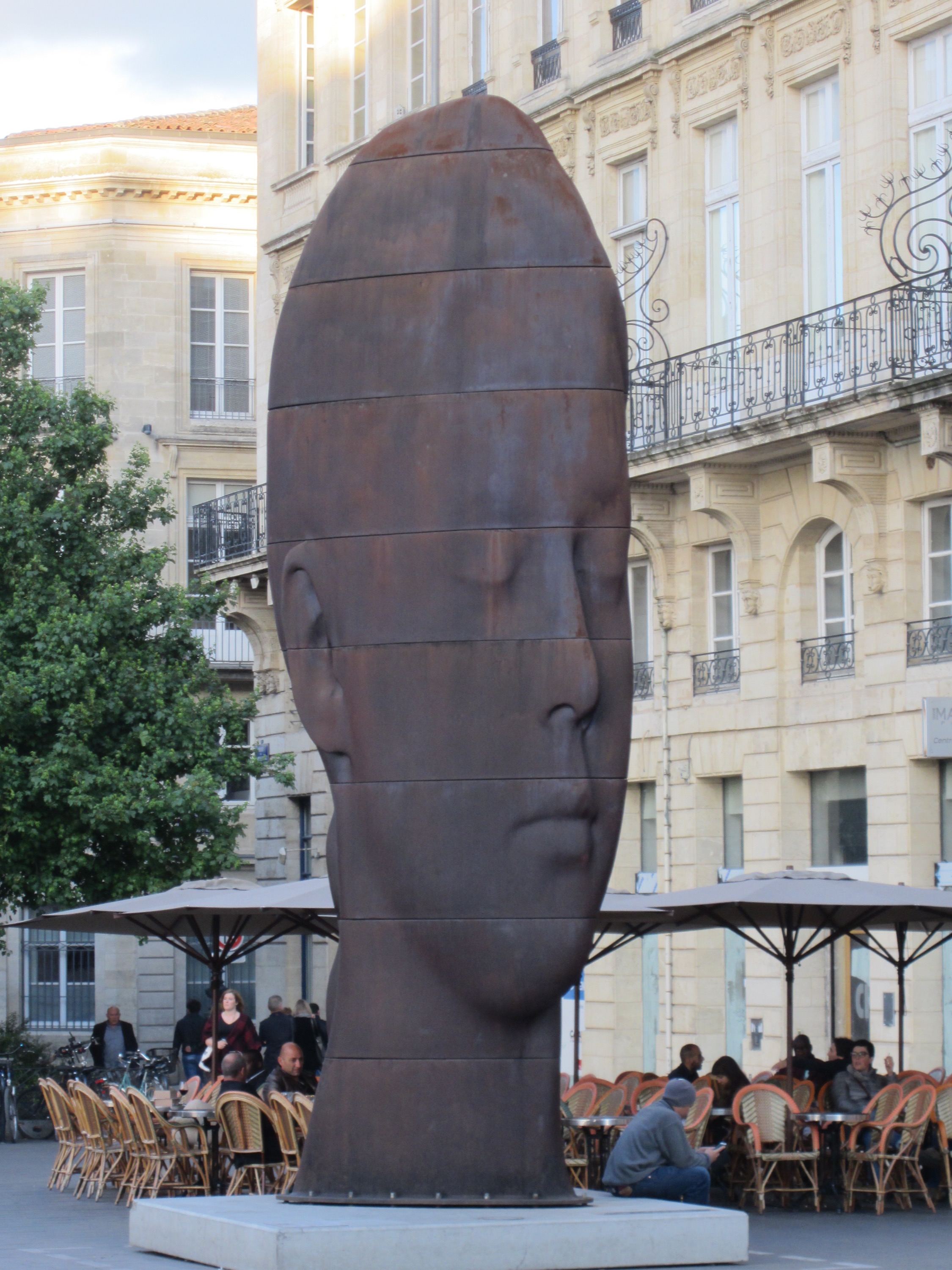
Three nights in Bordeaux was hardly enough. Our hotel was on Place Gambetta, close to the main shopping street, Rue Sainte Catherine. This proved to be rather dangerous. There are a lot of shops selling adorable children’s clothes – so tempting for newly minted grandparents! I was in Bordeaux in 2012 doing a language course at Alliance Francaise and I stayed with a single lady, Isabelle, whose mother, Any, lived just across the tiny square from her house, which had previously belonged to her grandmother. We spent a day with Any, lunch, coffee etc, being driven around in her little car. That was an experience! I didn’t know elderly French ladies shouted rude words at other drivers. She also, by her own admission, hates red lights and frets and fumes, waiting for the change. Speaking French all day with Any was a good way to kick start my French, given that, when we arrived, I asked the bus driver to take us to war! I blame the jet lag. Bordeaux Is a great place to wander about in and we had some lovely food. We also spent a few hours in the Musee D’Aquitaine, which traces the city forward from prehistoric times.


Enjoying the Musee d’Aquitaine


Aix-en-Provence

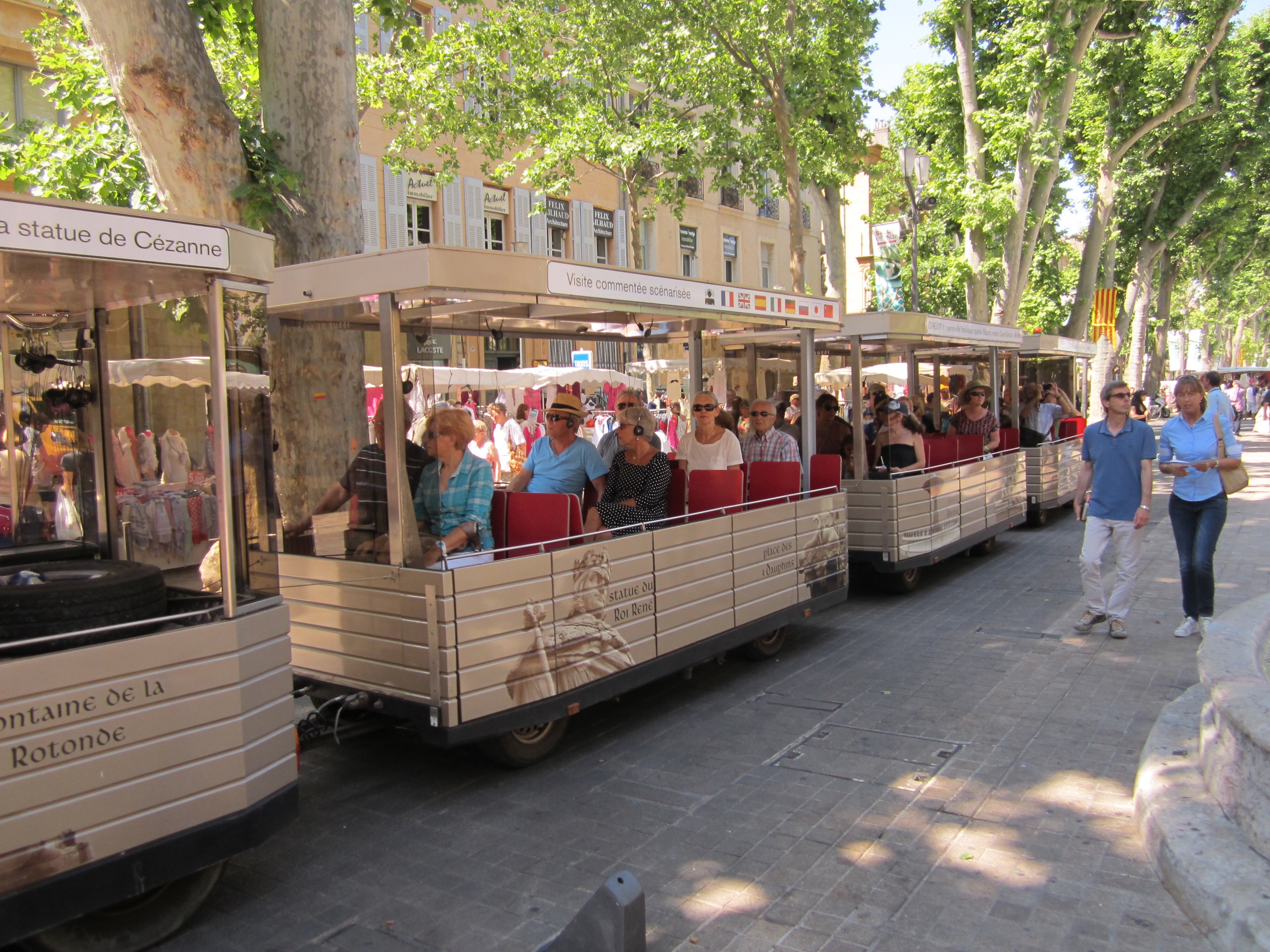
Aix-en-Provence is a  lovely city, very reminiscent of Nice, and it is the home of Cezanne.  Sadly, the Cezanne museum doesn’t open until June 8.  Two other museums we were interested in were also closed so we were forced to abandon more cultural pursuits for shopping!  As a result, we have had to post a box of goodies home to Australia at great expense.  We are resolved not to buy any more ‘stuff’.  We had a really lovely meal in Aix at a little restaurant called ‘Le Petit Verdot’ in Rue Entrecasteaux.  Highly recommend it.  We also took the Petit Train around the city, rather like children going around a shopping centre.  Very bumpy, but good commentary and a good way to get an idea of places you would like to visit.


La Fontaine on Rue de Mirabeau


Le Petit Train


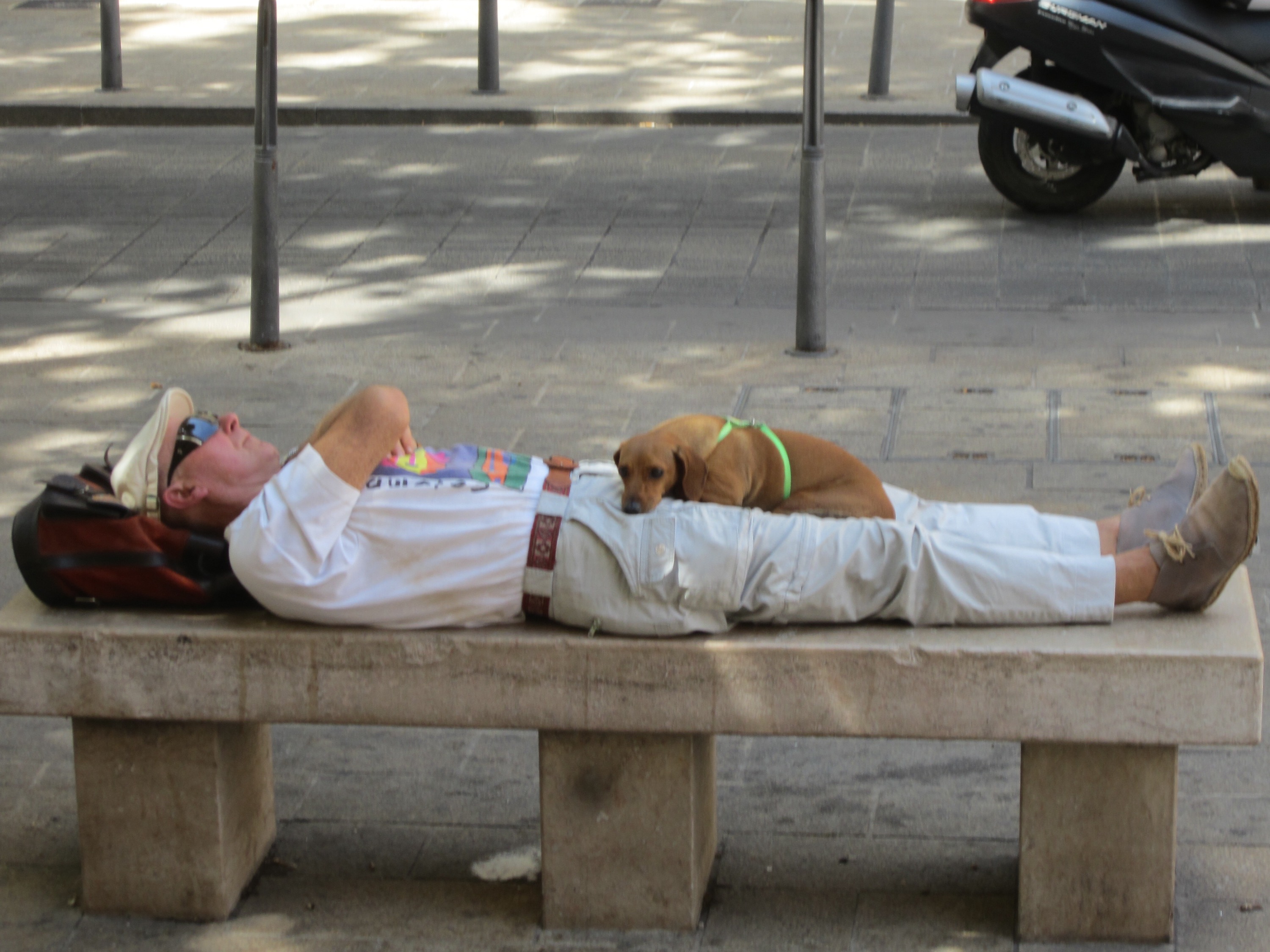
The French REALLY like their dogs


Moi at our hotel which had the smallest shower in the world


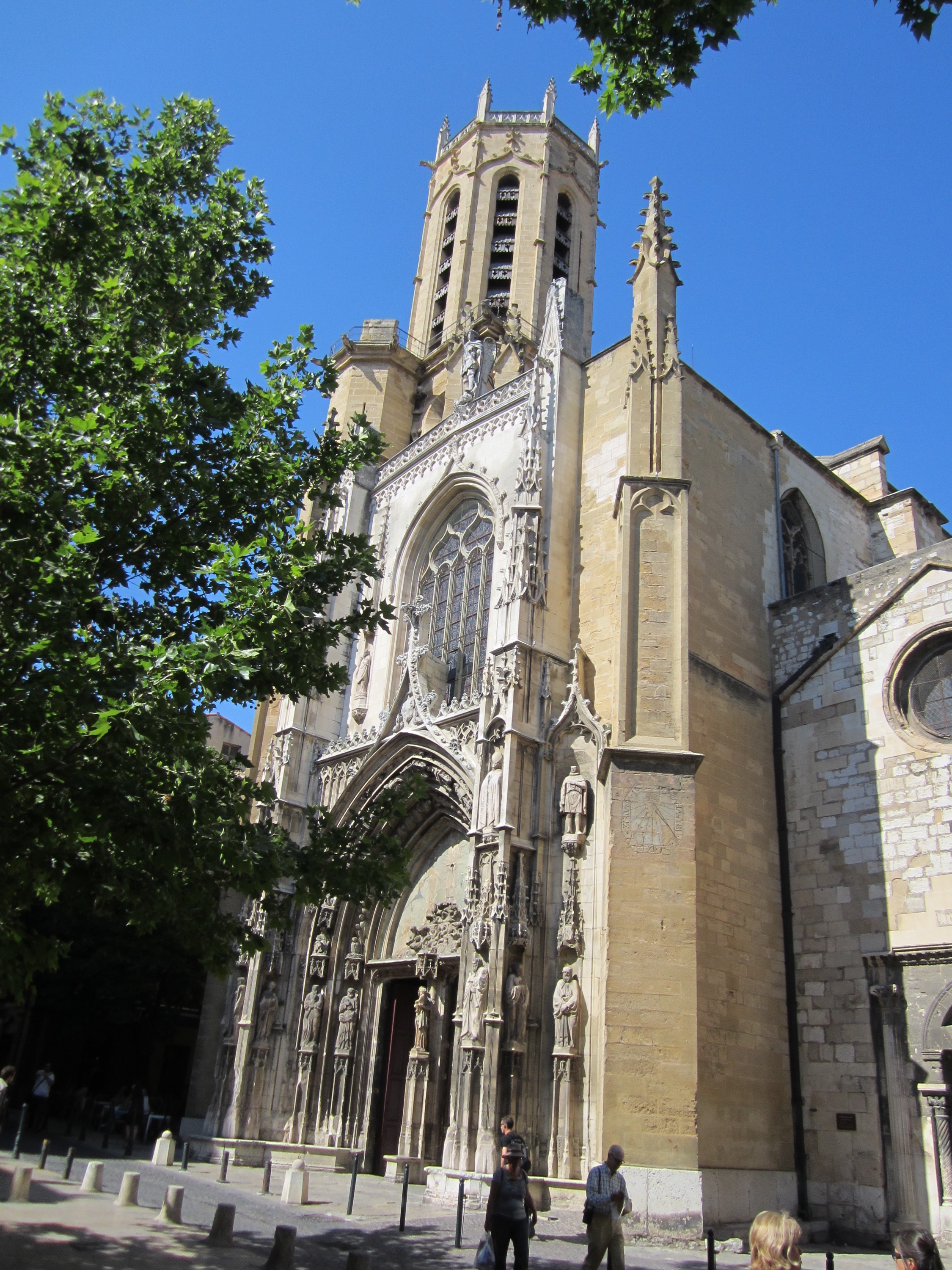
Saint Sauveur


Avignon/Haute Provence

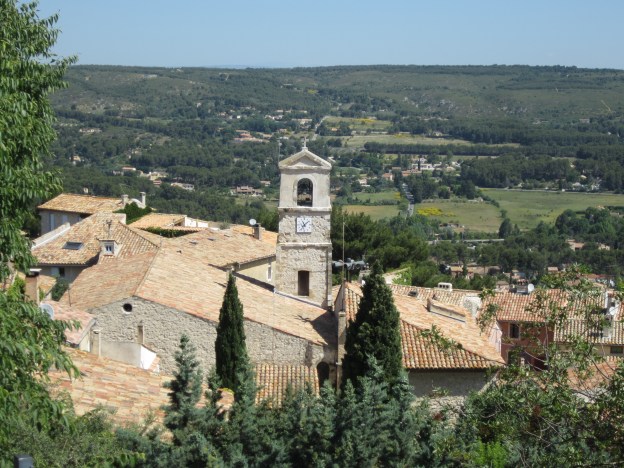
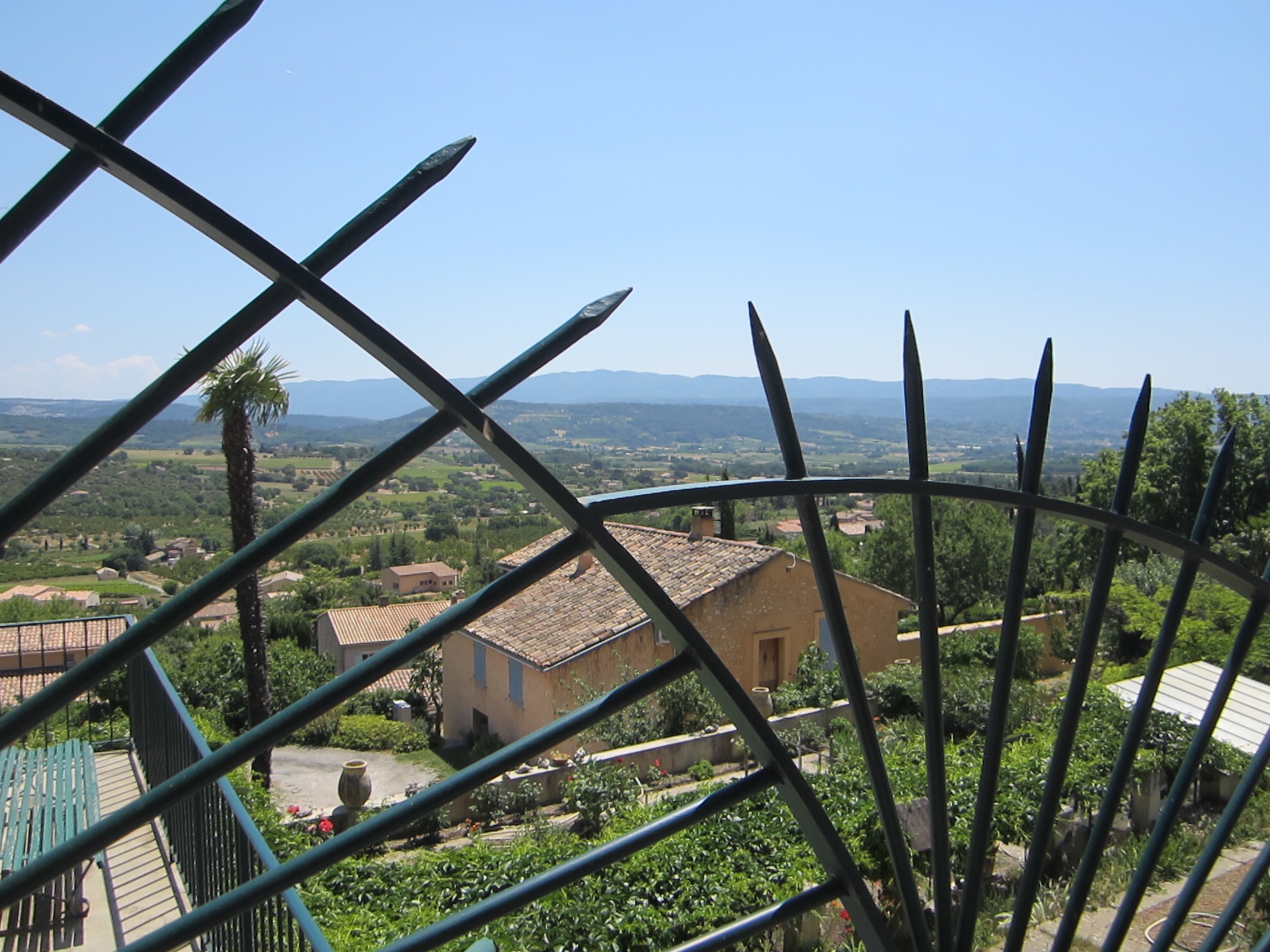
Avignon is only a short train trip from Nimes and we arrived late morning, planning to leave our suitcases in lockers at the station so that we were free for the afternoon. Unfortunately, we discovered that the railway station no longer offers a luggage storage facility (and nor does anywhere else in Avignon) because of plan Vigipirate – the French anti-terrorist security plan. We had to take it in turns to look after the bags and wander around Avignon. Geoff still managed to take some photos and I stocked up on Nespresso pods. Our friends, Lendriani and Nigel, picked us up in their hire car at about 3.30, as planned, and we travelled to a beautiful house nestled into the countryside near the tiny village of Banon. It is hard to imagine a more beautiful place. Glorious views, the twittering of little birds the only sound to be heard and perfect weather. I may never leave.  
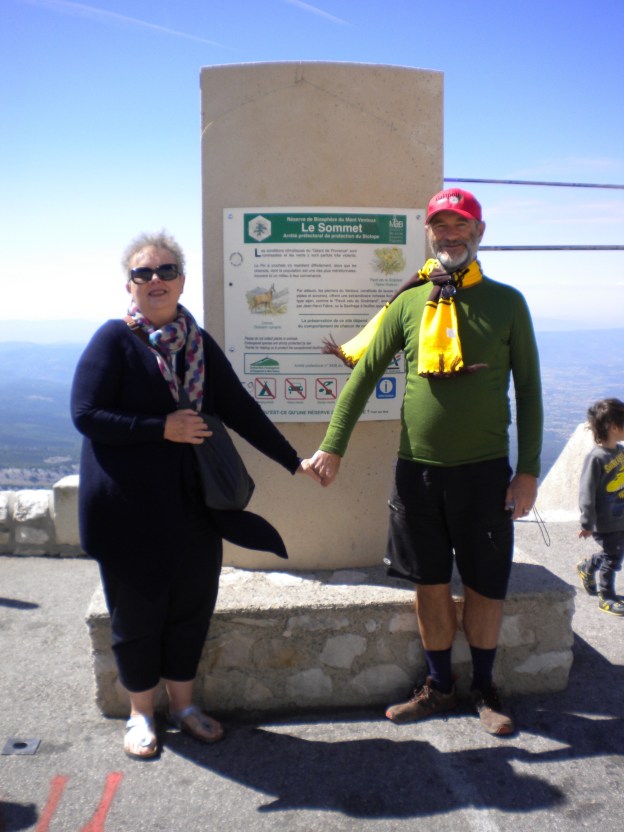
Thursday we went to Banon, and paid the obligatory visit to Le Bleuet (Cornflower) bookshop, just in case my suitcase wasn’t already heavy enough. We also shopped for food in Sault, always an enjoyable experience. There is nothing more satisfying than walking out of a shop with a French baguette or two, and something sweet, just for a treat! On Friday, Nigel, who is a keen, and very fit cyclist, made his fifth ascent of Mont Ventoux, the mountain we can see from here, which quite often forms part of the route of the Tour de France. M Ventoux is 1912m and it is a punishing ride, which makes it all the more surprising that so many cyclists are keen to do it. The rest of us travelled up the mountain by car and were there to cheer Nigel on over the last few kilometres, and greet him at the summit. The ride from ‘home’ took about 3 1/2 hours, and then he rode back. Ironman!

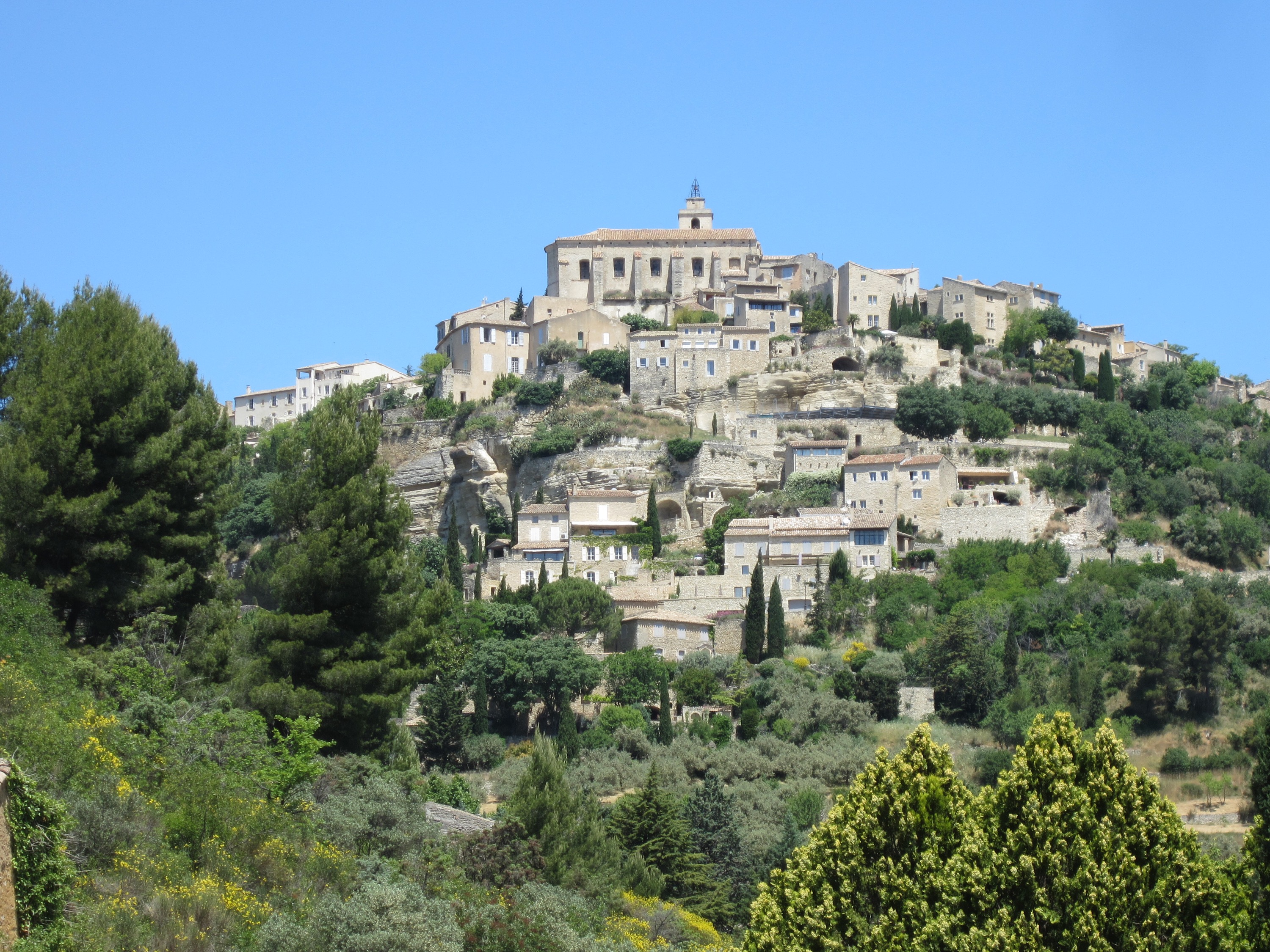
Yesterday, we visited the hilltop village of Gordes, in the Vaucluse Hills, overlooking the Uberon. These strategic places on rocks and hills were populated by folk seeking refuge from invaders during the Middle Ages (10th. century), and are very picturesque. It is delightful to roam the steep, narrow streets and stone stairways knowing that, around the next corner, there will be a cafe or bar offering a reviving wine or coffee. The rich architectural and cultural heritage of Gordes make it one of Provence’s leading attractions so we took care to arrive early. By the time we had left, a number of tour buses had arrived so I hate to imagine what it would be like in summer. For us, it was perfect.

Our 5-day sojourn in this house has been wonderful and we have had some great food, eaten out and at home. Asparagus, cherries and strawberries are all in season and they are absolutely delicious. The only drawback is that the region is famous for its chèvre and if there is one French thing I cannot take to, it is goat’s cheese, although I have truly tried to like it. Of course, it features on every menu, and I would as soon eat a cow pat!

We have done a bit of shopping and the suitcases are already bulging.

Off to Aix-en-Provence tomorrow, for a couple of nights and then we will pick up a hire car and travel north.

If you are wondering what has happened to the blog, Geoff had the iPad while I was in Foix and here at the house, we have been unable to connect to the WiFi. I am just typing up notes and hoping that I will be able to copy them into the WordPress.


Mont Ventoux


Iron Man


View from our window


Gordes


Nimes

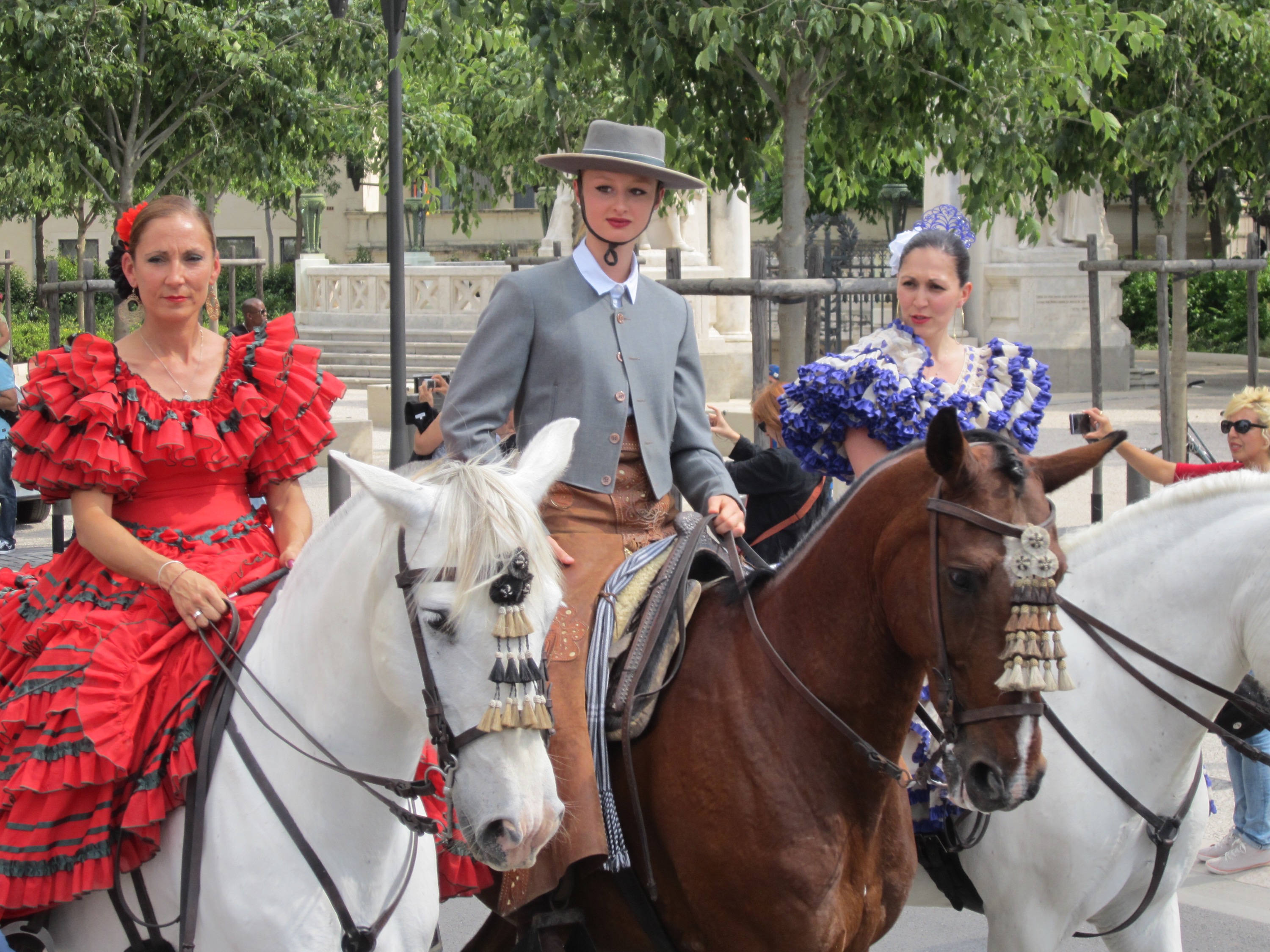
From Carcassonne we travelled by train to Nimes where we spent three night. Our hotel was well out of town, which I vaguely remembered from when I made the booking because there wasn’t much accommodation available. We soon discovered why. It was a long weekend in France (Pentecost) and the annual Spanish Festival was in full swing. 

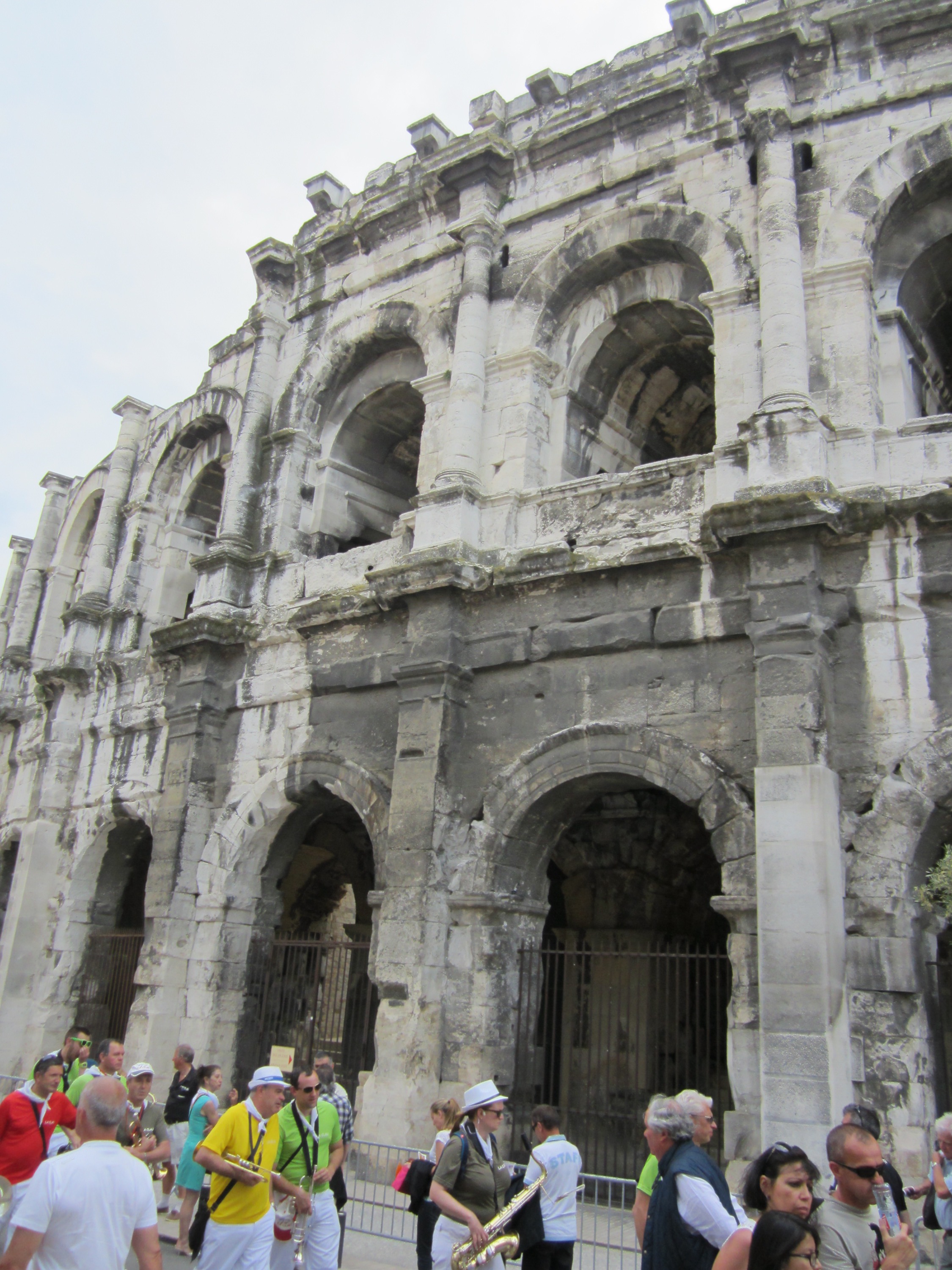
Nimes is 2000 yrs old – the founding of the city goes back to the sixth century BC. The Nimes amphitheater (Les Arenes) is one of the best preserved in the Roman world and continues to be used as a venue for conferences, sporting events, concerts and bullfights! There were bullfights held over the long weekend and I would have loved to have gone if only it didn’t involve watching a poor creature being tortured and killed. The amphitheatre was built at the end of the first century to accommodate 20,000 spectators who would have watched hunting and fighting spectacles featuring animals and gladiators.

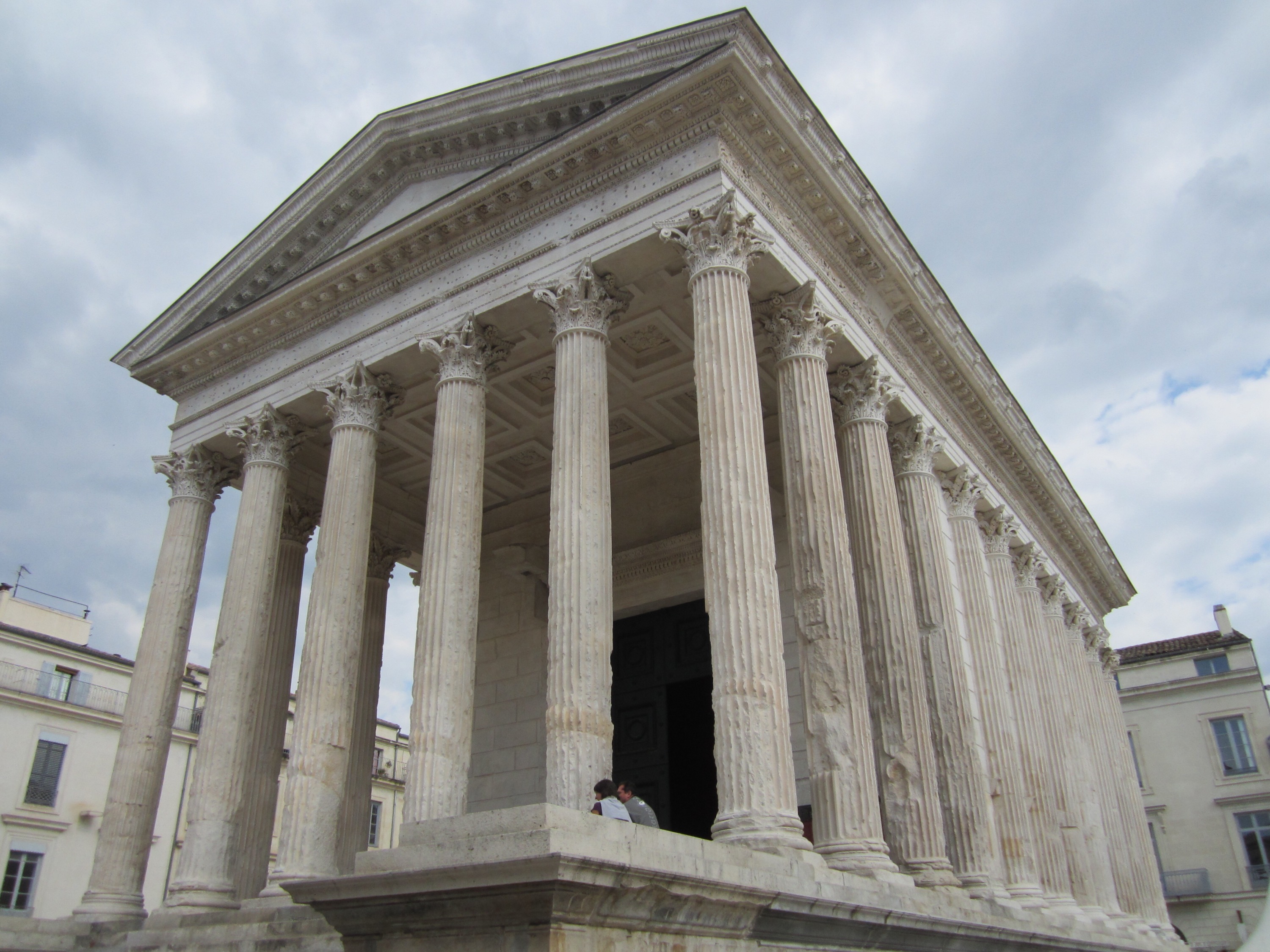
We visited La Maison Carre (square house), also first century, and Le Temple de Diane, one of the more romantic and enigmatic monuments of Nimes, which was associated with the imperial temple. The highlight of our French journey, so far, was a day spent at the Pont du Gard, the spectacular vestige of a Roman aqueduct which wound through the hills of the Uzege to bring water to Nimes, for five centuries. This magnificent structure was the tallest aqueduct in the Roman world and was built in only five years. It spans the River Gardon and there are places to swim and walk, restaurants and a museum and information centre. It is a great place to spend a relaxing day. 

Spanish Festival


La Maison Carre


Pont du Gard


Les Arenes

 The constant backdrop to our wanderings around Nimes was the Spanish festival – crowds of people, French and Spanish, music, horses, Flamenco and paella. It was hectic and very colourful.

Carcassonne

From Foix I travelled to Carcassone to meet Geoff and we had time to explore the Chateau and ramparts of the city. The site has been inhabited from ancient times and occupied by Visigoth, Saracen and Frankish assailants in their turn. Until the signature of the Treaty of the Pyrenees in 1659, Carcassonne was used to protect the border between France and Aragon. In the 19th century, the city was restored to its medieval appearance and was listed as a UNESCO World Heritage Site in 1997. It was certainly built to last. This is the season of the mistral, and the wind was howling and swirling around us as we walked along the parapet. It is a marvellous place to visit and we had an excellent dinner in the medieval city, to cap off a lovely day. Our hotel room overlooked the Canal Midi and the view made a boating holiday seem very appealing until we realised how much time and effort is involved in going through the many locks.   
Canal Midi


Carcassonne


Lots of steps!


View from the ramparts

 Not really a holiday at all!

Language School, FOIX

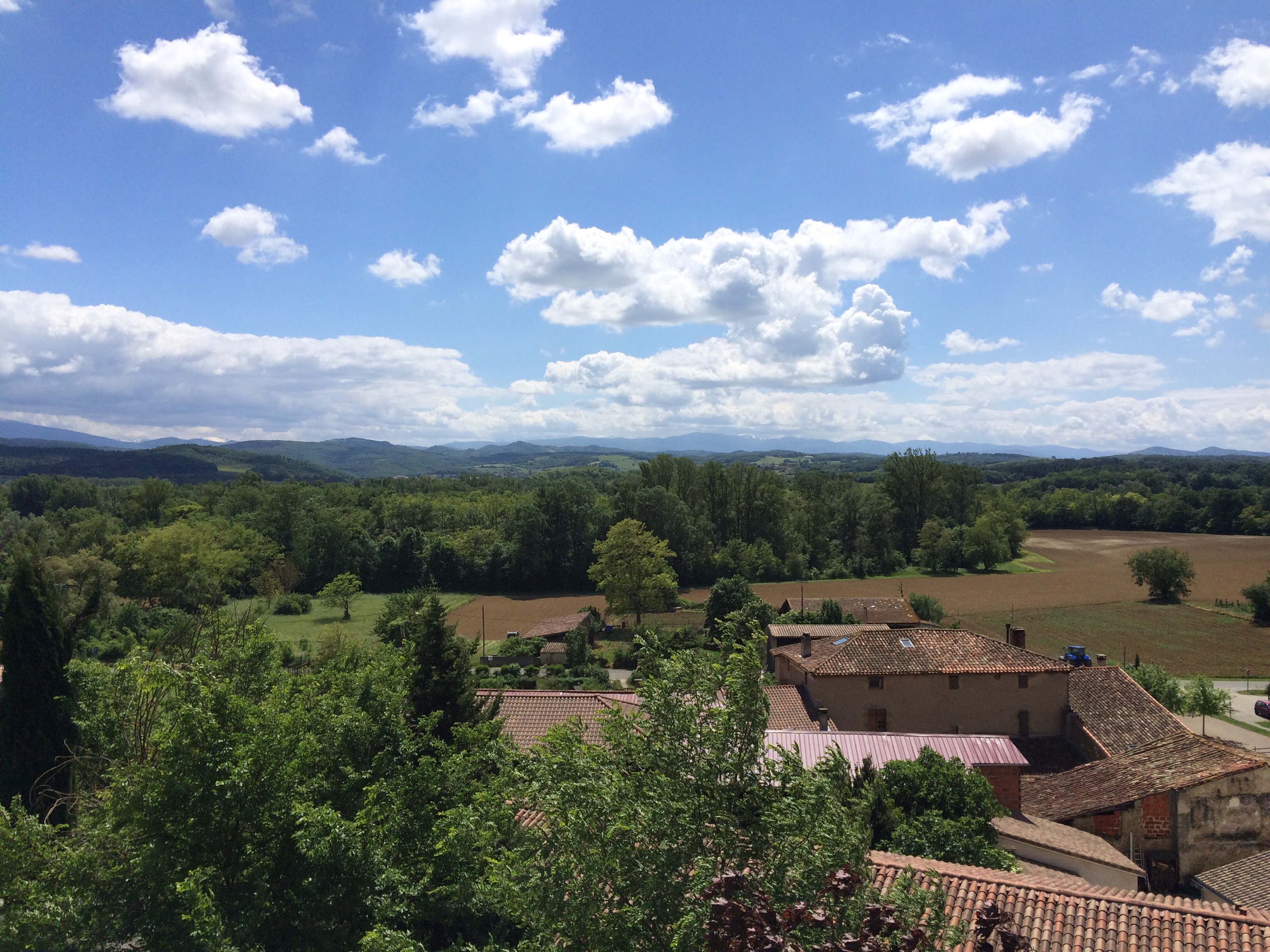
Sunday May 17, Geoff and I separated (temporarily) and he headed off to Montpellier to join his bike tour and I caught a couple of trains to Foix, to the Valorme Language School which is located in Rue de Chapeliers, right beside L’Eglise Saint-Volusien. Foix is a little medieval town, one hour from Toulouse, in the foothills of the Pyrenees. It is situated on the Ariege River, flanked by steep, forested escarpments and, beyond them, the Pyrenees and Andorra and Spain. It is a very popular destination for hikers and hang gliders.  
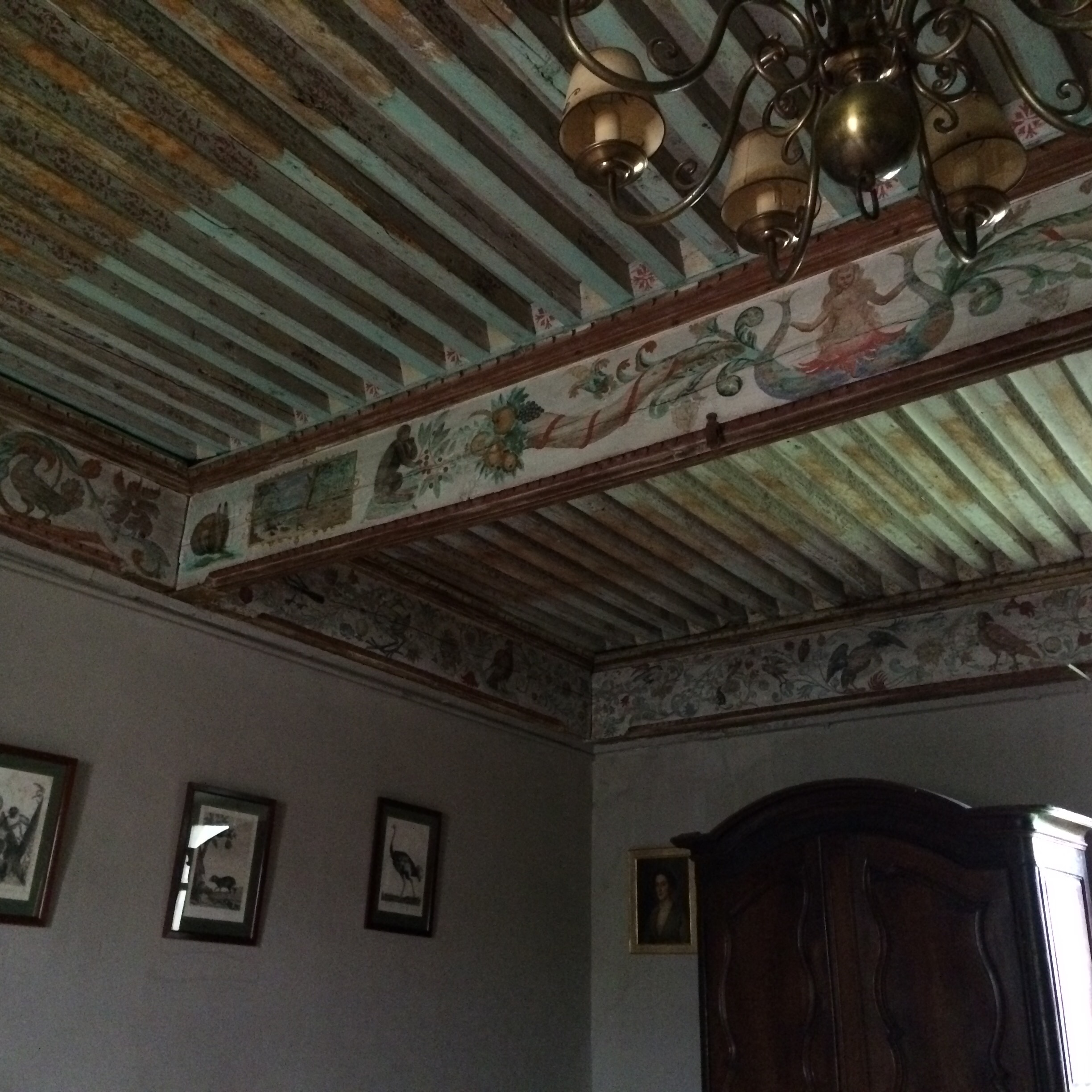
We had language classes from 9 – 12 and we then lunched at one of the many local restaurants and went out somewhere in the afternoon so there was no let-up – only French spoken for the whole day. Funnily enough, in the evenings when we had free time, apart from homework, we still tended to converse in French. There were three other students – another two women from Melbourne (what are the odds!) and a man who is in the United States Army. It was a lot of fun and we all made good progress. Our afternoon excursions included an especially arranged visit to the Chateau de Fiches which I loved. The chateau is ancient but the first records date from the 15th century. It is famous for two reasons, one of which is the extraordinary collection of mostly wild plants from the region, gathered, preserved and catalogued by the naturalist, Jean Joseph Adrien Fauree de Fiches. Re-cataloguing the collection, using modern methods, has been a major enterprise. The 200- yr-old specimens still retain brilliant colours thanks to the perfect storage environment of dark cupboards within the thick walls of the chateau. The chateau’s second claim to fame is the Bestiere which dates from the 17th century. This is the name given to the paintings of animals and birds which decorate the ceiling of the main reception room. More paintings are being discovered as other rooms have false walls and ceilings removed.   

Chateau de Fiches


Bestiere at Chateau de Fiches


Snow-capped mountains seen from Vals


Graves in French cemetries are often decorated with china flower arrangements


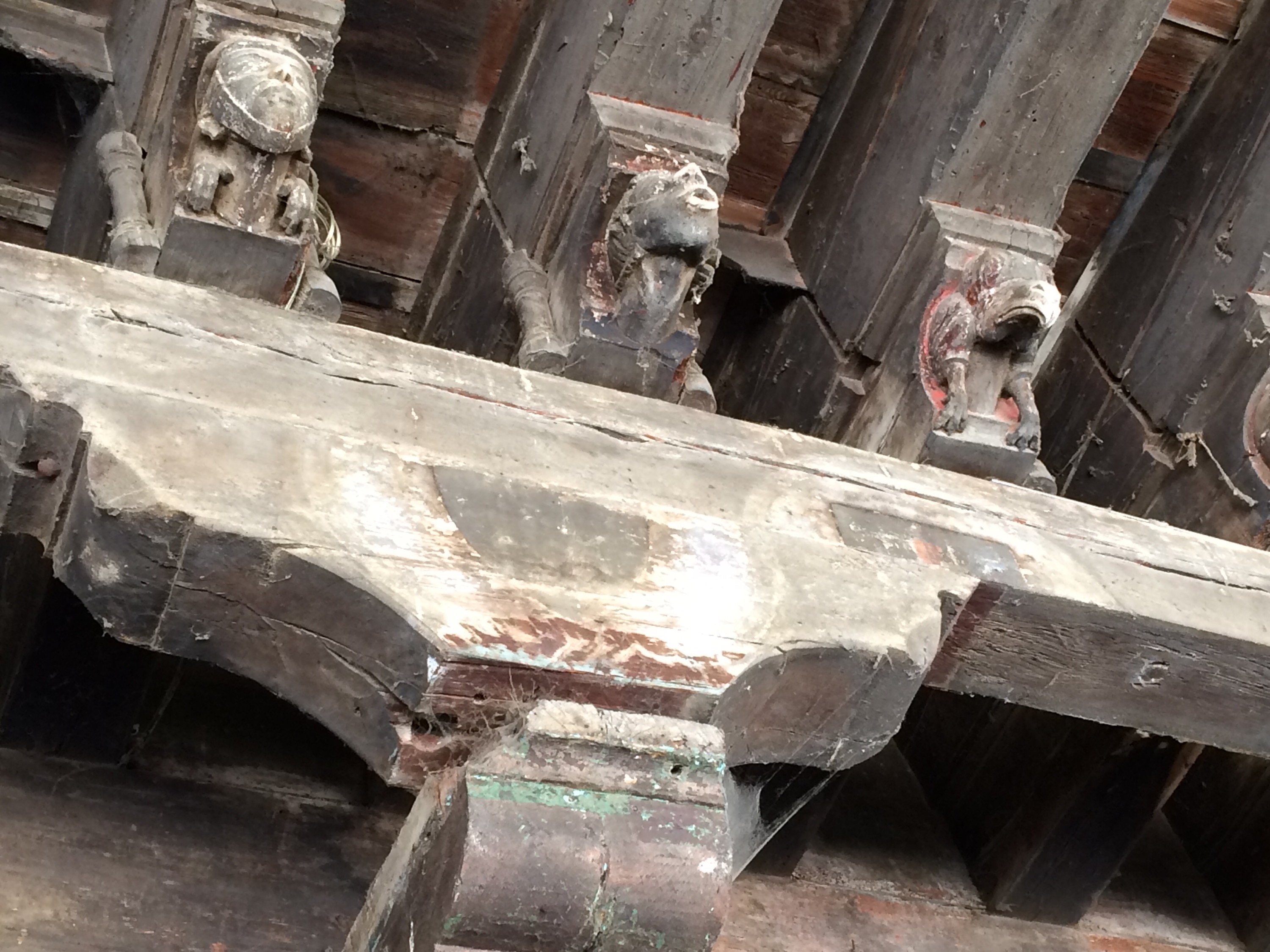
Ancient wood carvings in Mirepoix

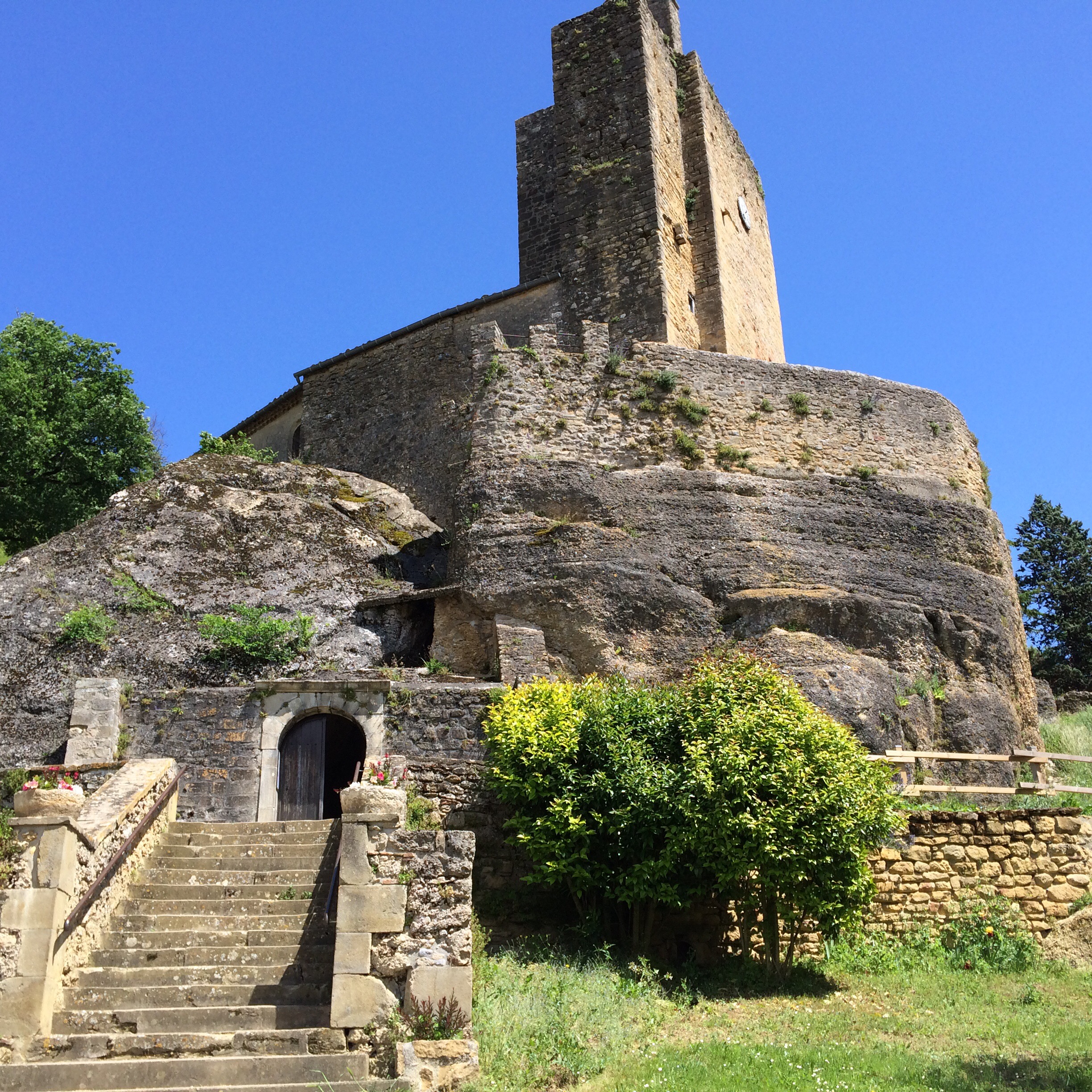
 We also visited the ancient market town of Mirepoix and the Eglise Semi-Rupestre et Site Archeologique de Vals. The latter is a remarkable church, built over centuries, incorporating two mighty rocks into its foundations. From the window of my small apartment I had a wonderful view of the Chateau de Foix and I measured my day by the great chiming clock of the cathedral. It was a terrific experience.