Category Archives: Wildflower Safari 2014

Jen & Geoff’s 3 month caravan trip to Western Australia

Shark Bay (Denham), Shell Beach, Kalbarri

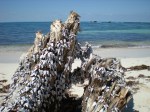
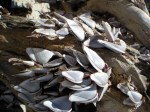
Shell Beach

Shell Beach

Jelly Fish at Shell Beach

Jelly Fish at Shell Beach

We stopped at Shell Beach on our way to Kalbarri.  The same hyper saline waters that allow the Stromatolites to grow in Hamelin Pool, also provide the right environment for other unique creatures like the Coquina Shell.  Trillions of tiny shells have accumulated up to 10m deep and 1 km wide forming a beach made of glaringly- white shells, stretching 120 km in the L’Haridon Bight.  By contrast, the water is crystal-clear and of the most intense greens and blues.

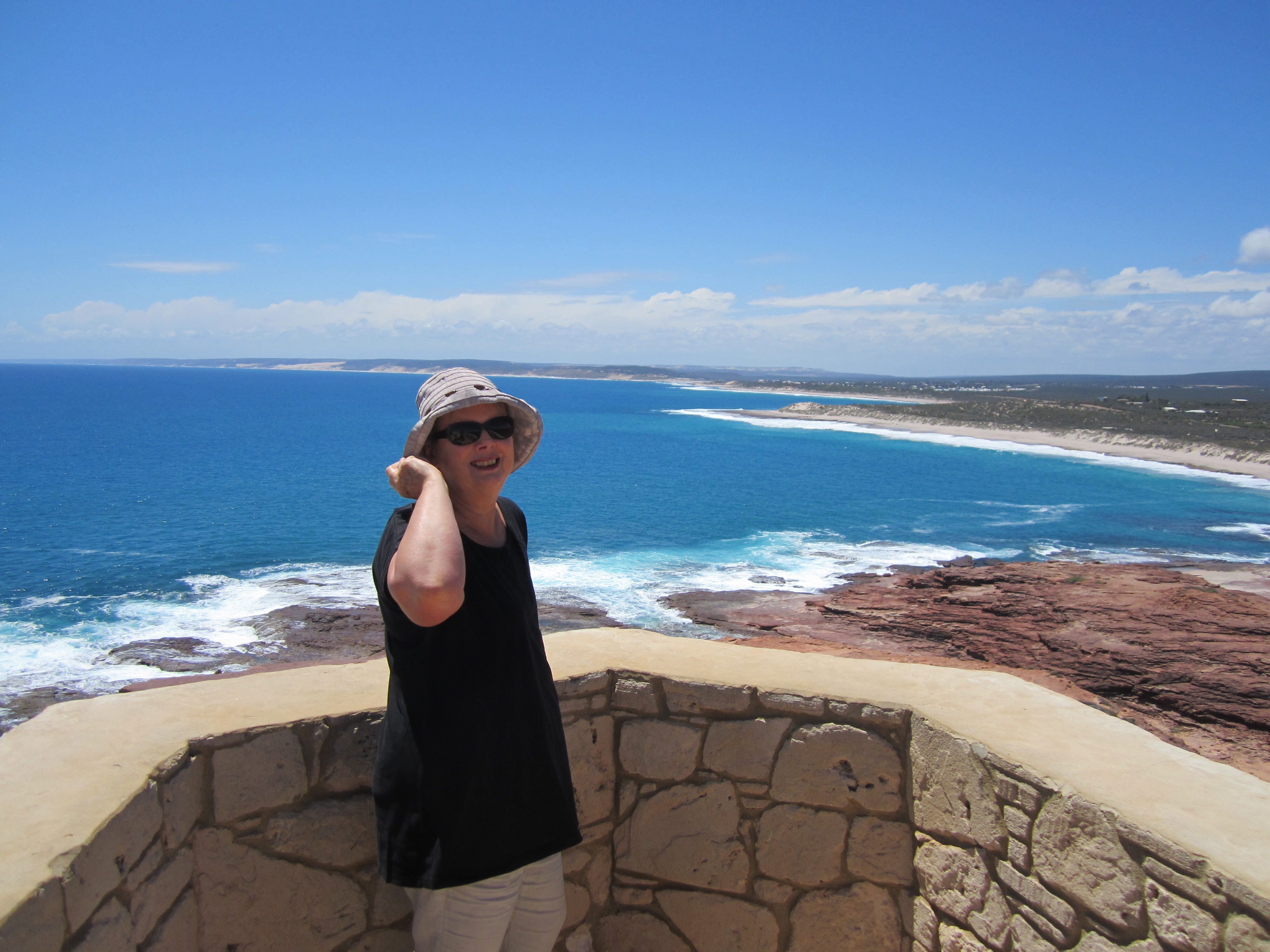
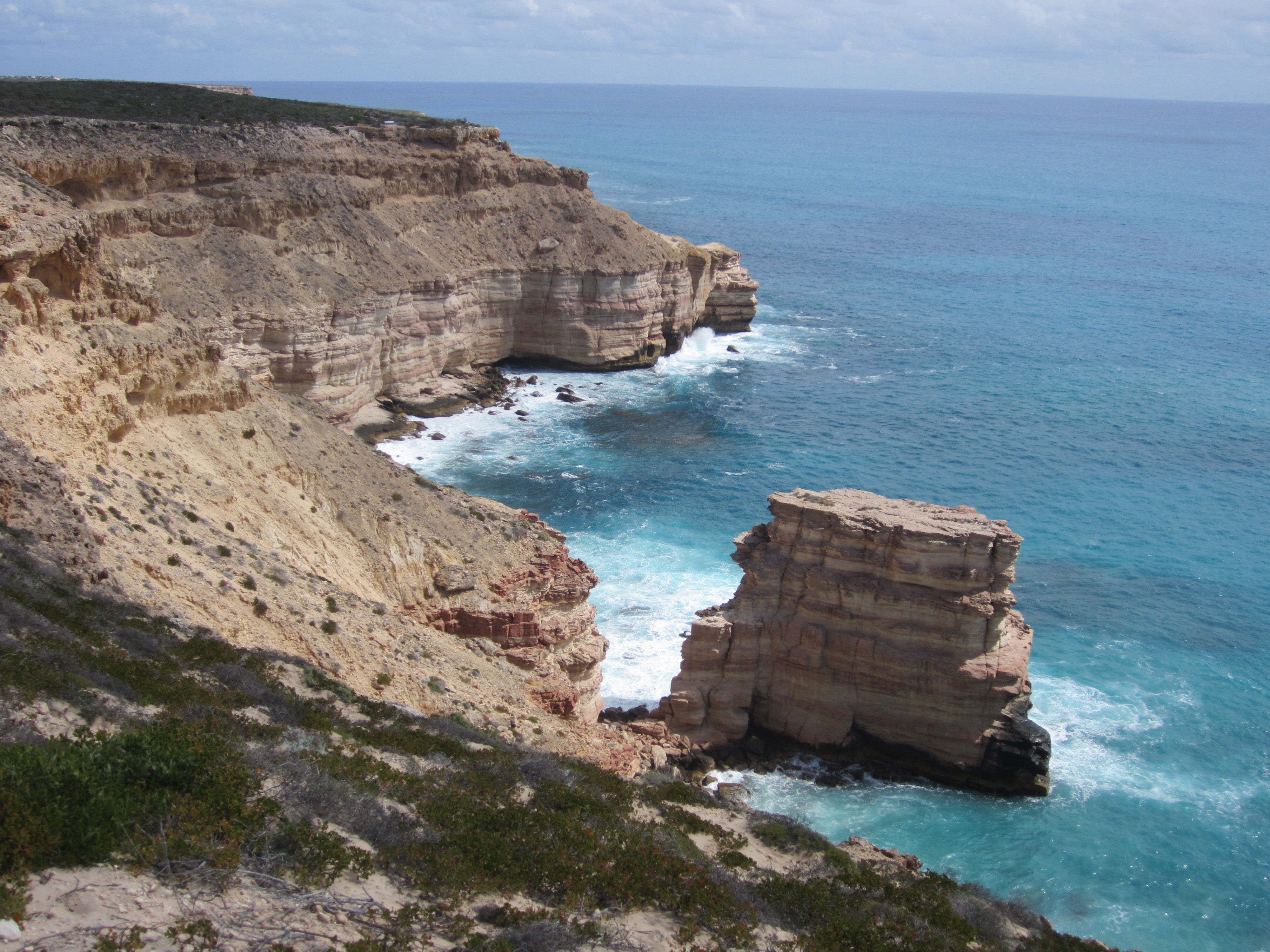
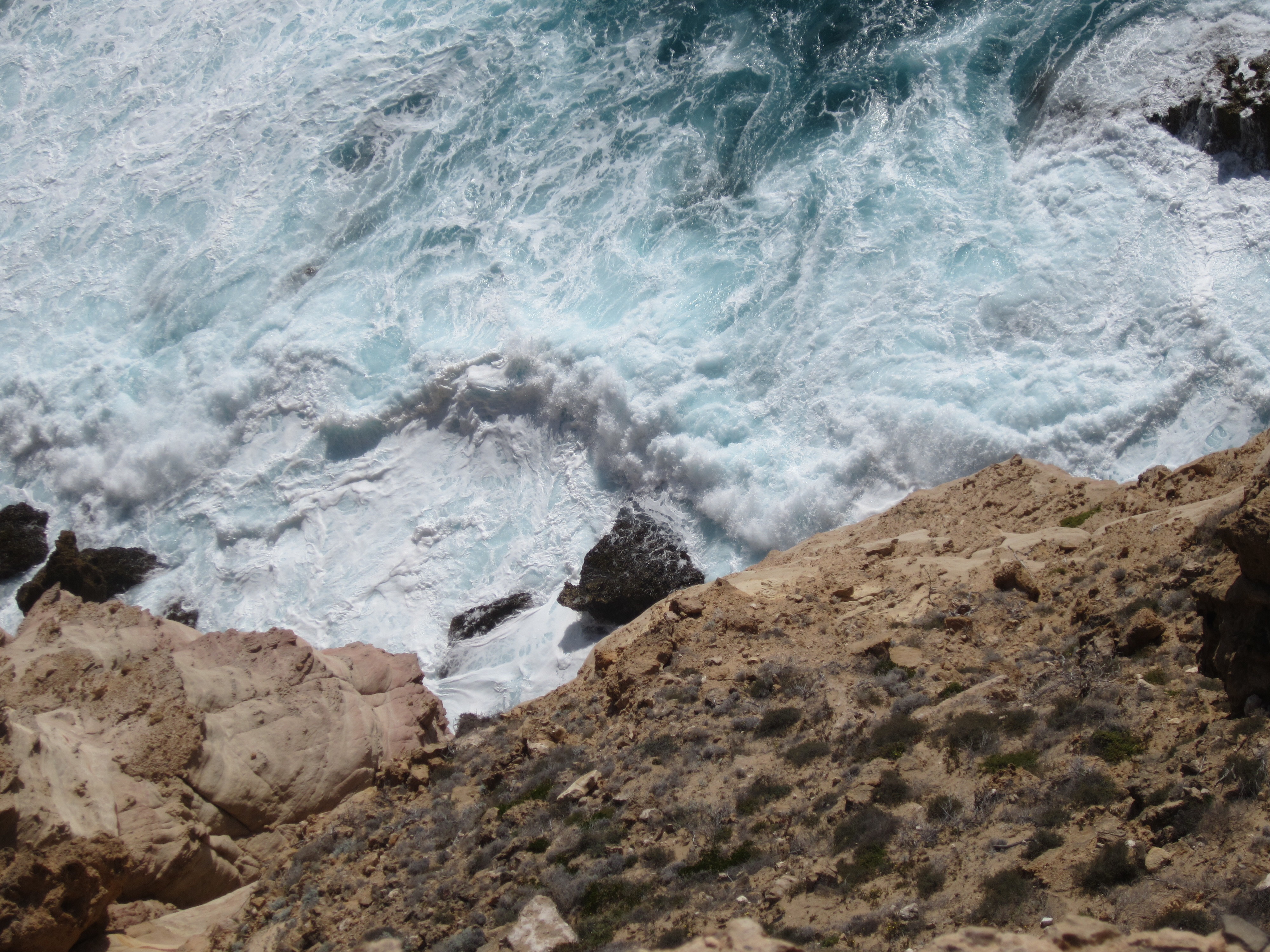
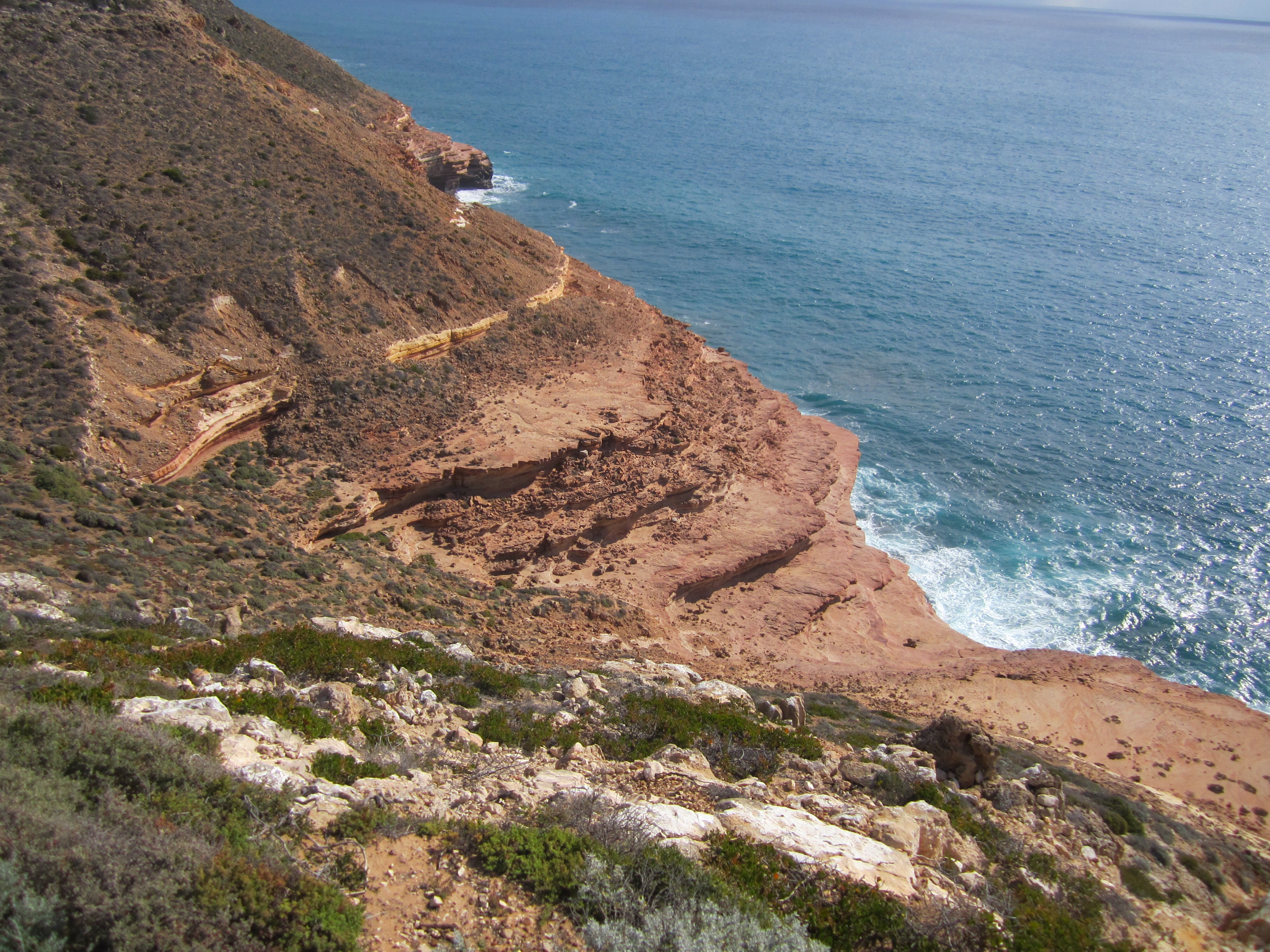
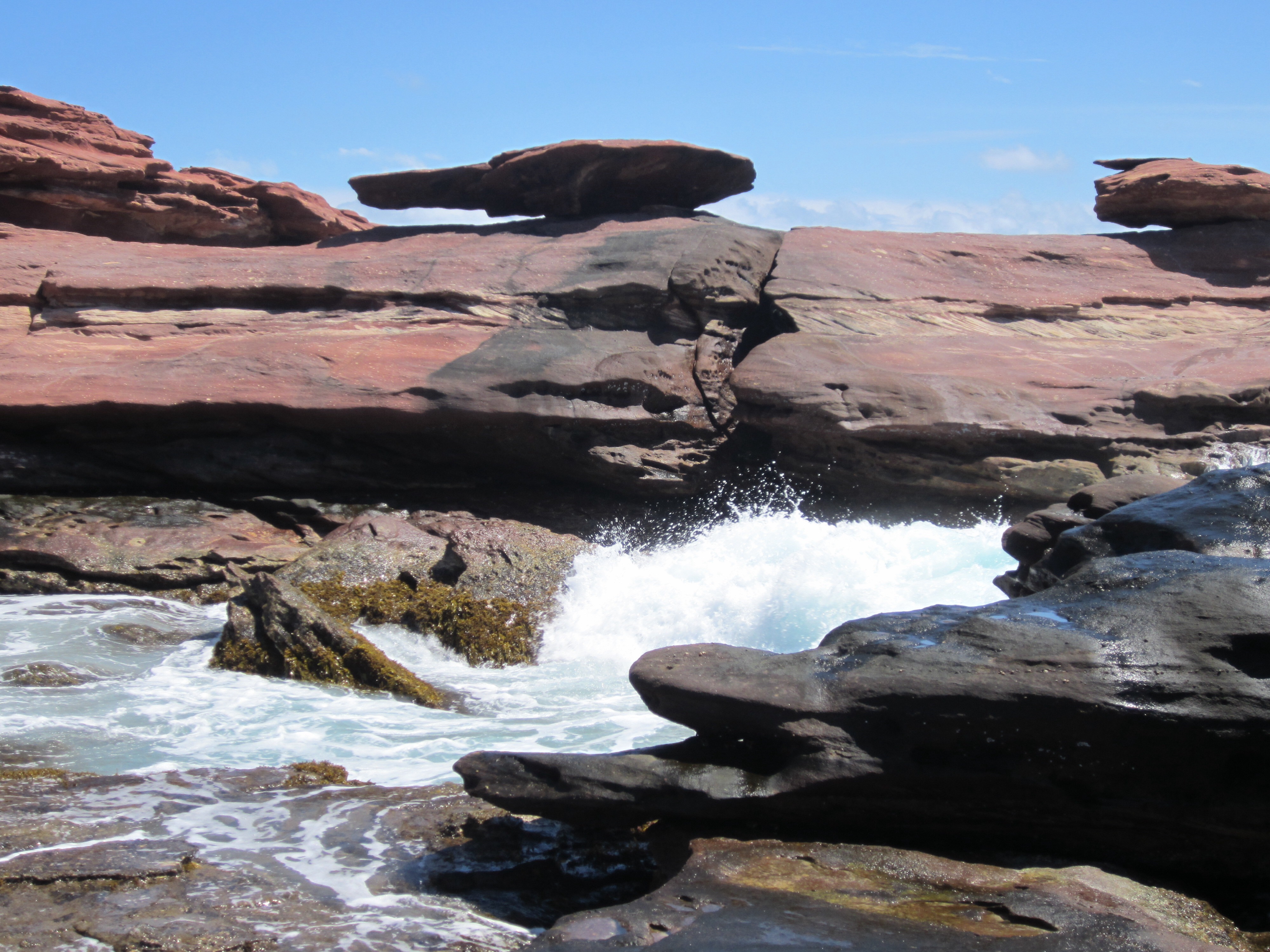
We are enjoying Kalbarri and have spent the afternoon walking the red cliffs along the coast to the south.  the Natural Bridge resembles the London Bridge in Vic., now collapsed, and, in fact, a lot of the coastline is reminiscent of the Great Ocean Road.  Here, there is a great, sealed path along the cliff tops with lookouts at various vantage points.  It is wonderful to watch the great waves crashing in and the foam boiling around the rocks, and this is on a calm day.  Watching the waves is as mesmerising as watching an open fire.  I could do it for hours.

Looking back towards Kalbarri from Red Bluff

Looking back towards Kalbarri from Red Bluff

South view from Red Bluff

South view from Red Bluff

image

The Island

The Island

The maelstrom

The maelstrom

The Natural Bridge

The Natural Bridge

Shellhouse Grandstand

Shellhouse Grandstand

Mushroom Rock

Mushroom Rock

Shark Bay & Monkey Mia

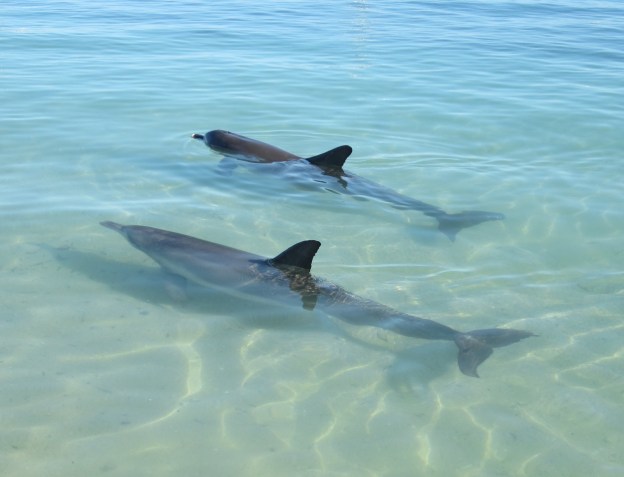
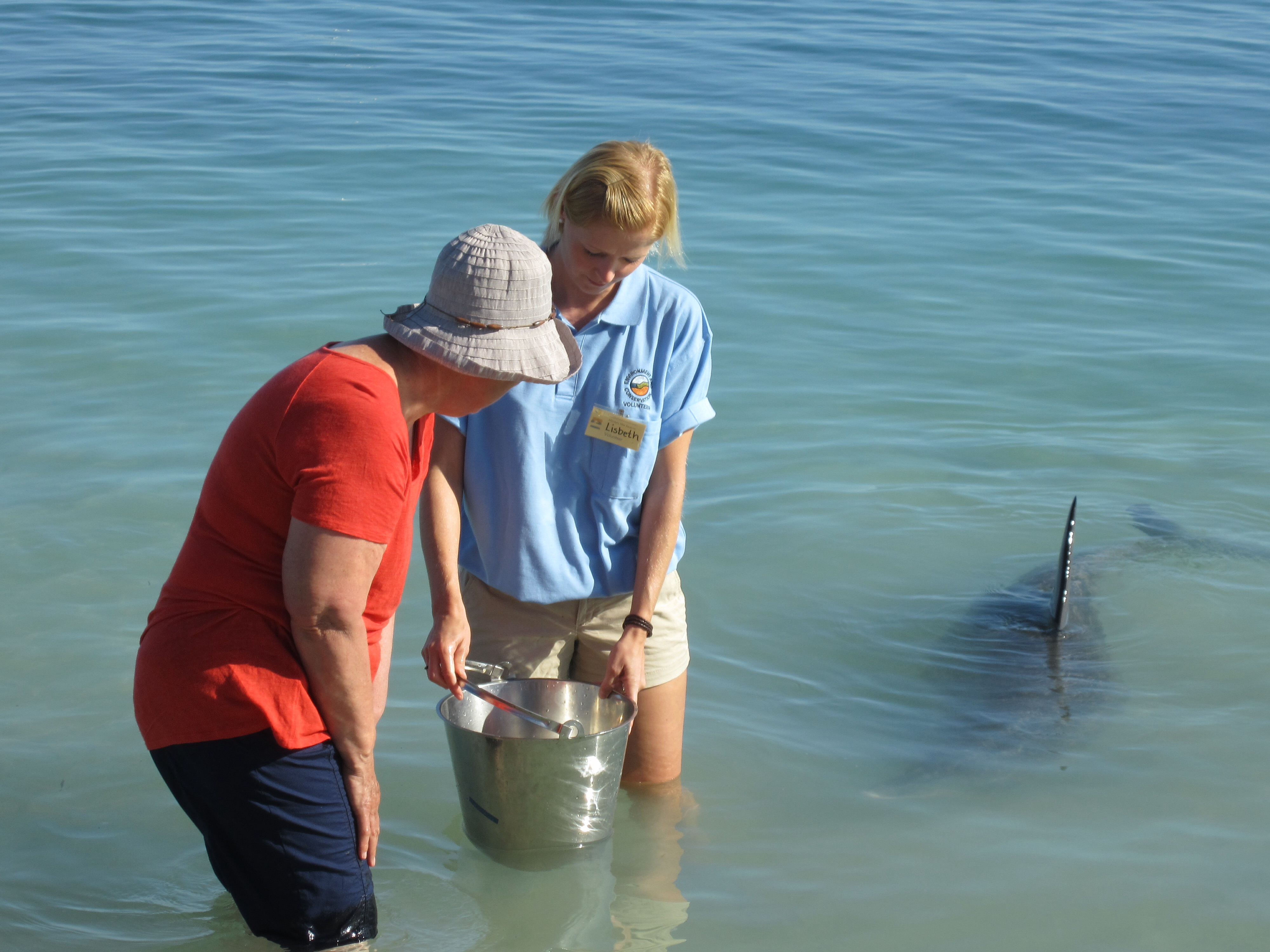
imageimageI am The Chosen One! We were at Monkey Mia early this morning for the first of a possible three ‘dolphin experiences’,( depending on how often the dolphins choose to come into the beach). Interaction with the dolphins is strictly controlled and the faithful gather at the water’s edge, in ankle-deep water, looking hopeful. The dolphins cruise up and down along the row of spectators and are remarkably relaxed. Volunteer staff stand in the water with a bucket, each containing 5 small fish, and people are randomly selected to feed a fish to a dolphin. I was thrilled to be picked out. It was a wonderful experience to be so close to such a beautiful creature. No-one is allowed to touch them and only 5 or 6 specific females are fed, and they are only fed a small amount to ensure that they continue to hunt fish for themselves and thath they don’t neglect their calves. Three generations of dolphins have visited, and continue to visit, Monkey Mia and they are all identifiable (by their dorsal fins), and are the subject of ongoing research. If it all sounds stage-managed, it is done very well, and it is far better than the free access of the 60’s and 70’s, when many dolphins died, or were killed or injured as a result of their interaction with visitors. We stayed on for the second dolphin feeding session and we were within a couple of feet of them, because there were fewer people. Weather was perfect and we had a great morning.

This afternoon we drove out to Eagle Bluff for an expansive view of Shark Bay and the long, thin shadow of Dirk Hartog Island, named for the first white man to arrive on Australian soil in October 1616, 154 years before Captain Cook. Shark Bay is shallow and very sheltered and its vast seagrass m

Not a dolphin

Not a dolphin

eadows feed and shelter globally endangered species. The common shark in the area is the Nervous Shark, which probably accounts for us not seeing any! We did see a stingray, but from a conhsiderable distance.j

This is a marvellous region, where the desert meets the sea, and it is as far north as we intend to go. We had hoped to reach Ningaloo Reef but we are a bit late in the season, having dilly dallied here and there, and it is getting very hot in the north. Apparently National Park camp sites are also hard to get, because many were washed out in a huge storm (600mm rain in 24 hrs), and there is a lot of redevelopment taking place.

Tomorrow marks the beginning of our journey home, as we head south to Kalbarri. We have travelled 9,000 km so far.image

Flora Park, Geraldton, Hamelin Station

We spent a couple of days at Geraldton, which is quite a big town, right on the shore. It was incredibly windy while we were there (thought our washing might end up in the desert) and it is just a beach holiday place so I wasn’t very taken with it. I have become accustomed to the wild and unspoilt beauty of the south-west coast and don’t relish being back in suburbia. However, at some point we do have to return to Springvale South!

We left Geraldton yesterday and quickly found ourselves in outback country similar to Central Australia – vast, cloudless skies, low scrub and red, red earth. We disturbed a flock of Red-Tailed Black Cockatoos which must have settled in a tree close to the road. Our first sight of them was as they wheeled in front of the car (heart in mouth) and then up and away. A stunning sight.

We spent a night at Hamelin Station, on a red dirt plain dotted with stunted vegetation. Once the sun had gone down,the silence was absolute and the blackness only relieved when you looked up at the stars which were clear and bright. It is an amazing landscape which, unfortunately has become home to huge numbers of feral goats which decimate the vegetation. The station corrals some to grain-feed and send to markets in Perth, and many are rounded up and sent to the USA and Malaysia. Apparently, goat is the most commonly consumed meat in the world. Who knew!

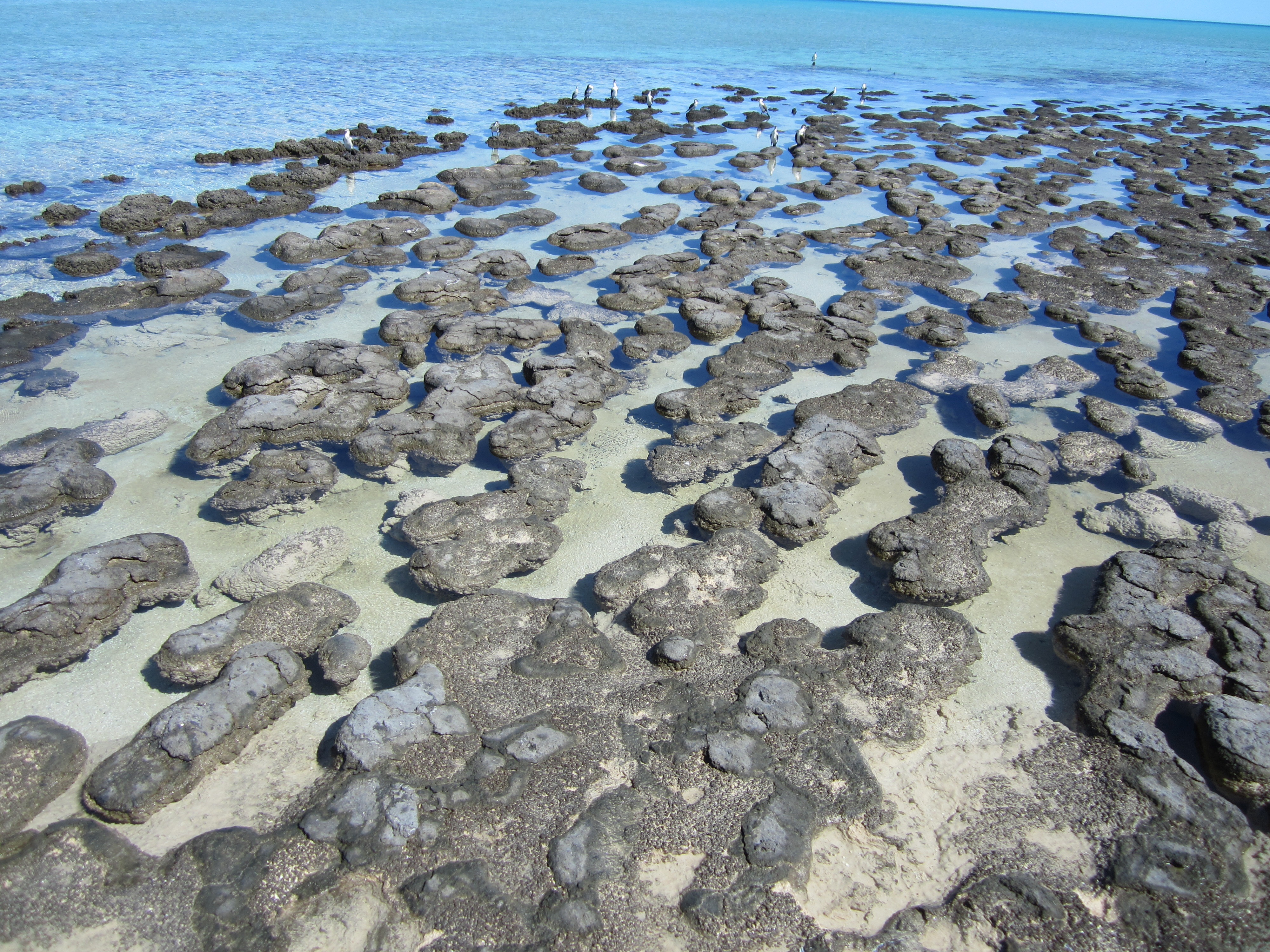
This morning, on our way to Denham, we stopped at Hamelin Pool to see the stromatolites – living fossils which contain microbes (Cyanobacteria) similar to those found in 3,500 million year old rocks. Even David Attenborough thought they warranted a spot on his show! The stromatolites, which can take a 100 years to grow 5 cm, are found in the shallows of Hamelin Pool, which is extremely salty ( twice as salty as water in the open ocean). Swimming is not permitted so we couldn’t try floating in it a la the Dead Sea. The stromatolites resemble fairly ordinary rocks but they represent a major stage in Earth’s evolutionary history and are one of the reasons for Shark Bay’s World Heritage Listing.

Hamelin Station

Hamelin Station

Hamelin Station - home for the night

Hamelin Station – home for the night

Another old fossil

Another old fossil

Housing options are limited in the desert

Housing options are limited in the desert

Stromatolites at Hamlin Pool

Stromatolites at Hamlin Pool

image

Carnamah, Eneabba and the Western Flora Caravan Park

The towns of Three Springs and Eneabba which we passed through on the way here are very modest but there are still a lot of wildflowers in the bush so it was a lovely drive. This is a bush caravan park, with a strong commitment to land care and preservation of local fauna and flora. We arrived in time to join the 2-hr guided walk by the resident amateur botanist who imparted a wealth of information about the various trees and flowers, particularly methods of pollination. It was a fascinating talk. Thimageis morning we walked out to the A

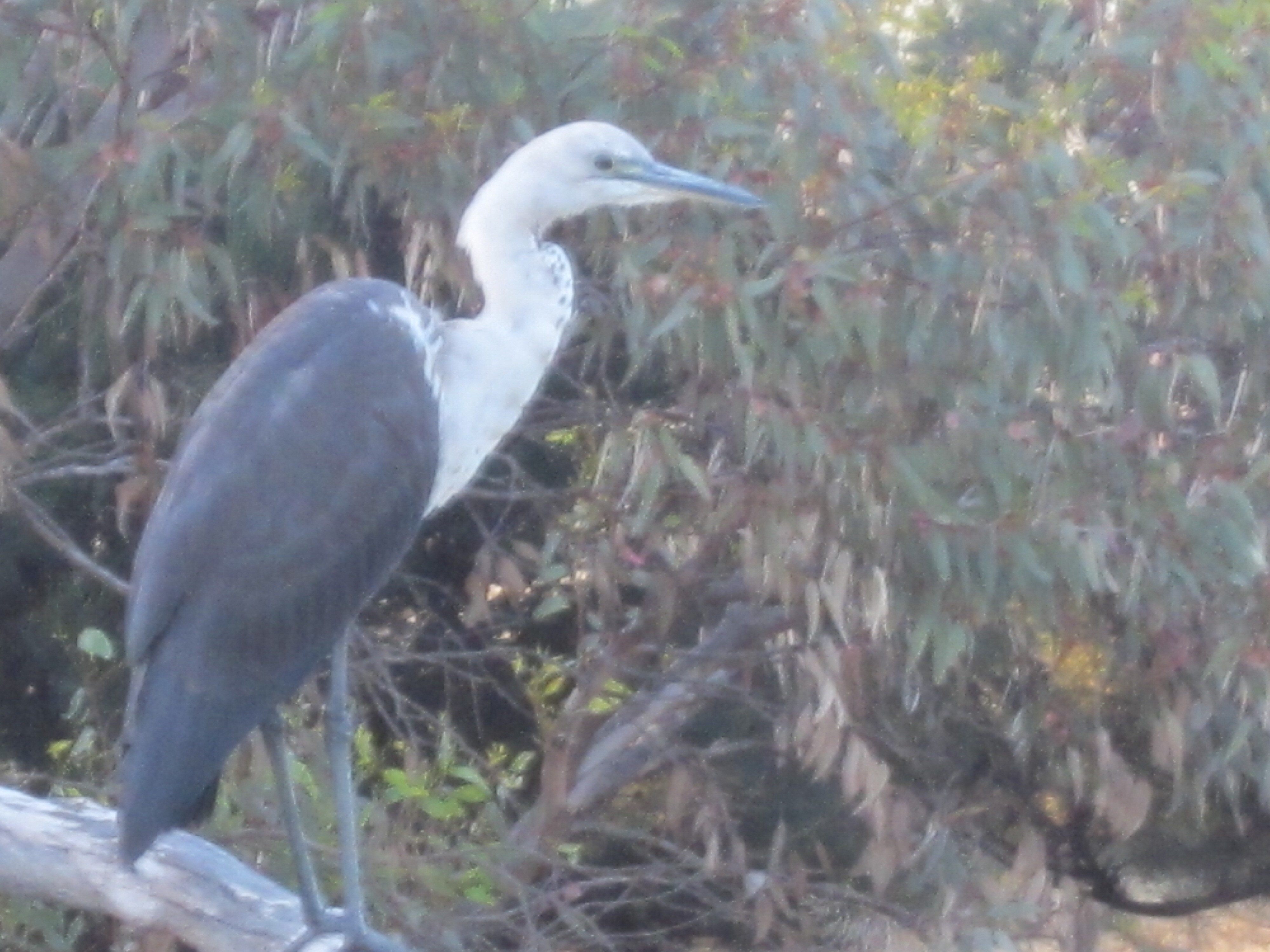
Pacific Heron?

Pacific Heron?

image

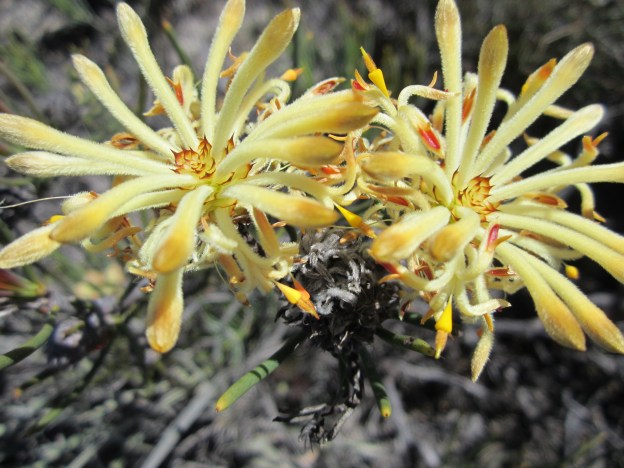
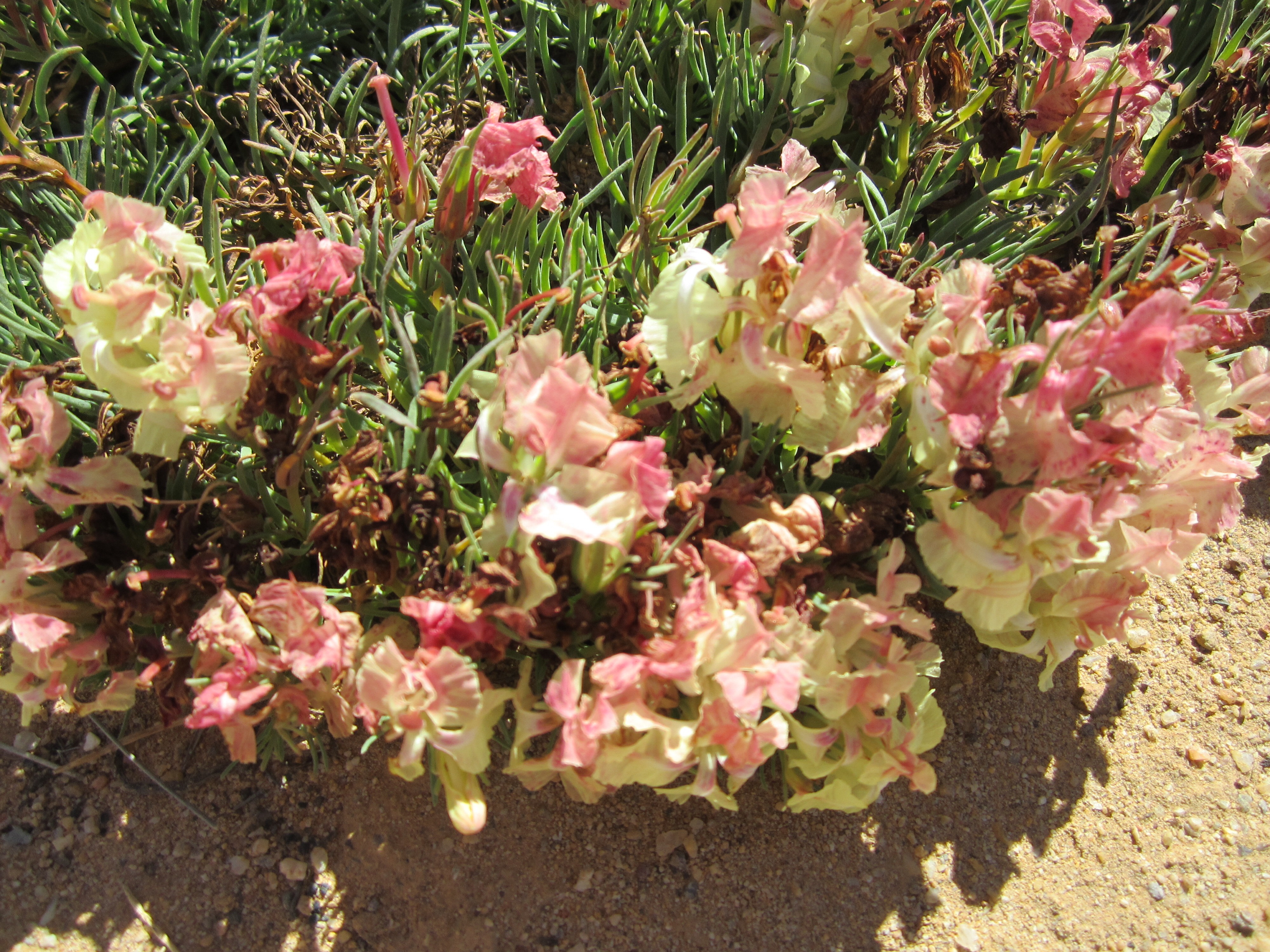
Almost-dead (appropriately) Wreath Flower.  The last one in WA with any flowers on it, we think!

Almost-dead (appropriately) Wreath Flower. The last one in WA with any flowers on it, we think!

Neighbours

Neighbours

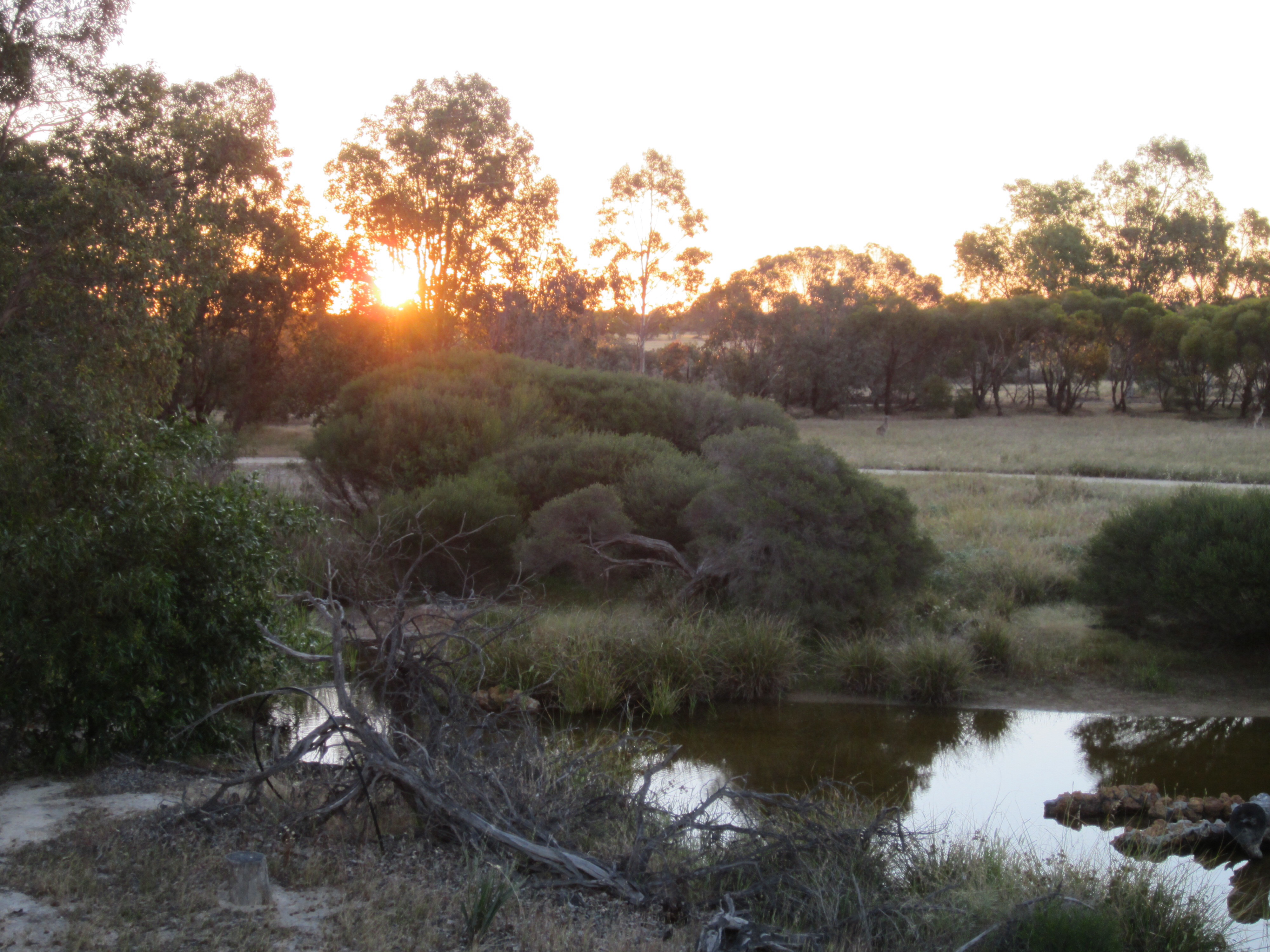
Wetland at dusk

Wetland at dusk

Hot - but the flies obviously don't mind

Hot – but the flies obviously don’t mind

I think these are Cow-licks

I think these are Cow-licks

rrowsmith River and the Sand Stone Waterfall, 5 km return, and still within the property. This area was burnt (deliberately) a few years ago and the fire has generated a remarkable show of flowers. We also wandered down to the wetland at dusk and watched a heron fishing for his supper. We have really enjoyed our stay here and will be sorry to leave.

Geraldton tomorrow – back to the Big Smoke.

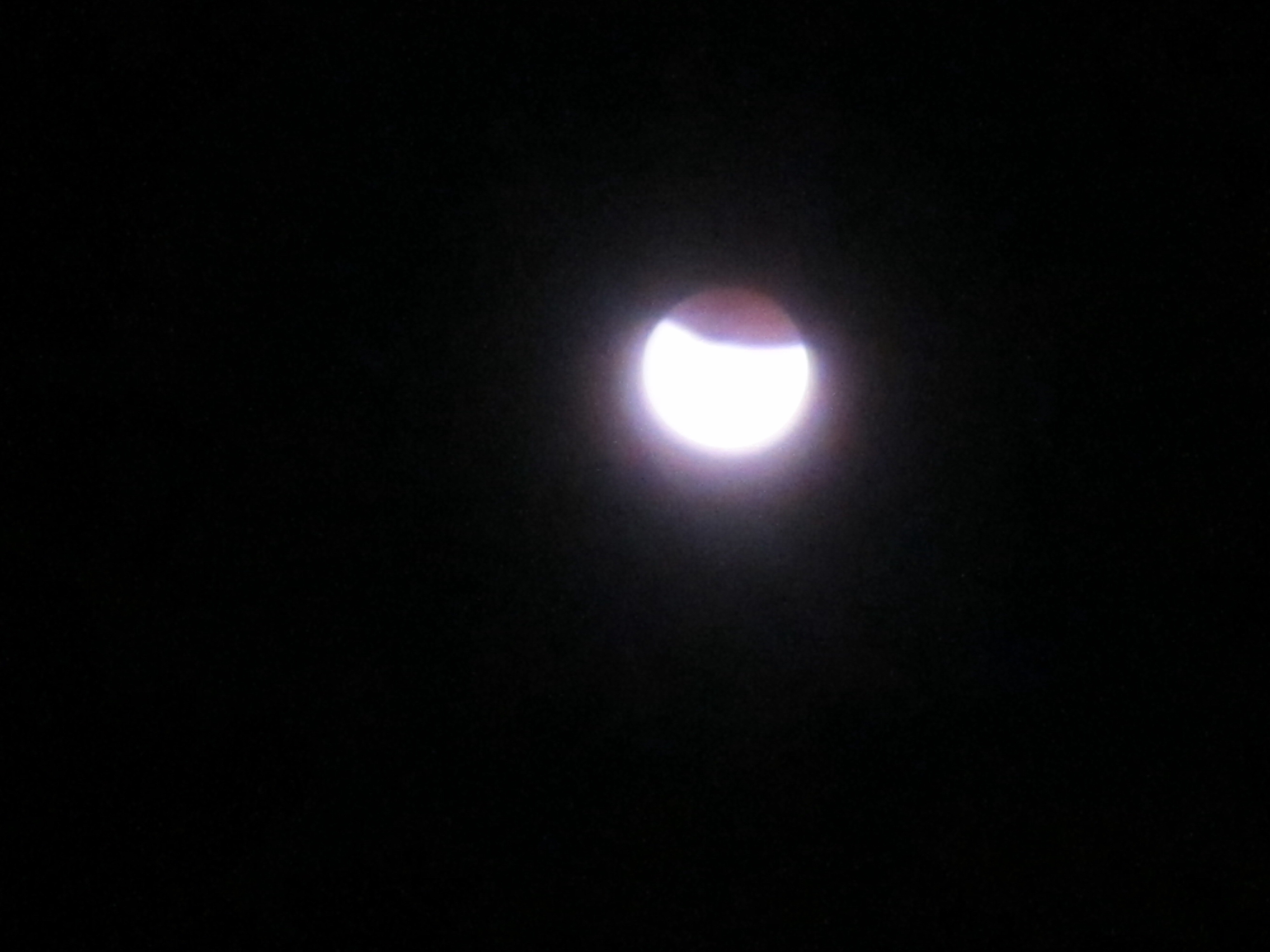
Lunar Eclipse Oct 8th

Lunar Eclipse Oct 8th

Fringe Lily

Fringe Lily

image

Parakeelya

Parakeelya

Perth to Carnamah

Perth City from Kings Park

Perth City from Kings Park

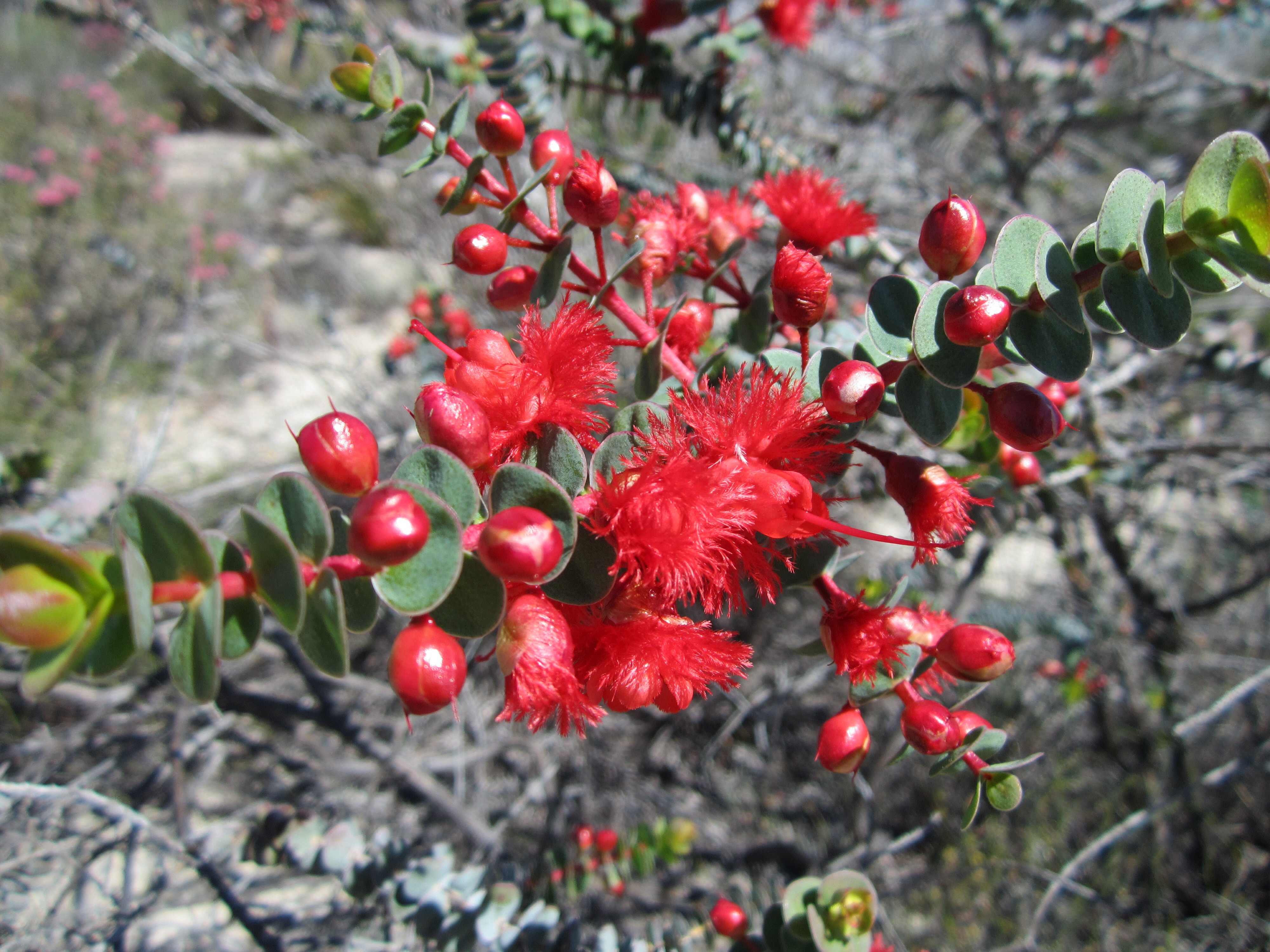
Geraldton Wax - I hope

Geraldton Wax – I hope

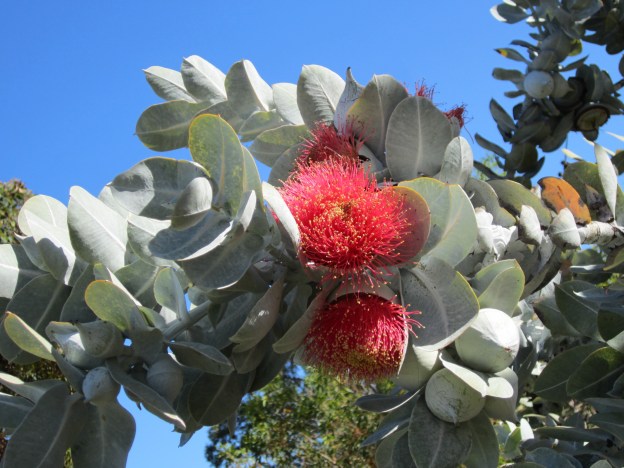
Verticordia Colombia?

Verticordia Colombia?

Blue Leschenaultia?

J Blue Leschenaultia?

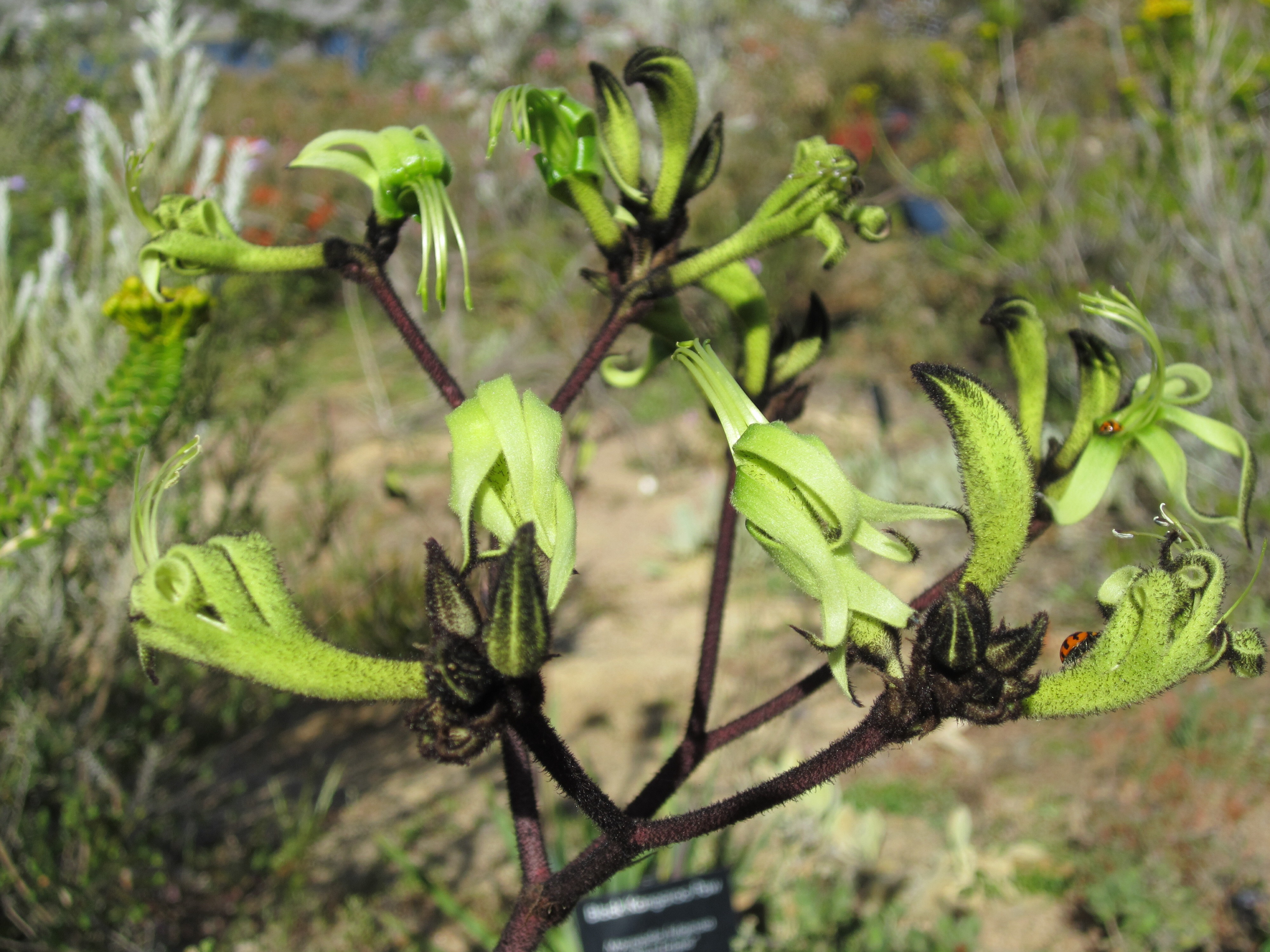
Black Kangaroo Paw

Black Kangaroo Paw

Cranbrook Bell

Cranbrook Bell


We have spent most of the last week in and around Perth, catching up with friends and revisiting some of Geoff’s childhood haunts. Wayne & Helen took us to the Araluen Botanical Gardens in the Darling Range. The gardens are beautiful and peaceful
and, as we ate on the verandah of the tea house, we were showered with wisteria blossom. From there we went to Kalamunda and had a drink at the pub which was built by Wayne’s great-grandfather and which is, reputedly, haunted. Helen only had coffee so that she could safely navigate the zig-zag which is rather hairy road which should have afforded wide views of Perth but visibility wasn’t great.

After 5 nights in Fremantle we moved to a different caravan park in Karrinyup, which is NW of the city. On the way over we had lunch on Cottesloe Beach and visited 50 Kathleen St, Swanbourne, where the Ravenscrofts lived in the 50s. For Geoff and his brothers it was barefoot to school and lots of time at the beach. An idyllic WA childhood.

We made a second trip into the hills with Keith and Sue and stopped in Toodyay for lunch at a cafe which is decorated to the max with a 50-yr old collection of Coca Cola memorabilia. We had Coke spiders to honour the occasion and almost exploded! Had a lovely home-

cooked meal in the evening with Wayne and Helen. It was a treat because most of our eating-out experiences have been expensive disappointments.

We had a rained-in day when we went to the movies (‘Gone Girl’ – not great), and we spent our final day revisiting the Perth CBD and exploring Kings Park, which is just fabulous. John Forrest, who became premier of WA in1890, was the acknowledged driving force behind the development of the 175 ha of public park. His vision was that 1000 yrs hence, people would be able to see this area as it appeared to the first explorers. The views of Perth city and the Swan River are spectacular and the Botanical Gardens are gorgeous. We had such a lovely day.

We travelled from Karrinyup to Dallwallinu, via New Norcia, and we are overnighting at Carnamah. We have seen some lovely flowers today and crossed the line of the Rabbit-Proof Fence. An unexpected bonus has been the most amazing, absolutely clear and unobstructed, view of the lunnar eclipse in all its phases. We can’t believe how lucky we are to be here at the right time under such perfect conditions.

Busselton/Perth/Fremantle

From Busselton we did a beautiful coastal walk from the Cape Naturaliste Lighthouse and saw whales breaching far out to sea. They are now travelling South, returning to sub-Antarctic waters with their calves. No more frolicking in the coves – their summer holiday is over.

There is a marvellous jetty at Busselton, almost 2km long, but we didn’t walk it as we baulked at paying for the privilege. Some things should be free! We lunched in Bunbury on our way to Perth and we spent our first two days here with friends, who live just north of the city. We are very comfortable in our caravan but it was nice to be in a house, with space around us, and we were very well looked after. Sat, of course, was Grand Final day so we had pies for lunch and enjoyed the game. Geoff is, naturally, very happy with the result.

On Sunday we relocated to a caravan park in south Fremantle and Monday morning we caught the ferry to Rottnest Island. We only stayed one night, but it was really lovely. It is a fairly low-key holiday destination and it is easy to see why so many West Australians have fond memories of the island. They are attached to it in the same way that many Victorians are bonded to The Prom. The current atmosphere belies the sorry history of Rottnest. It was a prison for aborigines and, of about three and a half thousand prisoners, approx. 10% died, and are buried in the island. Some of the prisoners came from as far afield as the Pilbara and some were very young or very old and some were sentenced for very minor infringements of the law. It would have been a terrible life and many would surely have died of broken hearts, far away from their people and their country.

For those of us lucky enough to be on Rottnest by choice, there is lots to do. There are virtually no cars on the island so transport is via Shank’s Pony, push bike, the shuttle bus or the hop-on, hop-off bus which loops the island, taking in many of the beautiful beaches and coves. We ate our lunch, sitting on the rocks at Fays Bay and we did a walk from the Kingston Barracks, to see the Bickley gun emplacements and Bickley Bay. We also rode on the little, bone-shaking, railcar up to Oliver Hill to tour the WW11 gun emplacements, ammunition stores and tunnels which formed an important part of Australia’s wartime defences. There are quokkas everywhere and they are quite unconcerned about all the noise and activity which surrounds them. There is also a resident peacock who is as peacocky as you could wish. He actually slowly pirouettes to have his photo taken.

I find myself thinking often of ‘The Shark Net’, now that I am seeing The West for the first time, especially on Rottnest

We came back to Freo yesterday, enjoying a much smoother crossing than we experienced on the way over. Tomorrow, friends are taking us out for the day, up into the hills.

Margaret River

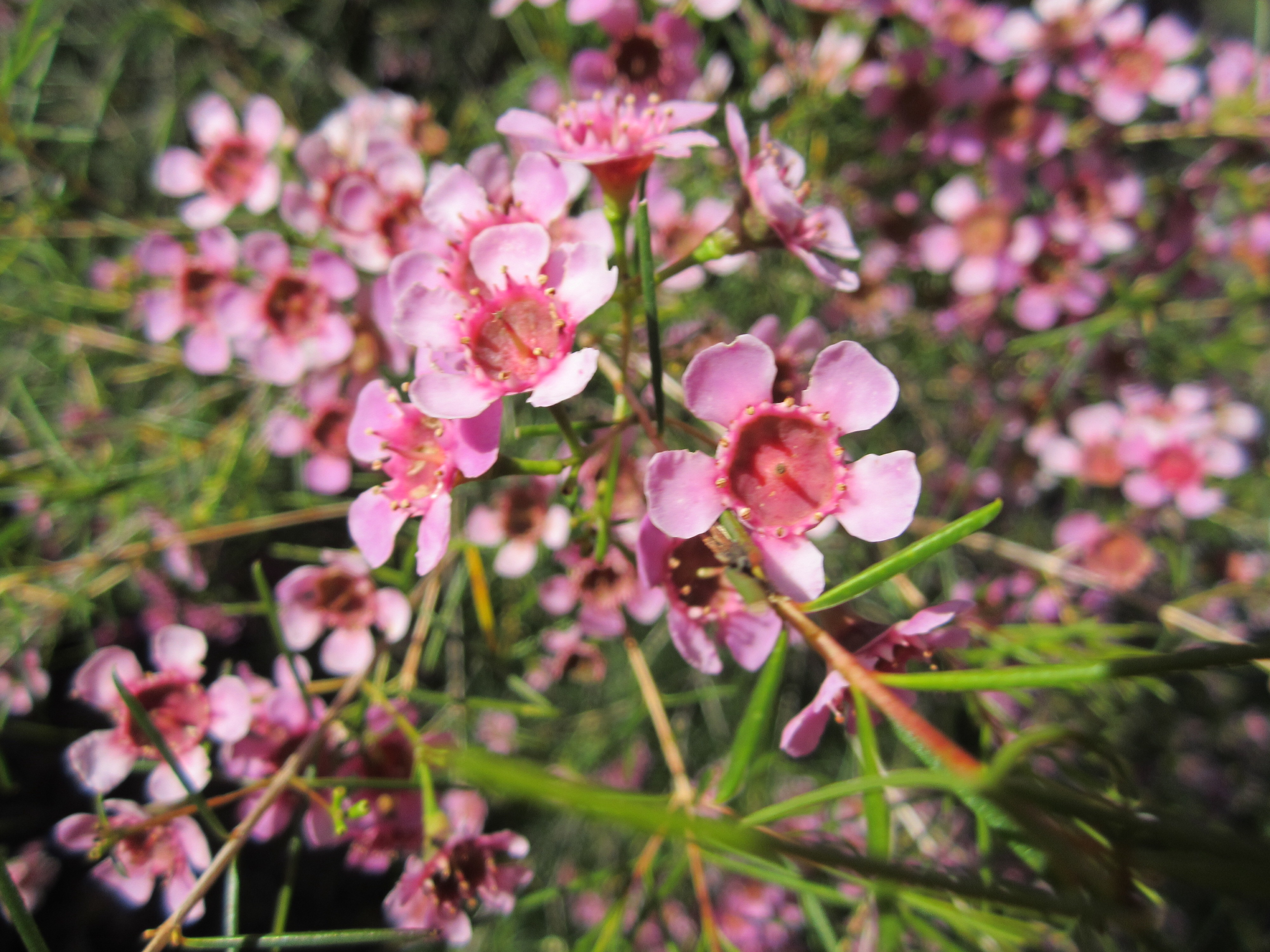
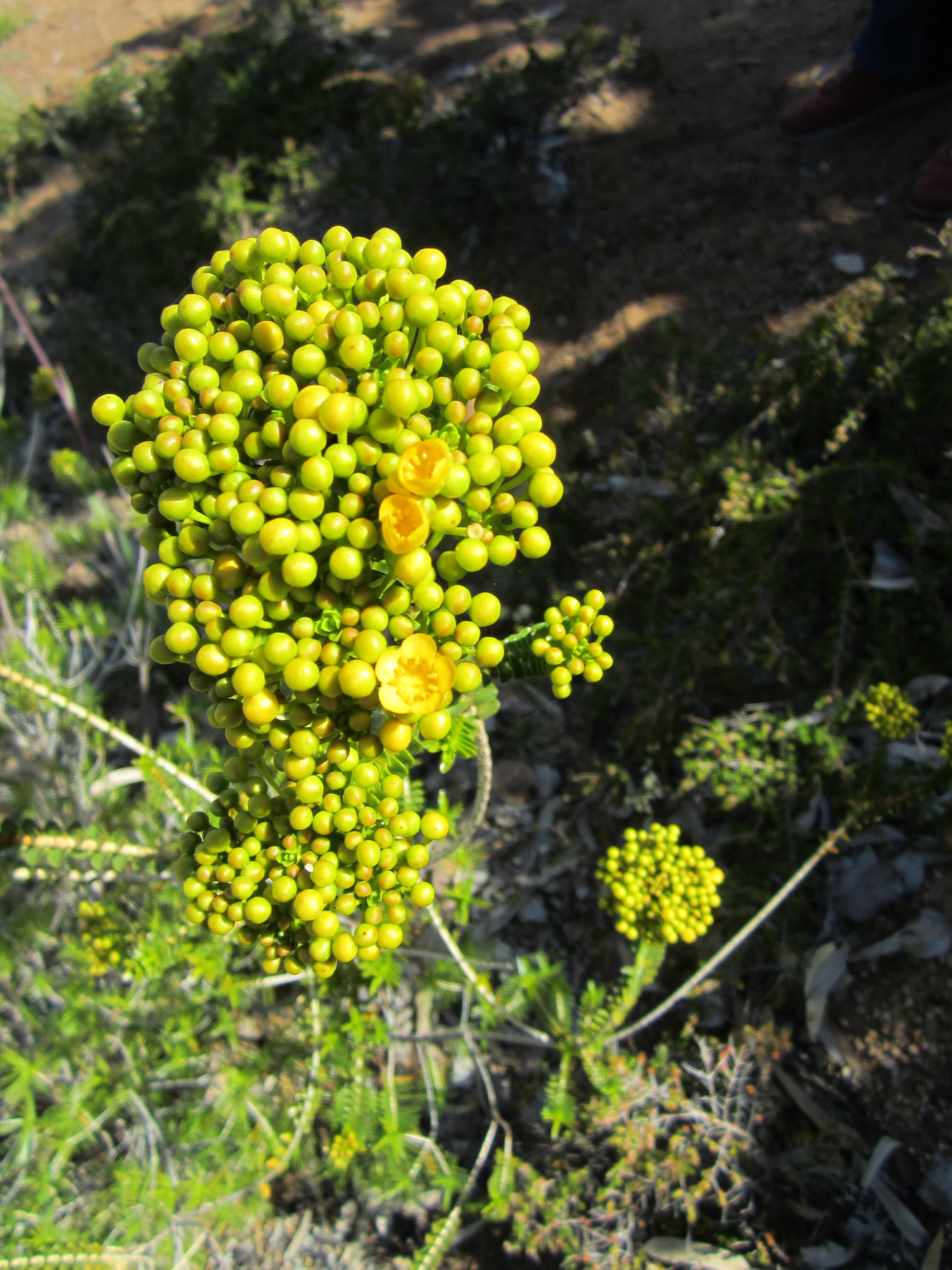
We arrived in Margaret River a couple of days ago and it was cold and rainy and we were a bit underwhelmed, although we cheered up after lunch and a glass of red in a nice, warm tavern. I expected it to be more picturesque and it is just a town, and less attractive than many we have seen. However, the surrounding countryside, the wineries and the beaches are all beautiful and we had a lovely day yesterday exploring and looking for wildflowers. The unfortunate payoff to this was the tick which Geoff noticed on my back this morning. First Geoff applied metho and then eucalyptus oil but the little blighter just thought he’d landed in a health spa and continued to hang on. Tweezers were needed to see him off. Then I found another tick on my leg which Geoff lassoed with a piece of dental floss – a prescribed method of removal, believe it or not. Victorian suburbanites don’t generally have to worry about ticks so it was all a bit of a shock. Now I view the forest with a jaundiced eye – not as a treasure house of wildflowers but a jungle bristling with nasty, little bloodsuckers. I thought I only had to worry about snakes which you can at least see.
Today we visited the Cape Leeuwin lighthouse on the extreme south West Point of Australia. Cape Leeuwin was named by Matthew Flinders in December 1801 at the commencement of the circumnavigation of Terra Australis, taking the name of the adjoining area which had been

called Leeuwin’s Land by the Dutch navigators when Leeuwin (The Lioness) rounded the Cape in 1622. The lighthouse was opened in 1896 and is still one of the essential navigation aids maintained around the Australian coast. It was automated in 1992. It was cold, wet and windy at Cape Leeuwin today – mild in comparison to the weather that can occur here, at the meeting of the Southern and Indian Oceans. It would have been a tough life for the lighthouse keepers and their families, especially since they had an outside loo which would have been quite challenging to get to during a gale.

Pemberton 4WD Trip

Karri forest

Karri forest

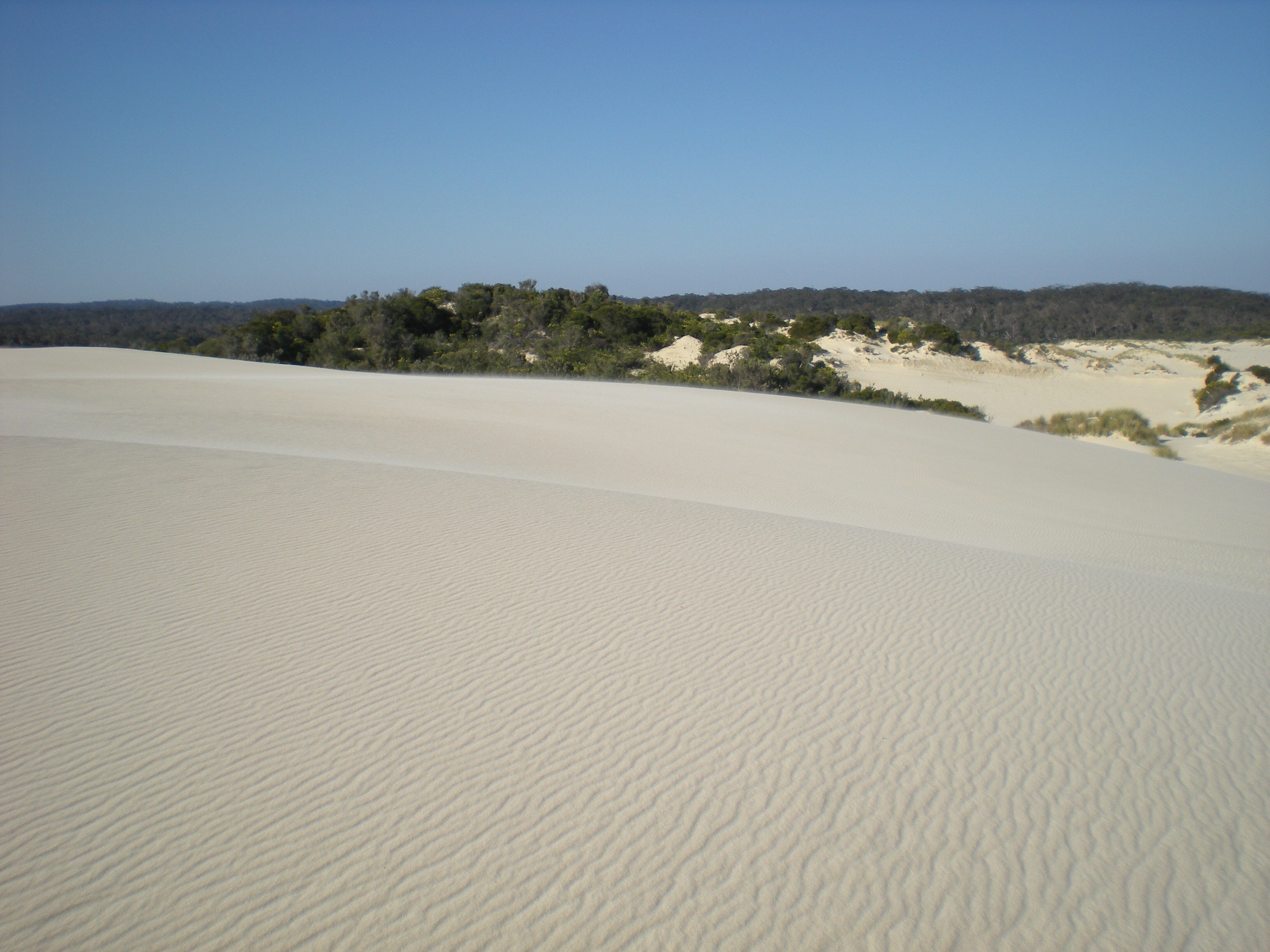
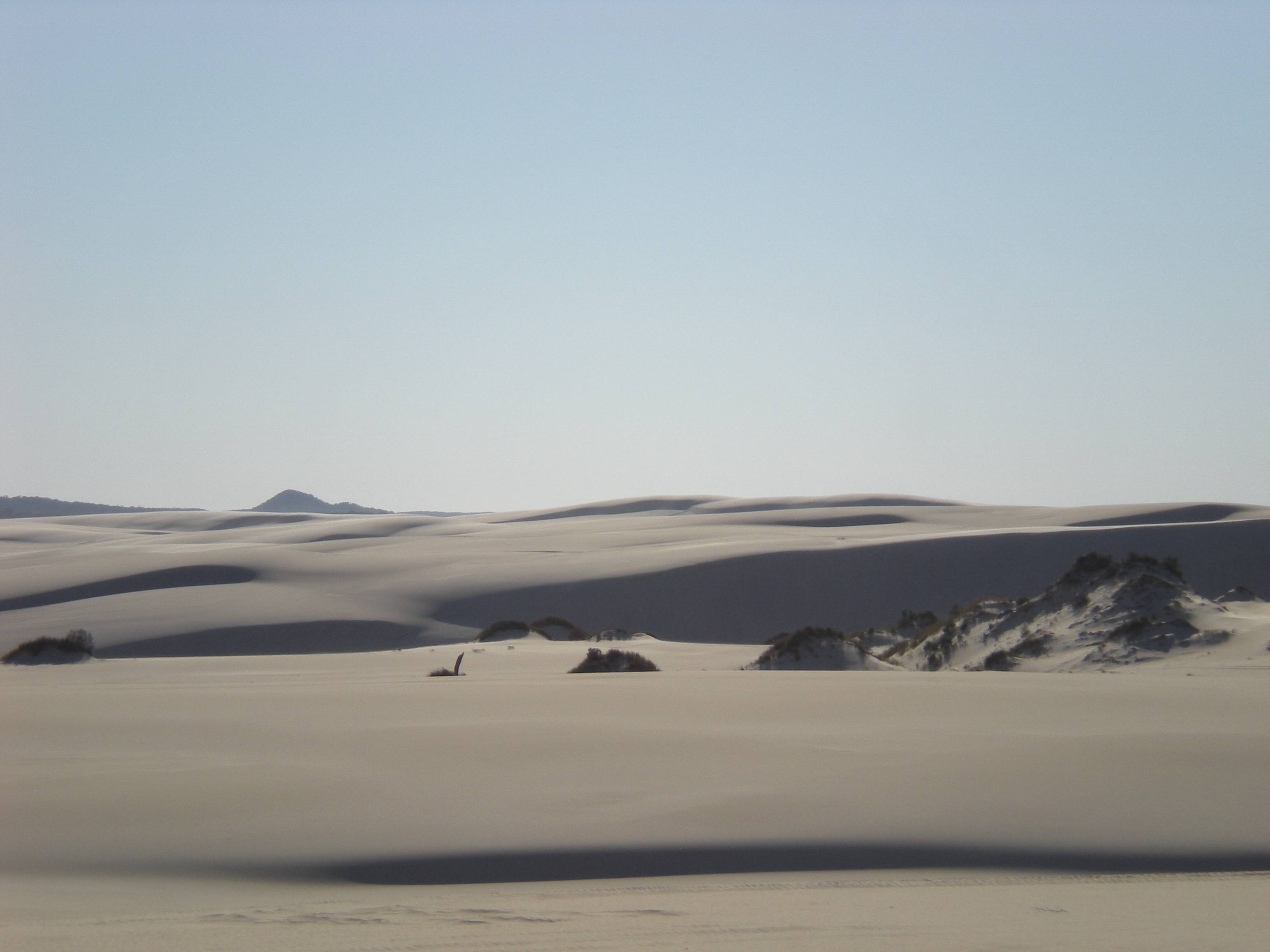
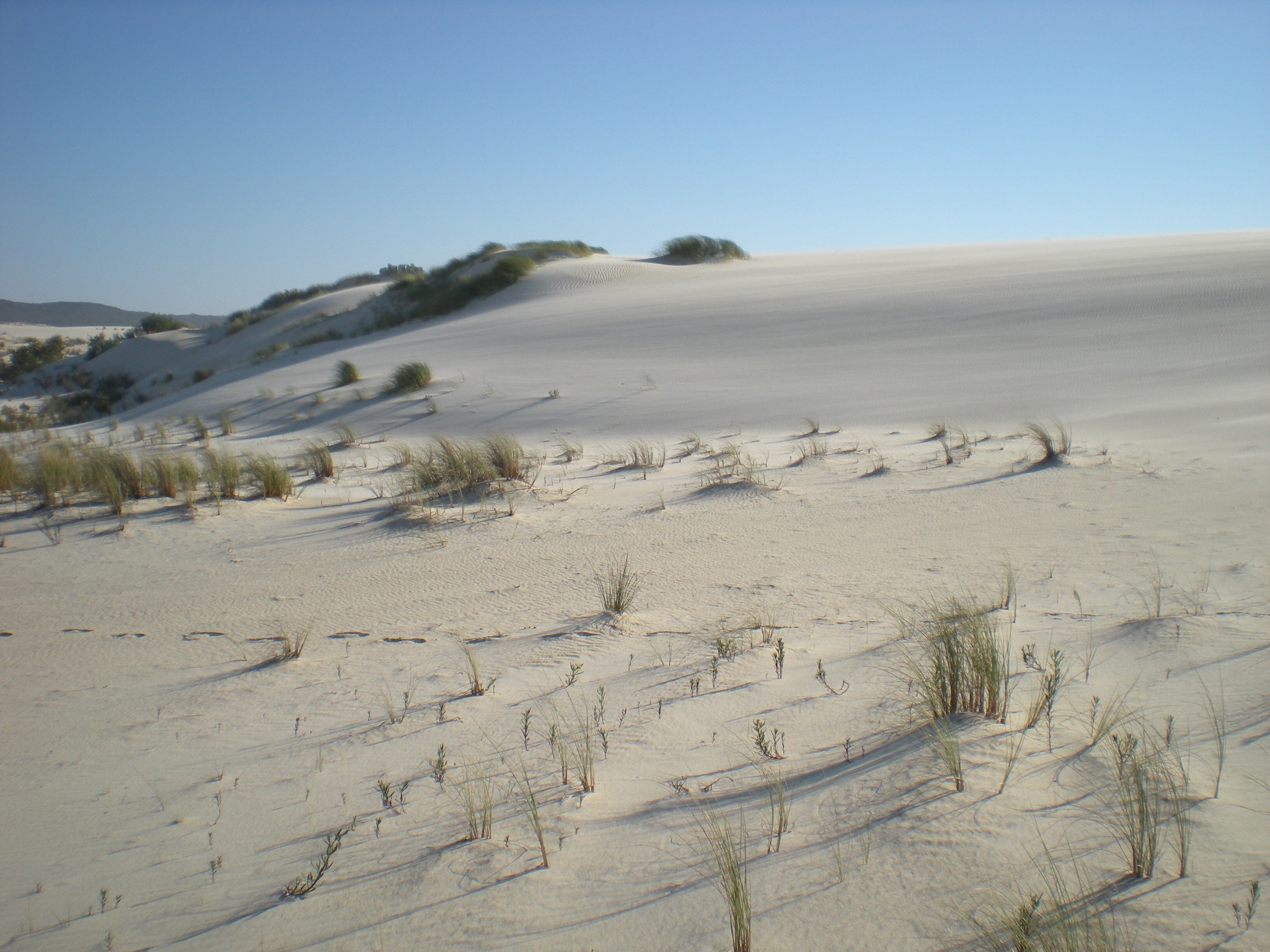
Yeagarup Dunes

Yeagarup Dunes

image image image image

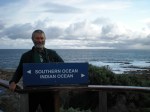
The Southern Ocean beyond the dunes

The Southern Ocean beyond the dunes

D'Entrecasteaux Point

D’Entrecasteaux Point

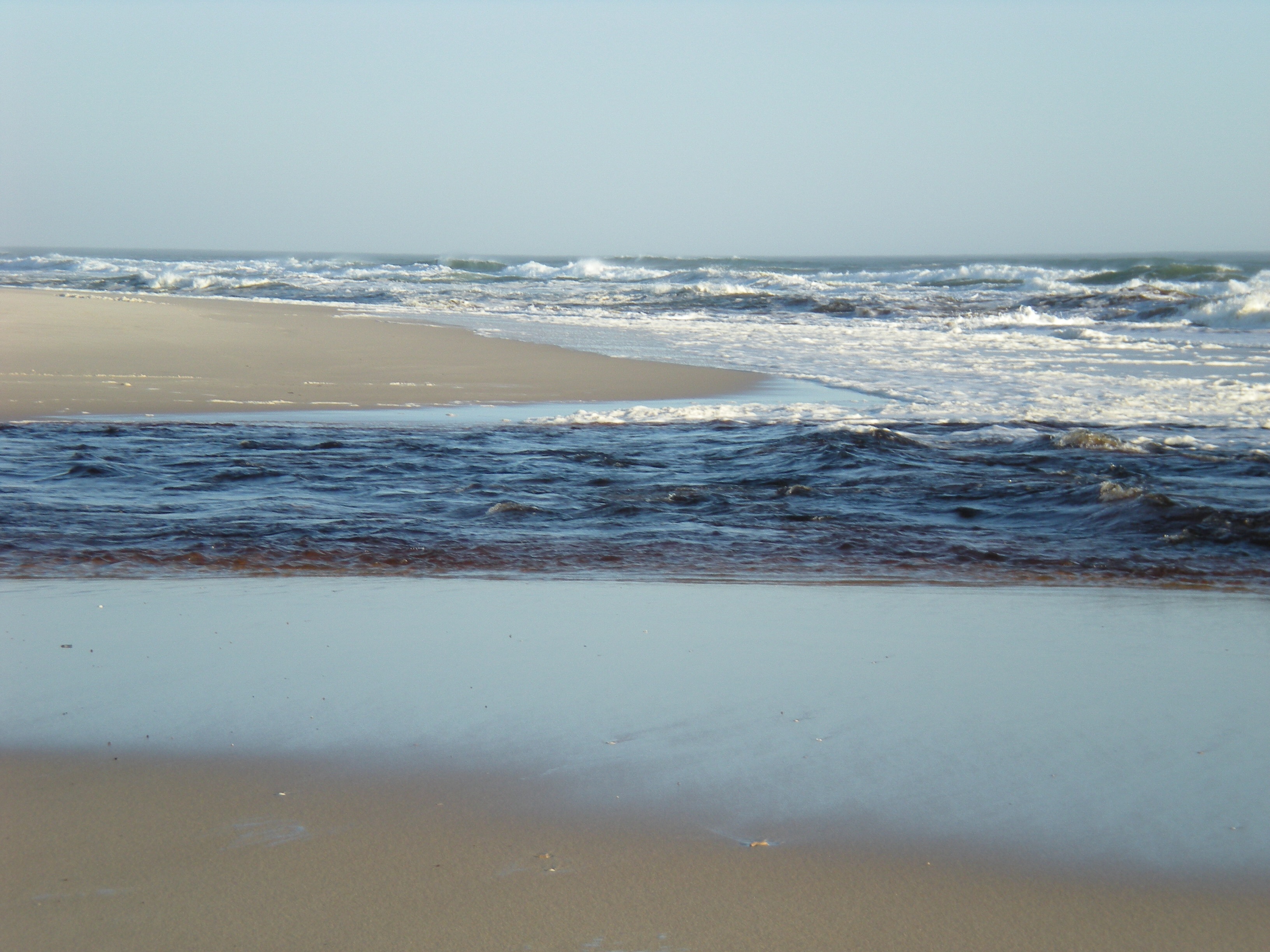
The tannin-stained waters of the Warren River feeding into the ocean

The tannin-stained waters of the Warren River feeding into the ocean

image

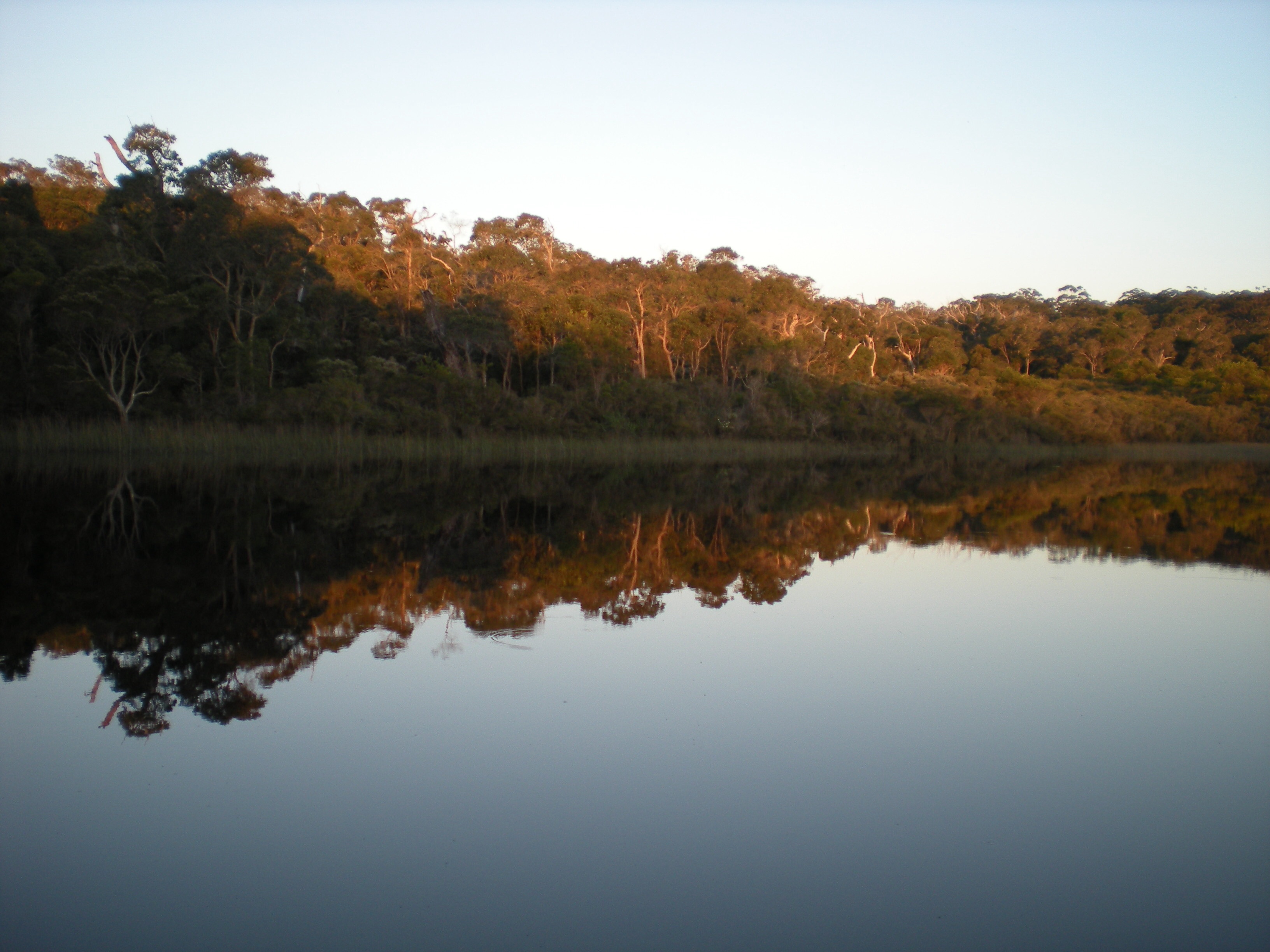
Lake Yeagarup at the close of day

Lake Yeagarup at the close of day

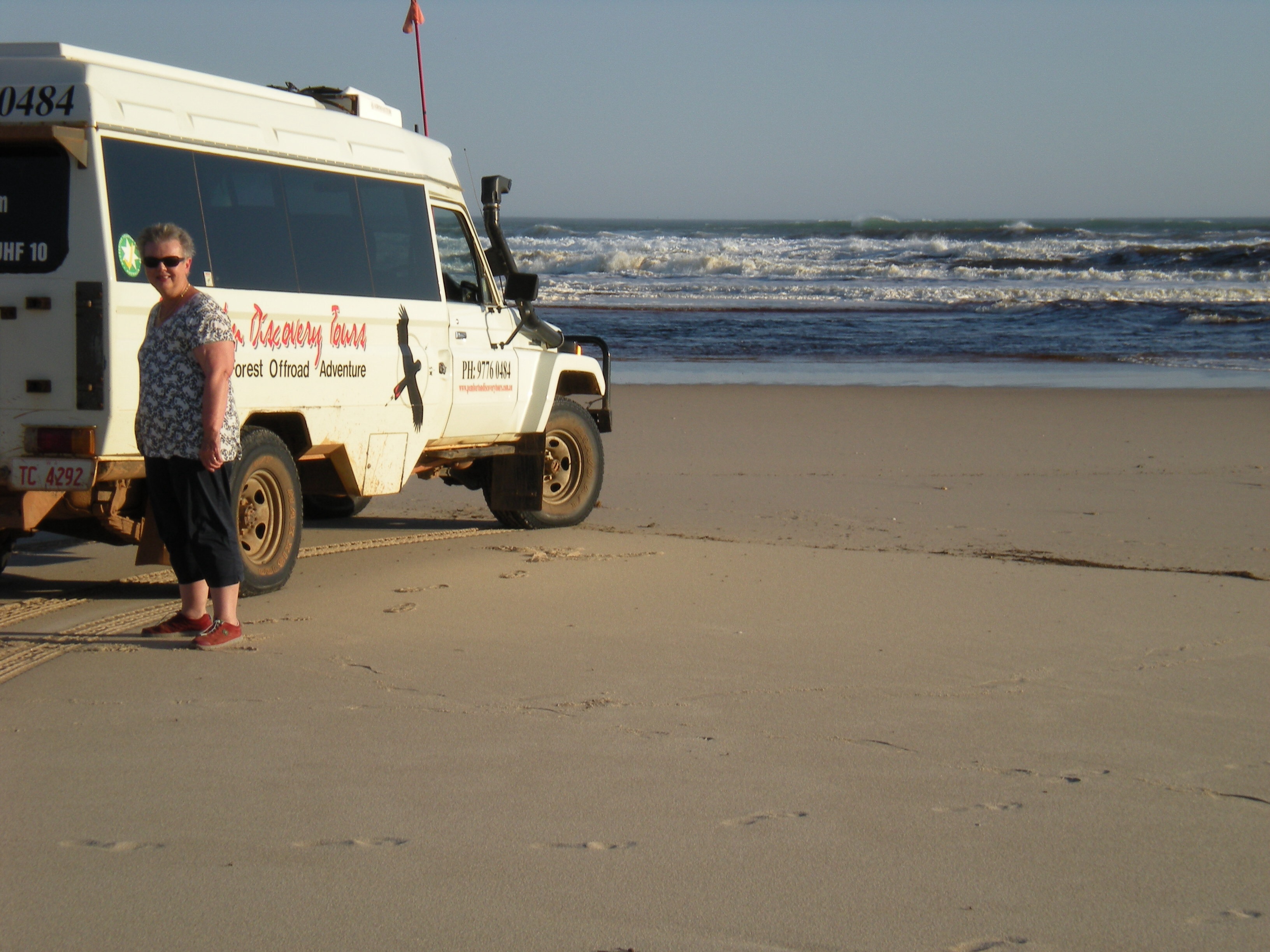
imageIn Pemberton we joined a ‘Beach and Forest Eco Adventure’ and bounced through ancient Karri forest and the landlocked Yeagarup sand dunes, to the Southern Ocean. Finding yourself in the middle of an inland dune system is quite surreal. Forest gives way to coastal scrub and, suddenly, you could be in the Sahara Desert. The Yeagarup dune system measures about 10km x 3km and starts about 6km in from the beach. The dunes are advancing inland at a rate of 4m per year and will eventually swallow the Yeagarup Lake where we stopped for afternoon tea. We continued through the dunes to Yeagarup Bay and the outlet of the Warren River into the mighty Southern Ocean. The beach is about 30km long, stretching west from D’Entrecasteaux Point, and is stunning. Huge breakers were crashing in and swirling around the river mouth, mixing the treacle-coloured (tannin) of the river water with the sea.

Walpole – WOW!

Circular Pool

Circular Pool

Frankland River

Frankland River

image

Yesterday we took the WOW Wilderness EcoCruise into the Walpole Wilderness and Walpole and Nornalop Inlets. It is impossible to really describe Gary, the guy who conducts the tour, except to say that he is a human dynamo, a Duracell Bunny! Standup comic, raconteur, scientist, ecologist and environmental activist – he is all of these things a

White Cotton Head ??

White Cotton Head ??

Scarlet Flame Pea ??

Scarlet Flame Pea ??

nd more. He is also very personable and entertaining and we had a great time. It was a beautiful morning and we stopped off at Rocky Head to climb over the headland to the beach. We also had morning tea there and watched the pelicans watching us eat home-baked lemon cake.

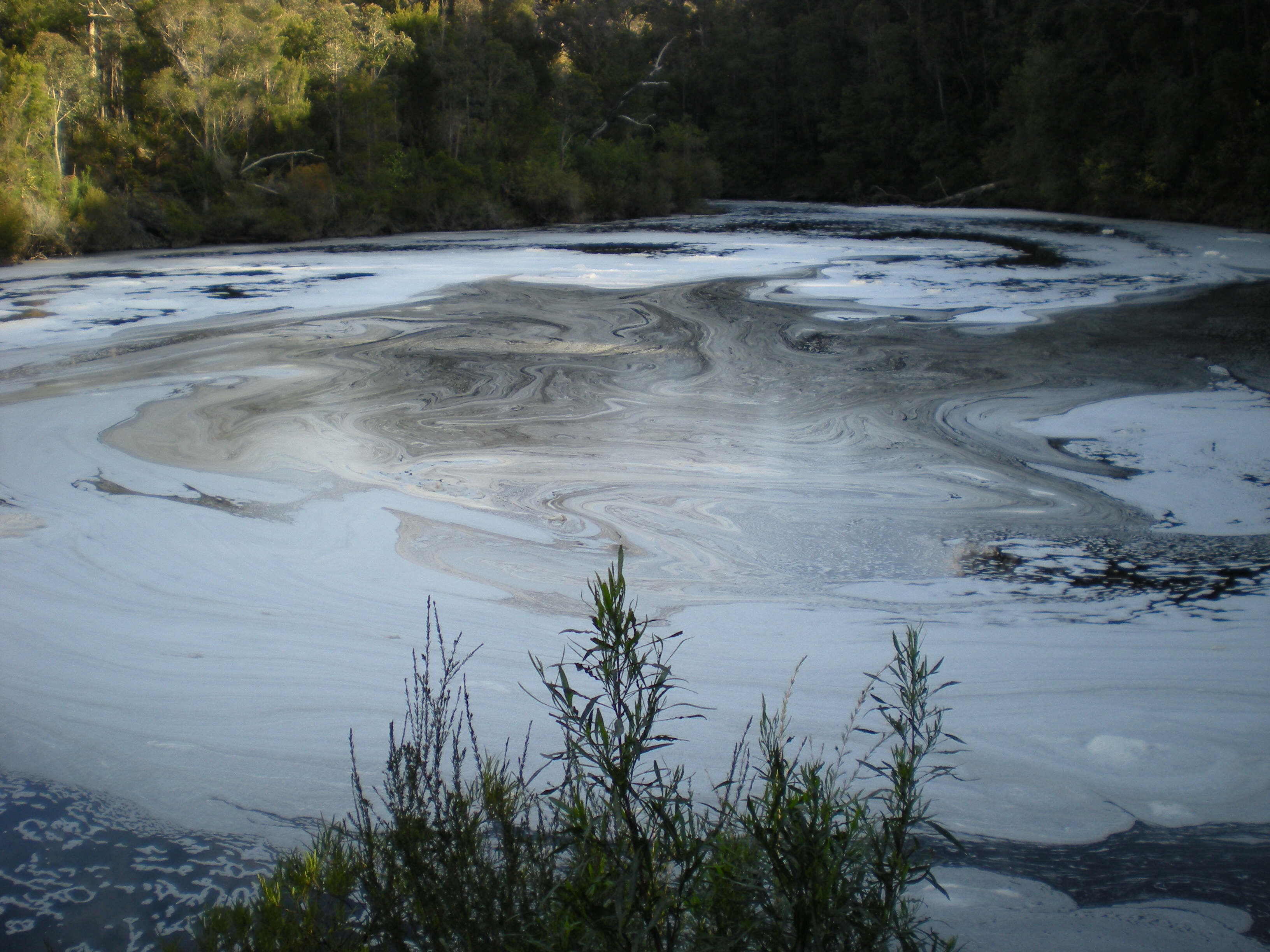
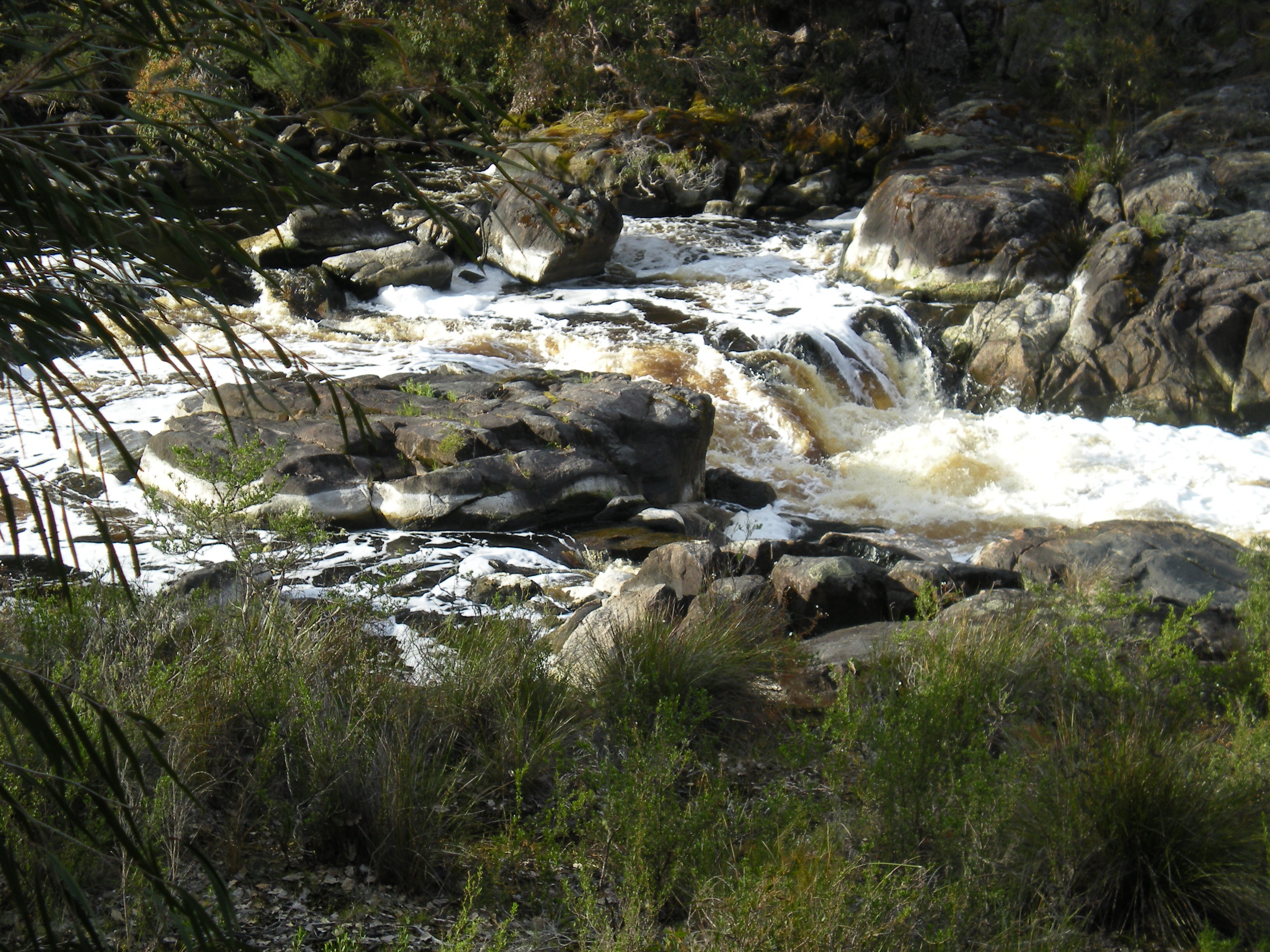
In the afternoon we went to see the Giant Tingle Tree, a unique specimen thought to be over 450 years old. It is 24m in circumference at its base, the largest living girthed eucalypt known in the world. We did a lovely forest walk to reach the tree and another short walk at the Frankland River to Circular Pool. The constantly-moving patterns on the surface are due to the currents, and the froth which results from all the tannin in the river.

We are now in Pemberton for a couple of nights. Saw a beautiful Red-winged Blue Wren this evening and lucky Geoff saw a Superb Blue Wren when he was out riding this morning.

The Giant Tingle Tree

The Giant Tingle Tree

image


Walpole – The Valley of the Giants

We paid a quick visit to Ocean Beach before we left Denmark and watched the Yellow-Billed Spoonbills snuffling through the mud (heck of a way to find lunch), before a final coffee at ‘Ravens’ and the drive to Walpole.

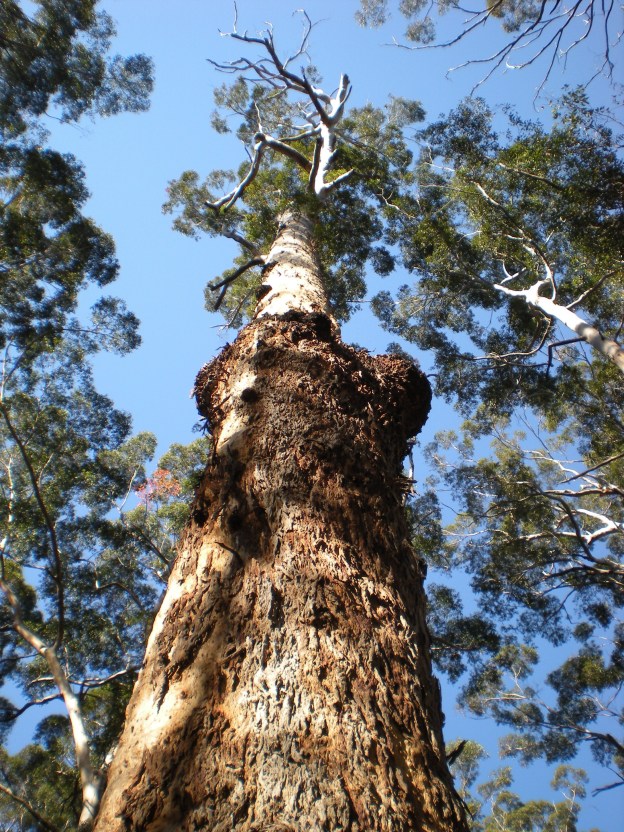
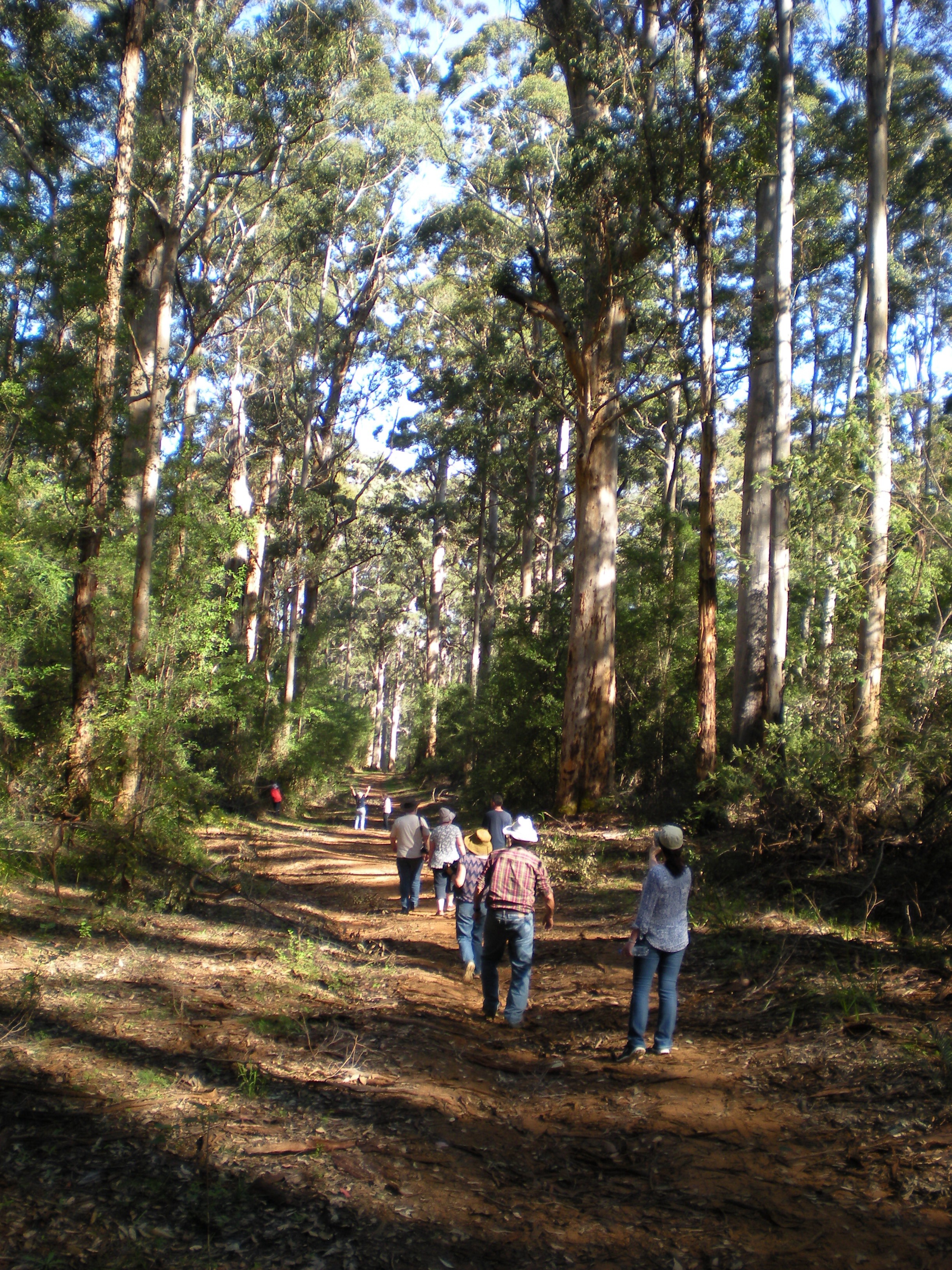
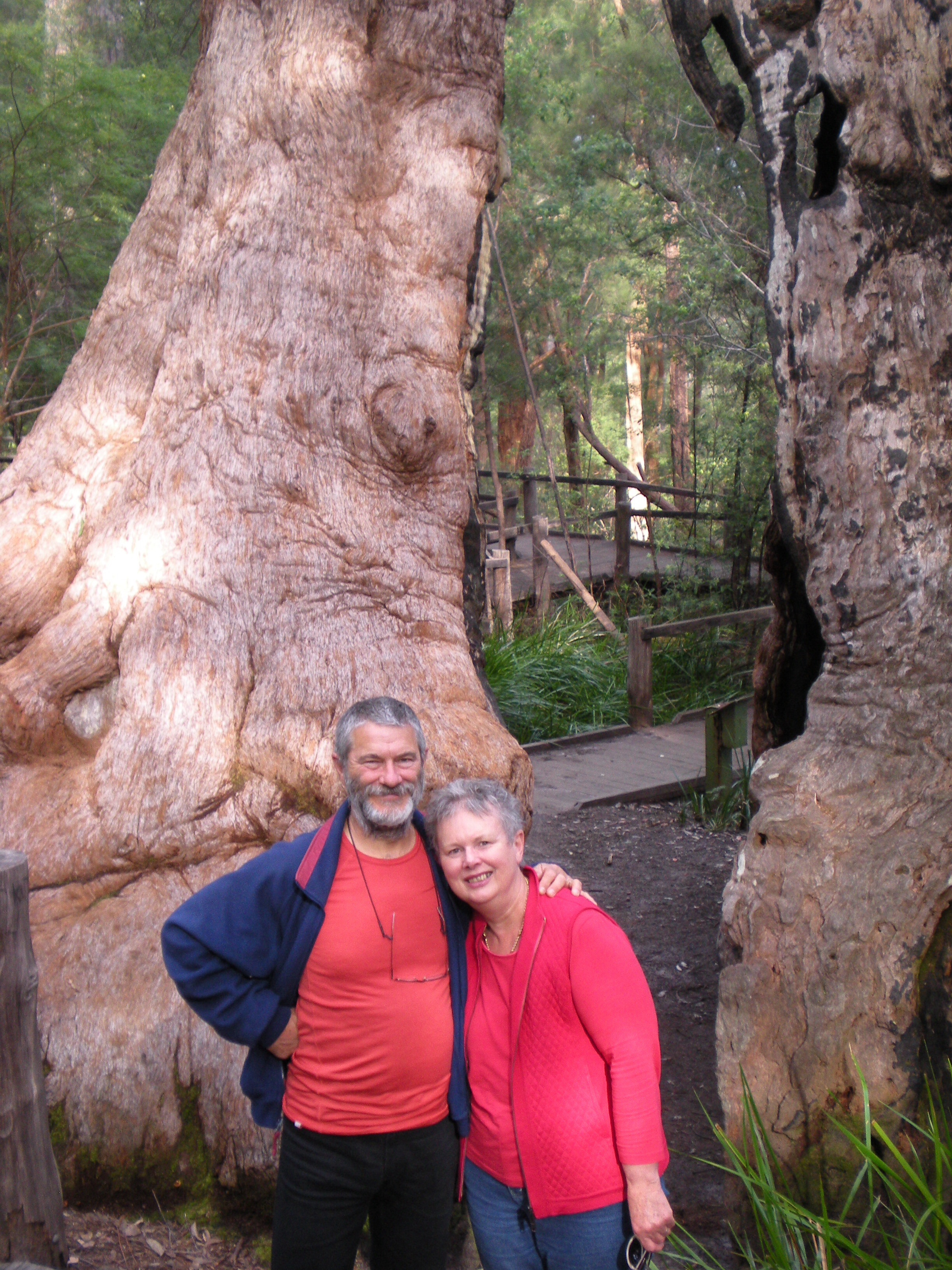
We drove out to The Valley of the Giants after lunch and did the Tree Top Walk, which reaches a max height of 40m, and the Ancient Empire Walk, which is ground-level and, therefore, more to my liking. The ‘giants’ are Red Tingle Trees (Eucalyptus jacksonii), which can grow to 75m and live for hundreds of years. They are extraordinary trees, not least because they remain standing even when the base of the trunk has been eaten out by fire, insects or disease and only a shell remains. It is hard to convey the grandeur of this forest but walking amongst these giants, just enjoying their presence, and breathing in the eucalyptus-scented air, is a calming and wonderful experience.

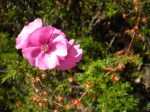
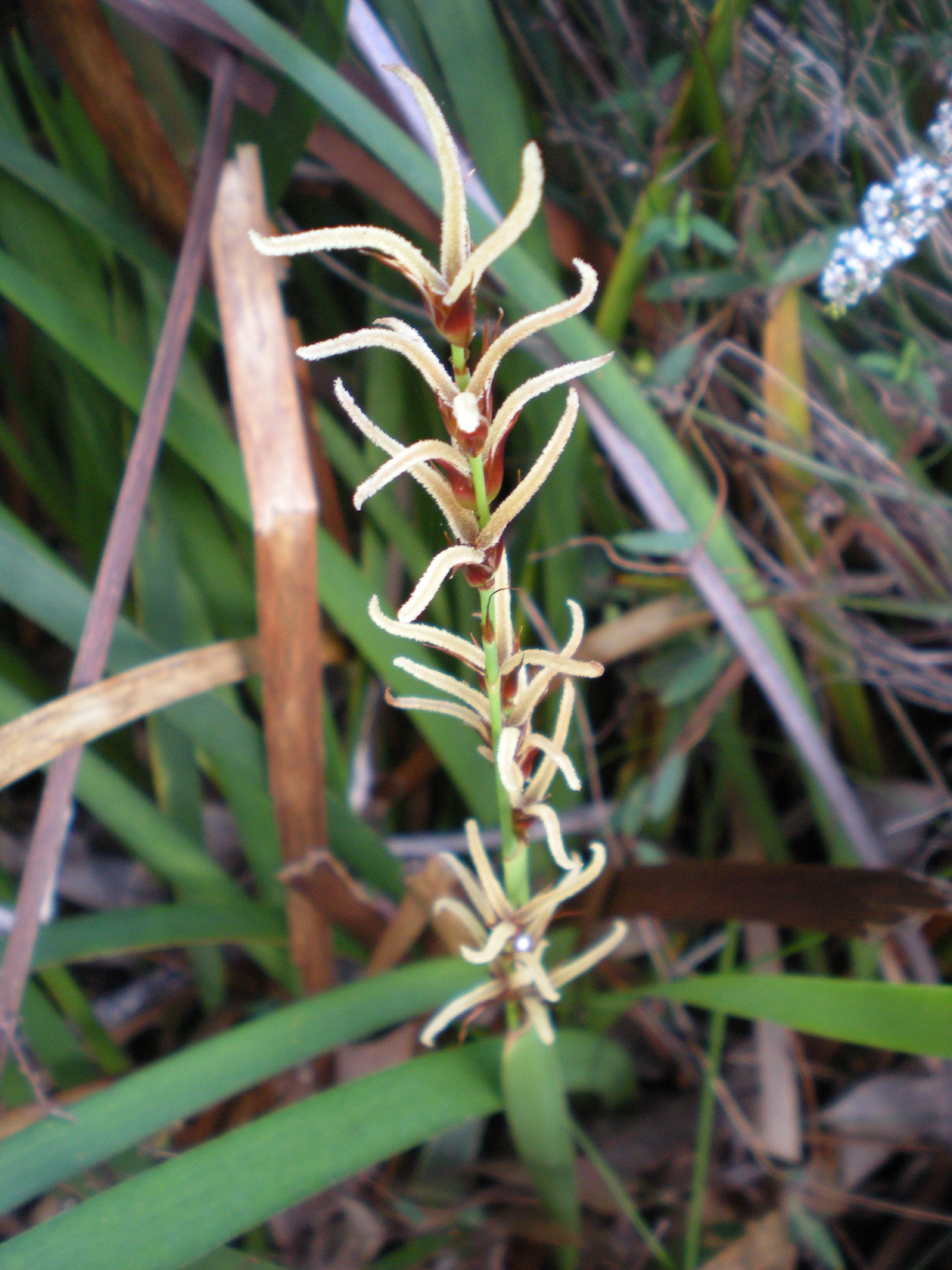
We have bought a book to help us identify the wildflowers which we are photographing, so I am trying to name the pics. Any botanical errors are all mine.